This is a short first-person story, a composite of ordinary expat experiences rather than a news report. The people are fictional. The practical tips at the end of each section are real, and we link to our guides where you can check details.
The morning the holiday turned domestic
On the fifth day of Golden Week, I woke up to the sound of the washing machine next door finishing its spin cycle. It was Monday, 5 October 2026, and for the first time since National Day the city outside my window sounded like a Sunday that had forgotten to end.
The first four days had been loud in the best way. Fireworks of WeChat messages on the first morning. A crowded museum on day two. A park picnic with friends on day three. Yesterday, a long afternoon tea that turned into dinner. Now my laundry basket was full, my fridge was a museum of holiday meals, and my body was asking, very politely, for an ordinary day.
So I gave it one.
Practical note: Day five is a good day for chores. Many people have left the city, and errands can feel easier than on a normal weekend. Our expat midweek errands guide covers what is likely open.
The washing machine and the weather app
My apartment, like many in Chinese cities, has a washing machine but no tumble dryer. When I first moved here, I thought this was an inconvenience. Now I think of it as a weather lesson. Before I press start, I check the forecast, because a load washed on a rainy day can sit damp on the balcony rack for two days.
The forecast promised sun until late afternoon. I loaded the machine, chose the quick cycle my neighbour once recommended by pointing at the buttons and saying a number, and went to face the fridge.
Practical note: If you do not have a dryer, wash in the morning on dry days, space clothes out on the rack, and bring them in before evening damp. Many residents also use shared or paid laundry rooms, or laundry pickup services on delivery apps. Check the forecast with the China Meteorological Administration’s service or a trusted local weather app.
The leftovers inventory
Opening my fridge on day five was like reading a diary backwards. There was half a box of mooncakes from late September that I had been politely ignoring. There was a container of braised pork from a friend’s family dinner on National Day. There were dumplings from a hosted lunch, a bag of grapes, three lonely eggs, and a small mountain of rice.
I made a list on my phone, because otherwise I would have eaten grapes for lunch and thrown everything else away on day seven.
- Mooncakes: breakfast with tea, cut into quarters
- Braised pork: lunch, reheated thoroughly, over rice
- Dumplings: pan-fried for dinner
- Eggs and old rice: fried rice tomorrow
- Grapes: snack, before they turned
It felt like a very adult plan. I was briefly proud of myself.
Practical note: Food-safety guidance from agencies such as the World Health Organization advises not to leave cooked food at room temperature for more than two hours, to refrigerate leftovers promptly, and to reheat thoroughly. If you are unsure how long something has been in the fridge, throw it out. For mooncakes specifically, see our guide to leftover mooncakes after Mid-Autumn.
The garbage room, a small civic exam
Leftovers create packaging, and packaging creates the garbage room. My building has bins for different types of waste, and on my first week in the city I stood in front of them for so long that an older neighbour came over and quietly showed me which bag went where.
Today I knew the routine. Food scraps in one bin, emptied from their plastic bag. Clean recyclables, like the mooncake tin and a cardboard box, in another. Dry or residual waste in the third. A dead battery from the TV remote went into the hazardous waste bin. The aunt who looks after the building gave me a nod, which in my building is roughly equivalent to a gold medal.
Practical note: Cities such as Shanghai and Beijing have mandatory household waste-sorting rules, and many other cities follow similar systems. Categories and collection times can vary by city and compound, so check your building notices. Our neighbourhood WeChat notices guide explains where these rules are usually posted.
The balcony and the quiet city
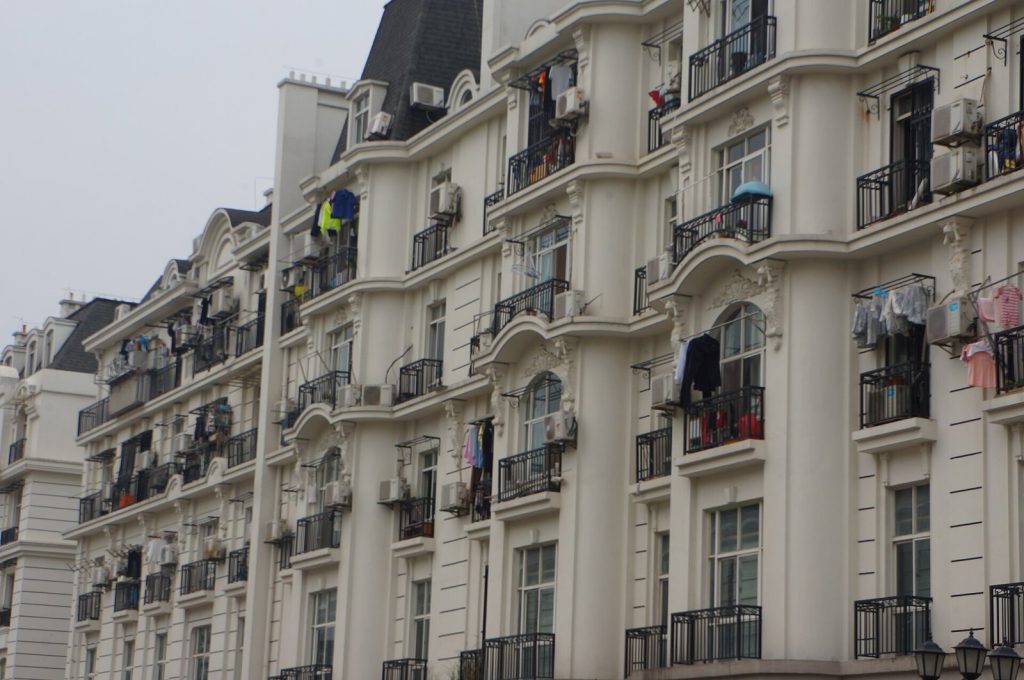
By late morning the laundry was out on the balcony rack. Across the courtyard, other balconies had joined in: towels, school uniforms, a bright red tracksuit, bedsheets moving slowly in the wind. If you want to know who has stayed in the city for Golden Week, look at the balconies on day five.
I took my tea outside and listened. A delivery scooter. A child practising piano badly and bravely. Someone chopping vegetables. Far away, the hum of the elevated road, quieter than usual. The city felt like it had exhaled.
My phone buzzed. A friend who had gone home sent a photo from a packed railway station, captioned with three tired emojis. Another friend, still travelling, asked whether it was worth trying to change her return train to tonight. I sent her our HSR return rush guide and the advice I had learned the hard way: check 12306, not rumours.
Practical note: If you are travelling back, day five is often when the return wave begins to build. Read Golden Week day five crowds for where crowds thin and where they peak, and use official 12306 information for tickets.
Lunch, and a small revelation about rice
The braised pork reheated beautifully. I ate it at the small table by the window, over yesterday’s rice, steamed until hot all the way through. It tasted better than it had on National Day, which every cook I know says is normal for braised dishes.
As I ate, I realised that the most “local” part of my Golden Week was not the museum or the scenic spot. It was this: laundry flapping on the balcony, leftovers from someone else’s family table, a garbage room aunt nodding at my sorting. The holiday had turned domestic, and I liked it.
Afternoon: the unglamorous jobs
I folded the first load before the sun moved. I cleaned the fridge shelves while they were half empty. I checked my parcel-locker messages and walked down to collect a box that had arrived. I put a reminder in my phone for Saturday 10 October, the makeup workday, because I have been caught by makeup workdays before.
I also did one small kind thing: I put two of the remaining mooncakes on a plate and knocked on my neighbour’s door. She gave me a bag of persimmons in return, which meant my leftovers list now had a new line.
Practical note: The holiday officially ends on 7 October, and Saturday 10 October 2026 is a working day. See our makeup workday guide. If you are staying home for the rest of the week, our staying home on National Day guide has more ideas.
Evening: dumplings and an early night
By evening the laundry was dry and folded, the fridge was lighter, and the dumplings were sizzling in a pan with a splash of water and a lid. I ate them with black vinegar and watched the courtyard lights come on.
There were still two days of Golden Week left. I did not need to fill them. I had learned, on day five, that a holiday in China does not have to be a sprint between famous places. Sometimes it is a quiet apartment, a full washing line, and a fridge you have finally made peace with.
What this day taught me, in plain terms
- Do chores on day five. Streets and shops are often calmer while many people are away.
- Wash on dry mornings if you have no dryer, and bring clothes in before evening.
- Plan your leftovers with a simple list, reheat thoroughly, and discard anything doubtful.
- Learn your building’s garbage rules and collection times.
- Check official sources like 12306 before changing any travel plans.
- Remember the makeup workday on Saturday 10 October.
- Share extra food with neighbours; it is a small, real way to belong.
FAQ
Is this story true?
It is a composite, first-person slice of life based on common expat experiences. The people are fictional; the practical tips are real.
Are tumble dryers common in Chinese apartments?
Many apartments have a washing machine and a balcony drying rack rather than a dryer, though washer-dryers are becoming more common.
How long can I keep holiday leftovers?
Refrigerate cooked food promptly, reheat thoroughly, and throw away anything you are unsure about. Follow official food-safety guidance.
Where can I learn the garbage sorting rules?
Check your building or compound notices and your city government’s official guidance.
Bottom line
Golden Week day five can be the most ordinary day of the holiday, and that is its gift: laundry in the sun, leftovers turned into meals, and a quiet city that briefly belongs to the people who stayed. Lovely China, founded in 2025, welcomes corrections at [email protected].