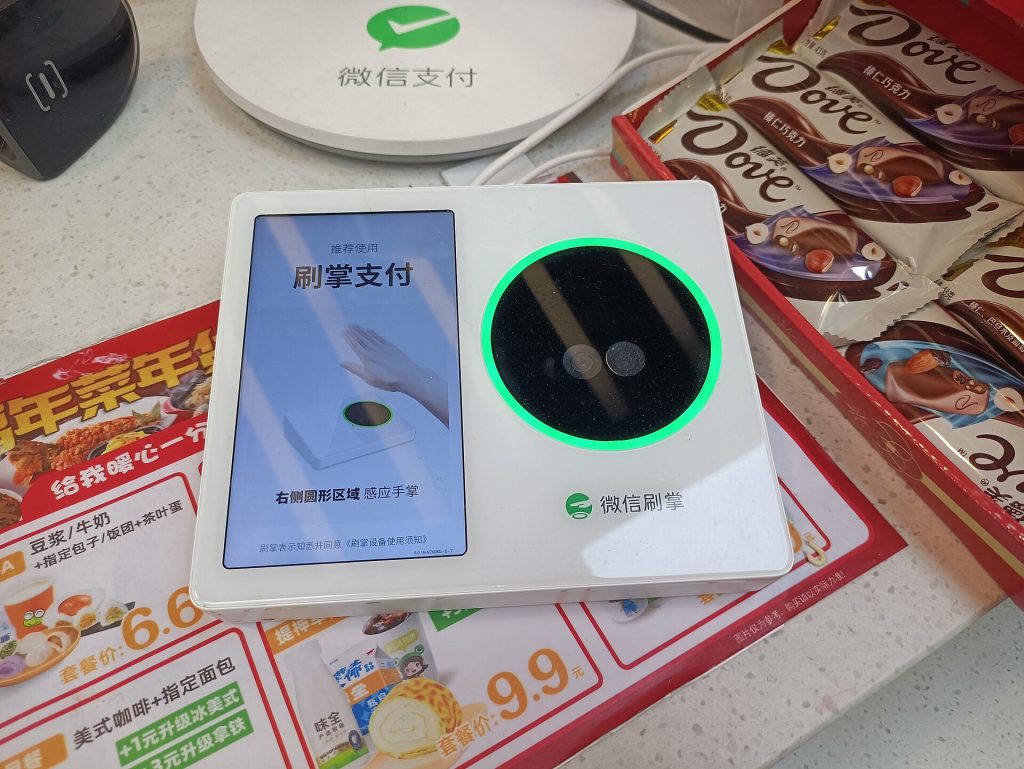
A hotel deposit, an official ticket site, or a card terminal in mainland China may suddenly ask your foreign card for a one-time SMS code, a banking-app approval, or a 3-D Secure challenge. That prompt is not the same problem as a flat decline. The payment is waiting for you to prove you still control the card, and the proof may be a text that never arrives on a foreign number, or an app notification you cannot open because the hotel Wi-Fi has not let you in yet.
This guide is about that stuck middle step. If the terminal has already said no, use when your foreign card is declined in China instead. Wallet setup itself lives in Alipay and WeChat Pay hub. Hotel holds and deposits are covered in more depth in hotel deposits on foreign cards. For SMS codes in general, SMS verification codes on a foreign number remains the companion piece.
Why the code may not arrive
Many issuers still send a one-time password by SMS to the mobile number on the account. In mainland China, messages to a foreign number can be delayed, blocked, or silently dropped. Roaming does not guarantee that a short code will land in time, and a newly bought local SIM will not help if the bank is still texting the home number.
Do not try to fix this with an unofficial “SMS receiving” website or a borrowed number. Those services are a security risk and are not a legitimate way to complete a bank challenge. The legitimate paths are the official bank app already installed on your phone, a voice or in-app approval your issuer actually supports, or a different tender.
App-based 3-D Secure or issuer “approve this payment” notifications are usually more reliable than SMS—if you set them up before you left home, you can still open the app, and you have a network path. That last point matters at a hotel desk at 11 p.m., when you may still be on airplane mode or stuck on a captive portal (hotel Wi-Fi captive portal for foreigners, hotel Wi-Fi login with passport, airport free Wi-Fi login).
What to set up before you fly
Do the bank work at home, on a network you trust:
- Install the official banking app from your usual official app store, sign in, and confirm that travel notices, payment approvals, and international-transaction settings are where your issuer wants them.
- Tell the bank you will be in mainland China, including the cities and the dates, so a sudden hotel authorisation is less likely to look like fraud.
- Turn on in-app or email approval if your issuer offers it, rather than depending only on SMS.
- Know how you will reach the bank if a code never comes: a number that works from abroad, a secure chat inside the official app, or a second person at home who can help you call. Write that path down offline.
Also prepare backups that do not depend on this card behaving. Bind a working foreign card to Alipay and WeChat Pay if those products still accept it, and test a small payment before you need a hotel deposit (Alipay setup for foreigners, WeChat Pay foreign card guide, add second foreign card to Alipay, bind overseas card to WeChat Pay). Carry a second card from a different network if you have one. Keep a modest cash float for taxis, small meals, and machines that will not wait (when you still need cash, paying without a Chinese phone number).
Apple Pay or Google Pay may or may not be useful at a given terminal; do not assume a phone-tap will bypass a 3-D Secure check (Apple Pay / Google Pay status).
What to do at the desk or on a ticket site
When a terminal or website prompts you, say clearly that you need a minute for an app approval, and stay on the payment screen. Opening a different app, switching Wi-Fi, or letting the session time out is how a hold appears on the card without a confirmed room.
If you are waiting on an SMS, check reception, disable airplane mode, and give it a short window—then stop. Waiting ten more minutes will not create a message that the network is not delivering. Switch to the official bank app and look for a pending approval. If nothing is there, use another card, a wallet, or cash, and sort the original authorisation later with the issuer.
Related Lovely China reading
For payments, start with Alipay and WeChat Pay hub and WeChat Pay vs Alipay for tourists. For trains, keep high-speed rail first-timers guide and 12306 passport signup for foreigners handy. City hubs: Beijing first-visit guide, Shanghai first-visit guide. Connectivity: roaming vs local SIM honest guide, pocket Wi-Fi vs eSIM for China, offline maps for foreigners. Bookmark China travel tools page.
Practical checklist
- Confirm official rules on the relevant government, park, airline, or bank page near your travel week
- Screenshot bookings, tickets, and QR codes while you still have stable Wi-Fi
- Save hotel and attraction names in Chinese characters in your phone notes
- Carry passport, a backup payment method, and a small cash float (why cash is still needed)
- Test one small mobile payment before you rely on wallets at a gate or taxi
- Keep China travel tools page bookmarked for related Lovely China hubs
FAQ
Why didn’t the SMS code from my bank arrive in China?
Messages to a foreign number can be delayed, blocked, or silently dropped in mainland China. Roaming does not guarantee that a short code will arrive in time, and a new local SIM will not help if the bank is still texting your home number. Use the official bank app’s approval flow if you set it up, or switch to a backup tender.
Is this the same as a declined card?
No. A 3-D Secure or SMS challenge means the payment is waiting for you to prove you control the card. A flat decline is a different problem, covered in the declined-card article. If the code never arrives, do not keep waiting indefinitely; use another card, a mainland wallet, or cash, then sort any pending hold with your issuer.
Can I use an online SMS-receiving service to get the code?
No. Unofficial SMS-receiving websites or borrowed numbers are a security risk and are not a legitimate way to complete a bank challenge. The legitimate paths are your official bank app, another official approval method your issuer supports, or a different payment method.
What should I set up before I fly?
Install the official banking app, enable in-app or email approvals if offered, and tell the bank you will be in mainland China. Bind a working card to Alipay and WeChat Pay if those products still accept it, carry a second card if you have one, and keep a modest cash float. Test a small wallet payment before you need a hotel deposit.
Notes for late 2026 travellers
Late December 2026 and the New Year week into 2027 bring colder mornings, earlier sunsets, and holiday crowds in many city hubs. Pack real winter layers in the north, and leave extra time on weekends and around 1 January.
This article does not invent ticket prices, opening hours, processing times, consular fees, or official statistics. When a number matters, verify it on the official site, app screen, or ticket board near your travel week.
If an official rule page disagrees with this guide, follow the official page. Lovely China orients English-speaking travellers; we are not an immigration, banking, or medical authority.