The minibus from Nanning’s Langdong station drops you at the Dongxing long-distance terminal just as the late afternoon light turns the Beilun River a flat, metallic gray. Across the water, Mong Cai’s high-rises catch the last sun, their neon already flickering on. You drag your bag toward the pedestrian bridge, the air thick with diesel fumes and the salty tang of mudflats, and realize the border isn’t a line on a map here—it’s a living, breathing marketplace where the two countries lean into each other.
Getting There: Wheels, Rails, and the Last Kilometer
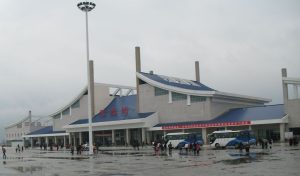
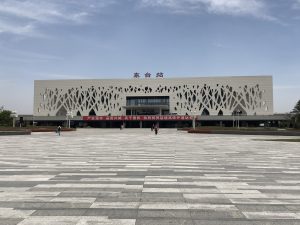
The high-speed train terminates at Dongxingshi station, a gleaming hall surrounded by sugarcane fields about nine kilometers from the actual border. It’s a clean, fast ride from Nanning or Qinzhou, but the station feels strangely empty compared to the chaos downtown. Outside, a fleet of green city buses (Route 6 or the “Border Express” shuttle) waits to cover the last stretch. The ride takes twenty minutes past rows of casuarina pines and duty-free warehouses. If you arrive on a late train and the buses have stopped, the only option is a negotiated ride in an unmetered sedan—drivers will ask for fifty yuan but settle for thirty if you walk toward the taxi stand.
Long-distance sleepers still roll in from Guangzhou and Beihai, depositing passengers at the old central bus station near the Friendship Bridge. These night buses save a hotel night but leave you stiff at 5 a.m. Keep your valuables in a bag on your lap, not the overhead rack; the overhead compartments on the older coaches have a habit of popping open on mountain curves. If you’re coming from the coast, the Beihai express bus runs hourly from the international passenger terminal and drops you closer to the beach hotels than the train station does.
Crossing the Friendship Bridge: Paperwork and Rhythm
The pedestrian lane on the Friendship Bridge is a conveyor belt of humanity: Vietnamese traders pushing bicycles loaded with styrofoam boxes of lychees, Chinese tourists hauling cardboard cartons of milk powder, students with backpacks half their size. You don’t “queue” so much as drift. Have your passport open to the photo page and your China exit card filled out before you reach the glass doors—pens are scarce and the guards have zero patience for fumbling.
- China Exit: Scan passport at the e-gate (Chinese passports only) or hand it to the officer at the manual counter. Foreign passports always go to the manual counter. You get a small white exit slip—staple it into your passport; you’ll surrender it on re-entry.
- No-Man’s-Land: The bridge span takes five minutes to walk. Midspan, a yellow line marks the midpoint. Phone signals flip from China Mobile to Viettel instantly—useful if you need to call a Vietnamese contact.
- Vietnam Entry (Mong Cai): Visa on arrival is no longer issued at this land port. You must hold a valid e-visa (applied online three to five working days prior) or a pre-approved visa from a Vietnamese embassy. The immigration hall is air-conditioned and orderly; officers scan your e-visa QR code, take a fingerprint, and stamp you in. No photo required on the spot.
- Currency Flip: Money changers cluster right outside the Vietnam exit gate. Rates are posted on whiteboards; they’re better than airport rates but count your dong carefully—polymer notes stick together. A quick WeChat/Alipay transfer to a local vendor’s QR code often beats cash exchange if you have a Chinese bank account.
Jin Tan (Gold Beach): Sand, Tides, and the Evening Ritual
Jin Tan stretches in a shallow crescent west of the border checkpoint. The sand is coarse, golden-gray, and firm enough to ride a motorbike on at low tide—which locals actually do. Swim zones are marked by red flags in summer; outside those months, the lifeguard towers stand empty and the water drops off steeply ten meters out. Jellyfish appear after strong southerly winds; vinegar bottles sit at the first-aid hut, but the best defense is asking the rental-shop auntie before you wade in.
The beach wakes up at 5 p.m. That’s when the tour buses leave and the real crowd arrives: families with fold-up stools, couples sharing grilled squid on sticks, kids flying kites made from plastic bags and bamboo. Vendors push carts of steamed oysters brushed with garlic-chili sauce, coconut water hacked open with machetes, and plastic bowls of qing bu liang—a syrupy dessert of coconut milk, taro, job’s tears, and ice. Rent a four-person canopy chair for twenty yuan an hour, order a bucket of cold Beerlao from the roving cooler, and you’ve got the local formula for a perfect humid evening.
- Best light: Arrive an hour before sunset. The sun drops behind the Vietnamese hills, painting the wet sand like a mirror.
- Tide watch: Check the WeChat mini-program “东兴潮汐表” (Dongxing Tide Table). Low tide exposes a kilometer of mudflat—great for clam digging with a small rake, useless for swimming.
- Shower hack: Public showers near the main entrance cost five yuan and run cold. Most beachfront hotels let non-guests use their outdoor rinse taps if you buy a drink at their bar.
Beilun River Estuary: Mangroves, Fireflies, and the Smuggler’s Path
East of the bridge, the river widens into a mangrove maze best explored by the flat-bottomed motor launches that idle at the “River Tour” dock near the border inspection plaza. The standard loop runs forty minutes: past the white boundary markers on stilts, through tunnels of Kandelia roots where mudskippers skip, and out to the sandbar where the river meets the Gulf of Tonkin. Boatmen cut engines near the sandbar; you drift in silence, hearing only the snap of pistol shrimp and the distant thrum of container ships queuing for Haiphong.
Night tours launch at 8 p.m. during the firefly season—roughly the sixth to eighth lunar months. The mangroves blink like a circuit board. Bring a red-filter headlamp; white light scatters the insects. The boatman will kill the engine and pole you into a narrow creek where the density of fireflies is thick enough to read a watch face. It’s touristy, yes, but the silence and the bioluminescence are genuine. Mosquito repellent is non-negotiable; the little biters here are aggressive and unafraid of DEET.
The Three Jing Islands: Wanwei, Wutou, Shanxin
A twenty-minute ferry from the Dongxing passenger wharf lands you on Wanwei, the largest of the three islands where the Jing (ethnic Vietnamese) have lived for centuries. The other two, Wutou and Shanxin, are connected by causeways you can cycle across in an afternoon. Rent a battered electric scooter from the kiosk near the Wanwei dock—thirty yuan for half a day, no license check.
Life here moves at a different cadence. Houses are built on stilts over the tidal flats, nets drying on every balcony. The single-ha festival (usually the tenth day of the sixth lunar month) brings the islands alive with ha singing—call-and-response duets accompanied by the two-string đàn bầu. If your visit coincides, follow the sound of drums to the village square; elders will press a cup of rough rice wine into your hand and expect you to sip, not refuse. Outside festival times, the Jing Museum on Wanwei holds a modest collection of bamboo hats, fishing traps, and blackened pottery. The curator, an elderly woman who speaks Mandarin with a heavy Vietnamese accent, will unlock the back room if you ask nicely—there’s a hand-copied Nôm script genealogy scroll she’s proud of.
- Ferry schedule: Boats leave roughly every forty minutes from 7 a.m. to 5:30 p.m. Last return is 6 p.m.; miss it and you’re sleeping in a fisherman’s guesthouse (basic, 80 yuan a night, shared bathroom).
- Eat: Seek out bánh mì chả cá—fish cake baguette with pickled papaya and cilantro—at the stall opposite the Wanwei clinic. The chili oil is made from home-dried bird’s-eye chilies; it lingers on fingertips for hours.
- Respect: Don’t step over fishing nets laid out to dry. Don’t point at the ancestral altar in a home. Ask before photographing elders; some believe cameras steal a fragment of the soul.
Practical Traps and Local Fixes
Visa panic: Travelers still show up at the bridge expecting a Vietnam visa on arrival. It hasn’t existed here since 2017. Apply for the e-visa at the official immigration portal at least a week before departure; the PDF approval letter works on your phone screen—no printout needed.
Luggage weight on the train: The posted limit is twenty kilograms per ticket. In practice, nobody weighs bags at Dongxingshi. If you’re hauling dive gear or surfboards, buy a first-class ticket for the extra rack space and peace of mind.
Currency confusion: Chinese yuan is accepted in Mong Cai markets at a rough 1:3,300 rate (mental math: 100 yuan ≈ 330,000 dong). Vendors round down. Pay in dong for street food; save yuan for the duty-free shops on the Chinese side where prices are marked in RMB.
Phone data: China Mobile and China Unicom both roam onto Viettel automatically, but data roaming charges are brutal. Buy a Vietnamese e-sim (Viettel or Mobifone) before you cross—QR code installs in two minutes—or grab a physical tourist sim from the kiosk right inside the Vietnam immigration hall. Five days, 10 GB, about 120,000 dong.
Exit timing: The Chinese pedestrian gate closes at 10 p.m. sharp (9 p.m. in winter). If you’re dining in Mong Cai, leave by 8:30 to buffer the walk, the queue, and the occasional system crash at the fingerprint scanners. The last green bus from the border plaza to Dongxingshi station departs at 9:40 p.m.; after that, it’s the thirty-yuan sedan or a very long walk in the dark.