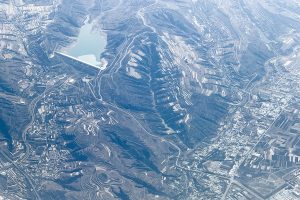
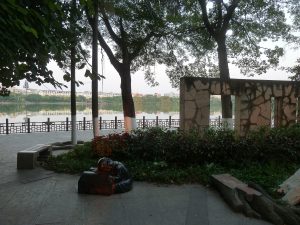
The minibus rattles west from the high‑speed station, past walls plastered with ads for lychee wine and river sand, and drops you at a crossroads where an old woman sells steamed buns from a bamboo steamer. The air smells of wet stone and fried garlic. You are in Guiping, a city that sits on the bend of the Qian River where the karst hills rise like broken teeth against the sky. Most travelers pass through on the way to Yangshuo or Detian, but the ones who stay a night find a place that still moves at the pace of a morning market.
Getting There Without a Fuss
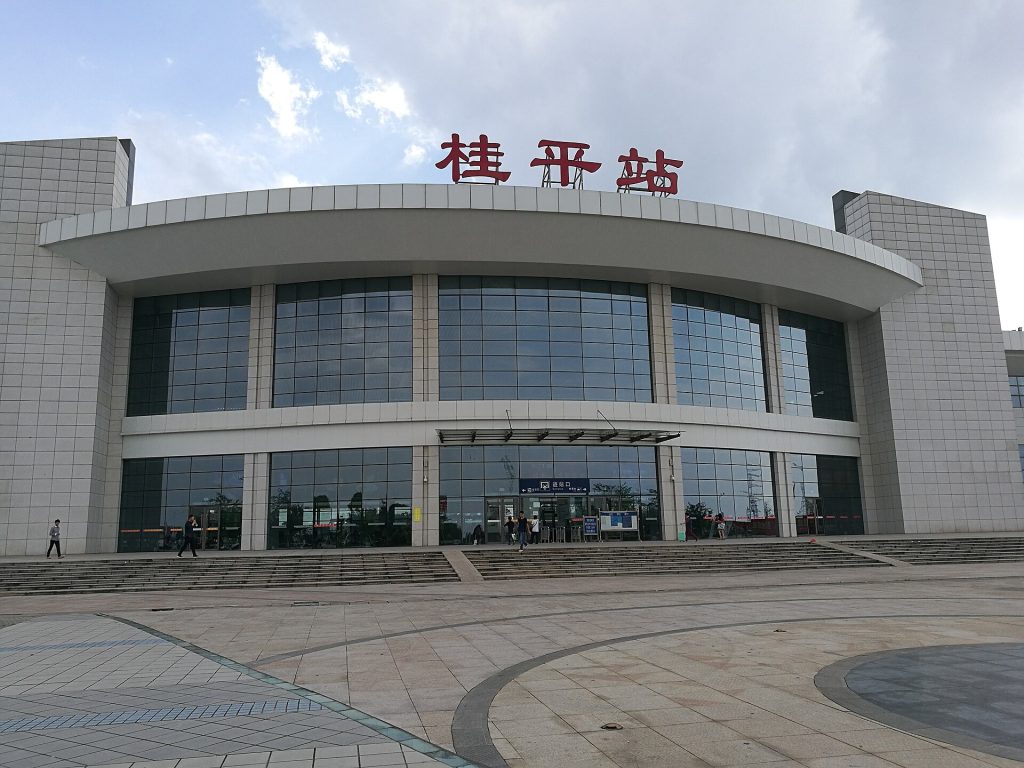
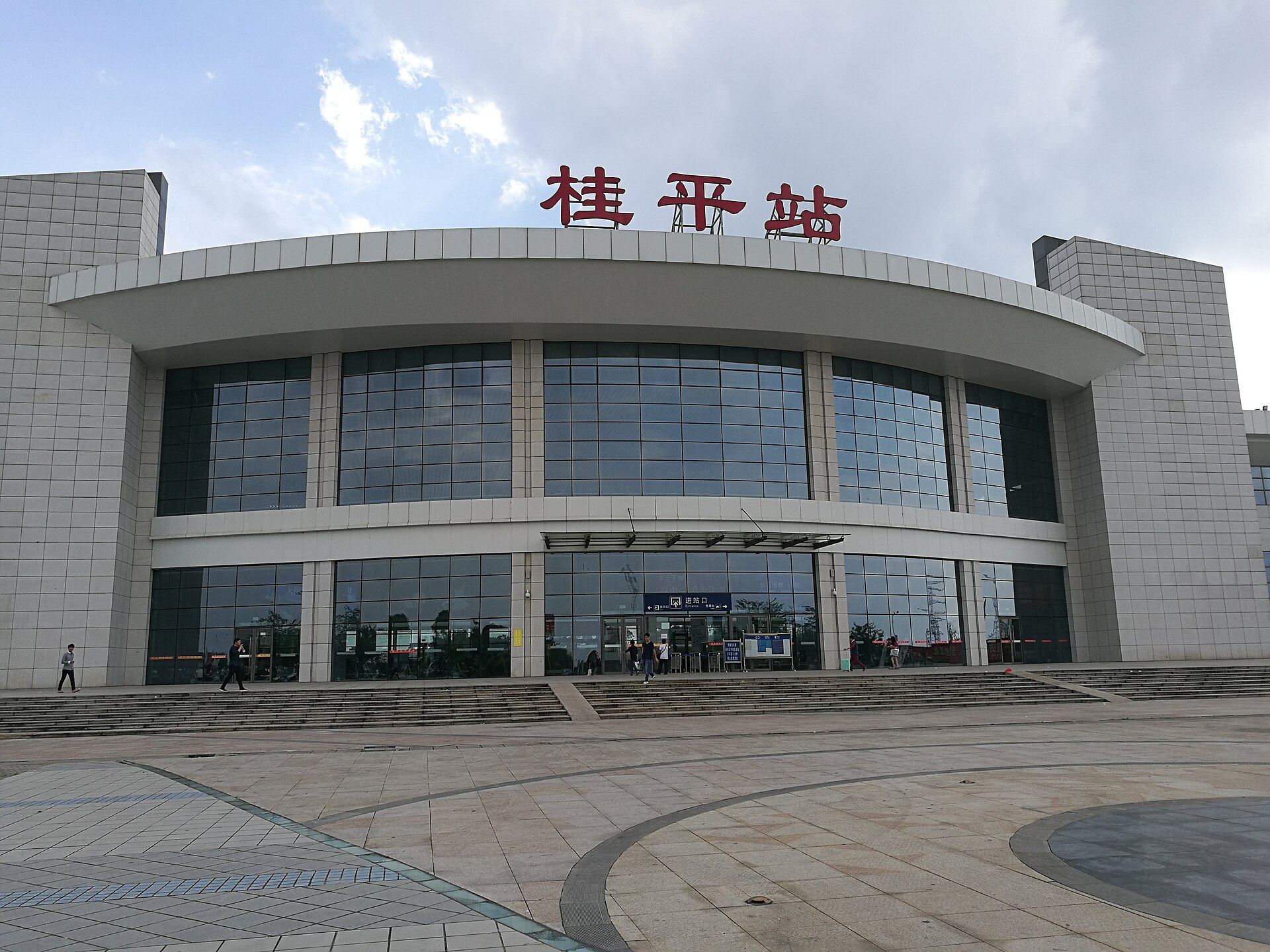
High‑speed trains from Nanning East pull into Guiping Station in roughly ninety minutes. The station sits in Xishan Town, a few kilometers west of the old center. A taxi ride into town costs about thirty yuan and takes ten minutes; the driver will likely ask if you want the “East Pagoda” or the “West Mountain” area first. If you arrive by long‑distance bus, you will land at one of two terminals: the Central Bus Station on Zhongshan Road South, right across from the hospital, or the General Bus Station on Xianfu Street. Both are walking distance to cheap guesthouses, though the Central Station puts you closer to the riverfront promenade.
Moving Around the City
Guiping is compact enough to cover on foot if you stick to the old streets near the river, but the summer heat makes a motorbike taxi tempting. Flag down a green‑vested driver at any intersection; a ride across town runs five to eight yuan. Public buses numbered 1 through 12 loop the main arteries. Bus 8 stops at the base of East Pagoda and West Mountain. Download an offline map—street signs switch between Chinese and Zhuang script, and English is rare. If you rent an e‑bike from a shop near the Central Bus Station, ask for a lock and a helmet; the traffic flow follows its own logic, and the riverfront road has no bike lane.
East Pagoda and West Mountain: The Twin Landmarks
East Pagoda rises from a low hill on the eastern bank, a seven‑story brick tower dating to the Ming dynasty. The climb is steep—stone steps worn smooth by centuries of sandals—but the view from the top platform stretches across the Qian River to the clustered rooftops of the old town. West Mountain, on the opposite bank, is less a single peak than a ridge dotted with shrines, a Confucian academy, and a cavern called Xianren Cave where locals burn incense for exam luck. A cable car hauls visitors up the northern slope, but the stone path winding past banyan roots and mossy stelae is worth the sweat. Allow half a day to do both; the pagoda opens at eight in the morning and closes at six, while the mountain paths stay accessible until dusk.
Riverfront Life and the Night Market
After sunset, the promenade along Binjiang Road fills with families. Vendors grill skewers of pork belly brushed with chili‑cumin powder, steam bowls of rice noodles in pork‑bone broth, and press fresh sugarcane juice into plastic cups. Find a plastic stool near the lantern‑lit bridge, order a bowl of *fen* with pickled green beans and crushed peanuts, and watch cargo barges push upstream under the glow of floodlights. The market thins out by ten, but a few stalls stay open for night‑shift workers. Don’t expect a menu—point at what looks good, hold up fingers for quantity, and pay cash.
Taiping History at the Jintian Uprising Site
Twenty kilometers north of the city, in Jintian Village, a stone archway marks the spot where Hong Xiuquan raised the banner of the Taiping Heavenly Kingdom in the winter of the lunar year 1850. The site includes a reconstructed meeting hall, a row of bronze statues depicting the early leaders, and a small exhibition hall displaying replicas of Taiping seals, coins, and the “Heavenly Decree” script. A guide—usually a retired schoolteacher—will walk you through the timeline in Mandarin or Zhuang; tip fifty yuan if you join a group. The surrounding fields still grow sugarcane and sweet potato, much as they did when the rebels gathered. Visit in the dry season when the dirt road is firm; after heavy rain the access lane turns to red mud.
Eating Like a Local
Guiping cuisine leans sour, spicy, and freshwater. The signature dish is *suanyu*—sour fish soup made with river carp, fermented bamboo shoots, wild tomatoes, and a handful of rice‑wine lees. The broth should be milky white, the fish flesh flaking off the bone, the bamboo shoots crisp and tangy. Another staple is *luosifen* served dry, tossed with fried tofu skin, pickled radish, and a ladle of chili oil that stains the fingers orange. For breakfast, hunt down a stall selling *zongzi* wrapped in banana leaves, stuffed with glutinous rice, mung bean, and fatty pork.
River carp (fresh, scaled, gutted)
Fermented bamboo shoots (rinsed, sliced)
Wild tomatoes (quartered)
Rice‑wine lees (two tablespoons)
Ginger (smashed), garlic (whole cloves), dried chili
Water or light chicken stock (1.5 liters)
Salt, white pepper, cilantro for garnish
Heat a wok until smoke rises. Add oil, then ginger, garlic, and chili; stir‑fry ten seconds.
Add bamboo shoots and tomatoes; toss until tomatoes break down.
Pour in stock, bring to a rolling boil.
Slide in the whole carp. Simmer twelve minutes—do not stir hard or the flesh shreds.
Stir in rice‑wine lees, season with salt and white pepper.
Ladle into a clay pot, scatter cilantro, serve steaming.
In a restaurant, ask for “suanyu, bu yao tai la” if you want the heat dialed back. Order a side of stir‑fried water spinach with fermented bean curd to cut the richness. A common beginner mistake is requesting extra chili oil before tasting the broth—the sourness is the soul of the dish, not the heat. Another error: skipping the fish head. The cheeks and collar hold the sweetest meat, and locals consider it rude to leave them untouched.
Where to Sleep
Budget guesthouses cluster around the Central Bus Station and the old west gate. A clean double room with air‑conditioning and hot water runs 120 to 180 yuan per night in the off season; prices climb during the lunar new year and the mid‑autumn festival. Many family‑run places have no English signage—look for the character 住宿 painted on a red banner. Mid‑range hotels near the riverfront offer elevators and a breakfast buffet of congee, steamed buns, and boiled eggs for 250 to 350 yuan. Book a room with a window facing the hills; the morning mist rolling off the karst is the best alarm clock.
Seasonal Rhythms and Festival Timing
The city wakes up during the third lunar month for the “March 3rd” Zhuang song festival. Villagers from the surrounding counties pour into the main square in embroidered jackets, singing antiphonal duets and tossing embroidered balls. Accommodation fills a week early. The lychee harvest arrives in the fifth lunar month; roadside stacks of red fruit appear overnight, and the air turns sweet. The Dragon Boat races on the Qian River fall on the fifth day of the fifth lunar month—find a spot on the stone embankment by noon for a clear view. Winter is quiet, misty, and ideal for hiking West Mountain without crowds.
What Newcomers Get Wrong
First, assuming Guiping is just a transit hub. Travelers who only change trains miss the river breakfast, the pagoda steps, and the sour fish that lingers on the fingers. Second, relying on ride‑hailing apps—drivers often cancel short trips, and the pickup points at the stations are chaotic. Third, skipping the Jintian site because it looks “reconstructed.” The replicas are modest, but the guide’s oral history fills gaps no plaque can. Fourth, eating only at the night market. The best *suanyu* simmers in a back‑alley kitchen where the owner’s mother tends the pot since dawn. Follow the scent of fermented bamboo; the plastic stools are low, the napkins are rough, and the broth remembers every hand that stirred it.