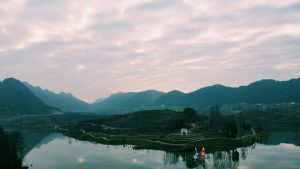
The minibus shudders as it pulls off the G75 expressway, the Jialing River suddenly wide and brown through the window. Ahead, the river splits around a long sandbar where a few egrets stalk the shallows. This is Hechuan, seventy kilometers northwest of Chongqing’s core, where the Fu, the Qu, and the Jialing knot together. The bus terminal on Beihuan Road smells of diesel and steamed buns; porters shout destinations—Laitan, Diaoyucheng, Shuangfeng—while commuters swipe transit cards for the local 118 or 815. You step onto the curb with a backpack and a paper map, the morning humidity already sticking your shirt to your back.
Getting There Without a Car
Long-distance coaches leave Chongqing’s Chenjiaping, West, and Hongqihegou stations every twenty minutes or so. The ride takes ninety minutes if traffic behaves; two hours if a truck jackknifes on the mountain stretch. Buy a ticket at the window or scan the QR code on the electronic board—cash works, but drivers prefer WeChat Pay. Ask for “Hechuan Kefang” (合川客运) so you land at the main terminal rather than a suburban drop-off. From the terminal forecourt, city bus 118 runs straight to the Diaoyu Fortress parking lot; 815 heads toward the old town of Laitan. Both cost two yuan and rumble past vegetable markets and concrete apartment blocks before hitting the river road.
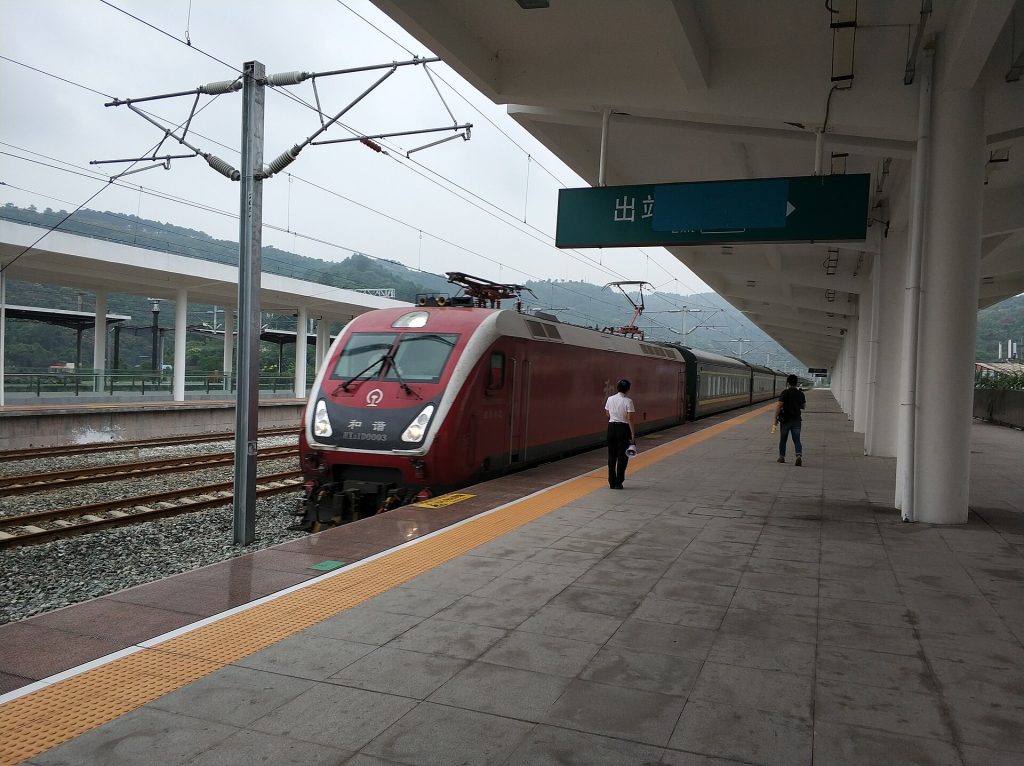
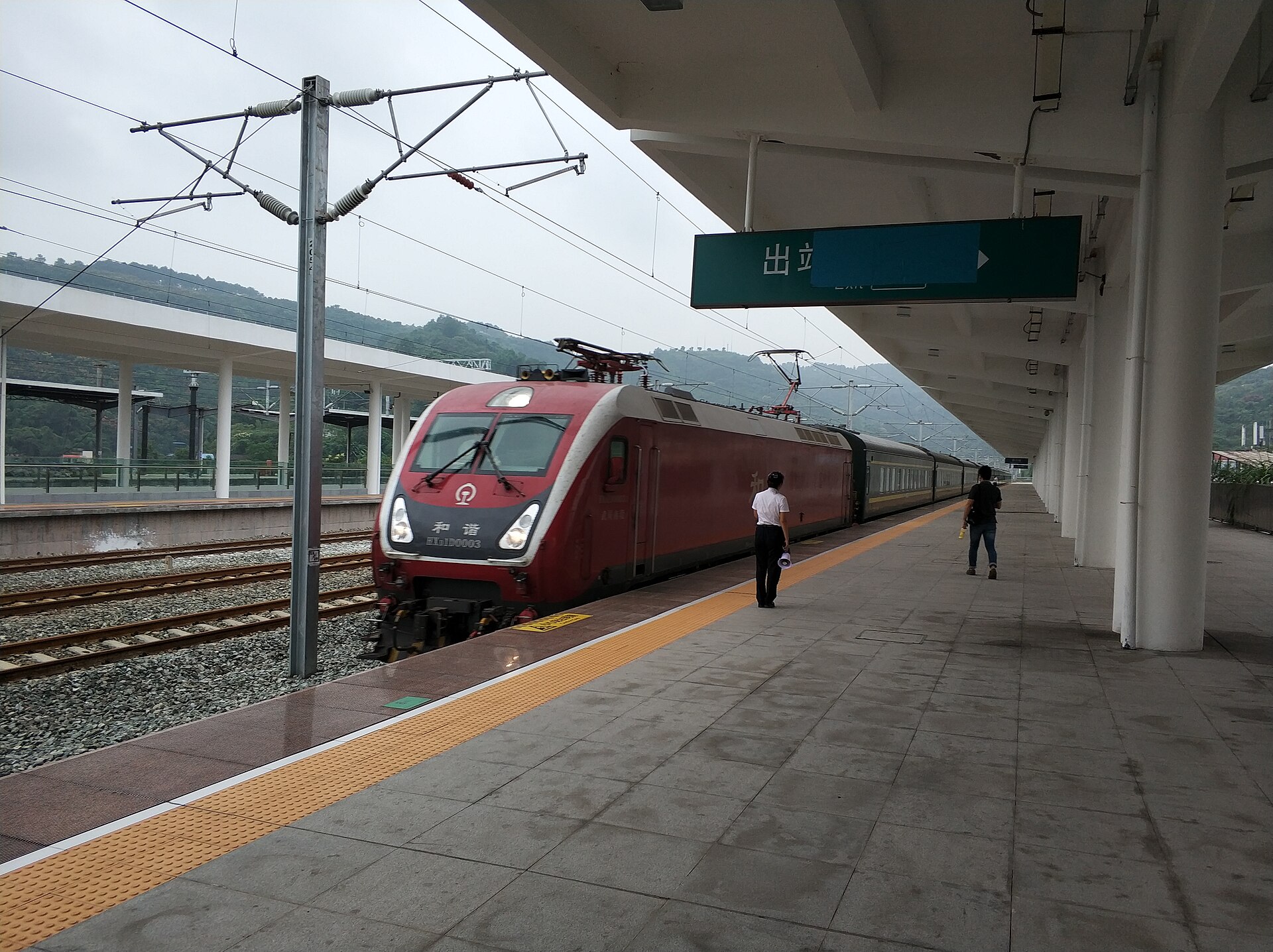
If you prefer rail, the Chengdu–Chongqing intercity line stops at Hechuan Station, a glass-and-steel shed surrounded by taxi touts. High-speed trains from Chongqing West take thirty-five minutes. Exit the station, ignore the “black car” drivers waving licenses, and queue for the official taxi stand—meter starts at ten yuan, twenty to the fortress, thirty to Laitan. Didi works fine, but the pickup point is a chaotic scrum of shared bikes and delivery scooters; pin your location on the app and walk fifty meters toward the bus loop to save the driver a U-turn.
Diaoyu Fortress: Climbing the Song Dynasty Ramparts
The fortress sits on a steep peninsula where the Jialing makes a sharp elbow. You enter through a reconstructed gatehouse, past a stone tablet listing the names of Song generals who held the line against Mongol siege engines for thirty-six years. The path climbs in switchbacks—uneven flagstones, iron handrails bolted into schist. Halfway up, a platform opens toward the river: brown water churning around mid-stream boulders, a single cargo barge pushing upstream, its horn a low moan. Incense curls from a small shrine to the river god; locals leave oranges and baijiu bottles wrapped in red paper.
- Wear closed-toe shoes with grip; the stone gets slick after rain.
- Bring a liter of water—no vendors on the ridge.
- Allow two hours for the full loop: gatehouse, artillery platforms, commander’s hall, and the cliffside “Heavenly Ladder” stairs.
- Morning light hits the river bend best; afternoon sun bakes the exposed walls.
At the summit, a reconstructed watchtower frames the three-river confluence. You can see the Fu joining from the left, the Qu slipping in from the right, the Jialing swallowing both. A few retirees practice tai chi on the parade ground, movements slow as the current below. No audio guide, no gift shop—just wind and the occasional tour group’s megaphone. Descend the same way or take the north trail down to the riverside promenade where a ferry still shuttles villagers across for fifty cents.
Laitan Old Town: Lanes That Remember the Salt Trade
Twenty minutes by bus 815 from the terminal, Laitan spreads along a bend of the Qu River. The main street is paved with worn blue slate, gutters running clear with spring water diverted from the hills. Wooden storefronts hang cured pork, bundles of dried chili, and jars of fermented bean paste sealed with lotus leaves. There is no ticket gate; you simply wander in. An elderly woman fans charcoal under a wok, tossing rice noodles with pickled mustard greens, minced garlic, and a ladle of chili oil that stains the steam orange. She hands you a plastic stool, a chipped enamel bowl, and a pair of bamboo chopsticks—breakfast for six yuan.
- Walk the riverfront boardwalk at dusk: lanterns flicker on the moored sampans, and old men play erhu under the banyan tree.
- Peek into the former salt guild hall—carved window lattices, a courtyard well, ledgers still stacked on a desk.
- Skip the “ancient tea house” with the neon sign; the real tea drinkers gather at the back-alley stall where the owner rinses gaiwans with boiling water from a dented thermos.
- Public toilets are marked with blue signs near the guild hall and the ferry pier; carry tissue.
Stay past dark if you can. The day-trippers leave on the 5:30 bus, and the lanes quiet to the sound of mahjong tiles clicking in upstairs rooms. A vendor pushes a cart of grilled tofu skewers brushed with fermented bean sauce—crust blackened, center steaming, the scent sharp and savory. You eat standing, juice running down your fingers, while a cyclo driver naps in his seat, straw hat over his face.
Eating in Hechuan: River Fish and Fermented Heat
The cuisine here leans on the rivers: carp, catfish, and the ugly but prized yellow catfish (黄颡鱼) steamed with pickled chili, ginger, and wild peppercorn. In a family-run spot near the fortress parking lot, the chef splits the fish down the belly, stuffs it with julienned pickled mustard stem, and plates it in a shallow clay dish swimming in oil the color of amber. The flesh falls off the bone in translucent flakes; the heat builds slow, numbing the lips before the sour kick arrives. Order a side of cold cucumber smashed with garlic and vinegar to cut the grease.
- Signature dish: Pickled Chili Fish Head (剁椒鱼头) — ask for “medium spice” unless you grew up on Sichuan pepper.
- Staple carb: Hechuan rice noodles (合川米粉), thinner than Guilin’s, served in bone broth with peanuts and cilantro.
- Snack: Crispy pork belly cubes (酥肉) tossed in chili salt, eaten with toothpicks over beer.
- Drink: Local rice wine, low alcohol, slightly sweet, served warm in tiny porcelain cups.
Vegetarians survive on stir-fried lotus root slices, dry-fried green beans (干煸四季豆), and tofu skin rolls. Tell the server “bu chi rou” (不吃肉) and “bu yao la” (不要辣) if you need mild; they will still splash a spoonful of chili oil for “fragrance.” Pay at the counter—cash or QR code—no tipping. Peak lunch is 11:30 to 13:00; arrive at 11:00 for a seat without queuing.
Day Trip Rhythm: What to Do When
Start early. Catch the 7:30 coach from Chenjiaping, reach Hechuan terminal by 9:00, grab a bowl of beef noodles at the stall behind the station. Bus 118 to Diaoyu Fortress by 9:30. Climb slow, photograph the river confluence at 11:00. Descend by 12:00, taxi ten minutes to a riverside restaurant for the fish lunch. After eating, bus 815 to Laitan—arrive 14:00 when the tour groups have thinned. Walk the guild hall, drink tea in the back alley, watch the light slant across the slate lanes. Ferry across the Qu at 17:00 (last departure 17:30) to the north bank where a minivan waits for the return highway run. You’re back in Chongqing before 19:30, dust on your shoes, chili oil under your fingernails.
If you overnight, book a courtyard guesthouse in Laitan—blue brick walls, tiled roof, shared bathroom down the hall. The owner wakes you with a thermos of hot water and a plate of steamed buns stuffed with preserved vegetable. Morning mist clings to the river; you hear the ferry engine chug before you see it. That quiet hour, before the first bus unloads, is the reason you came.
Mistakes That Waste Time
- Assuming the fortress cable car runs—it was dismantled years ago; the only way up is legs.
- Taking a taxi from the terminal to Laitan without agreeing on price; meters are rare, drivers quote eighty yuan for a twenty-yuan ride.
- Ordering “mild” at a riverside restaurant and expecting zero chili—ask for “wei la” (微辣) and confirm twice.
- Planning the return on the last 18:30 coach; it fills with migrant workers, luggage straps blocking the aisle. Book the 17:30 or take the train.
- Wearing sandals on the fortress stairs—loose gravel turns ankles fast.
Hechuan does not perform for tourists. It works: ferries haul sand, trucks load citrus crates, grandmothers sort chili on doorsteps. You fit into the gaps. Move at the pace of the river, eat what the boatmen eat, and the place reveals itself in the steam rising from a clay pot at noon.