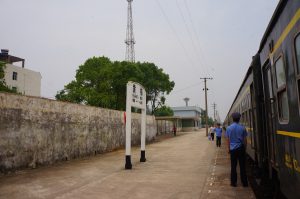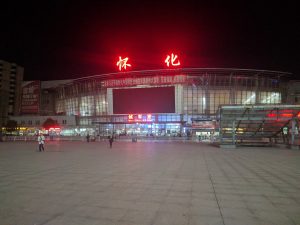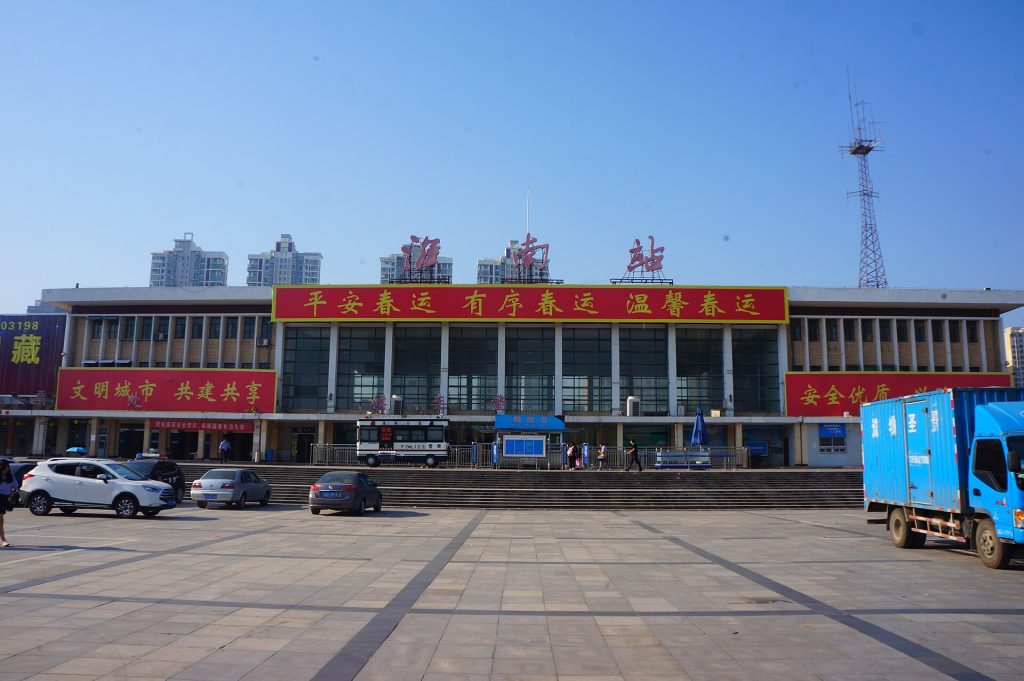
The high-speed train slides into Huainan East Station just as the morning fog lifts off the Huai River, revealing a skyline where cooling towers stand shoulder to shoulder with new apartment blocks. A vendor on the platform shouts over the hiss of steam buns, and the air carries the faint, metallic scent of coal dust mixed with frying scallions. This is not a city that performs for tourists; it works, eats, and remembers in equal measure.
Arriving and Moving Around
Three high-speed rail stations serve the area: Huainan East and Huainan South sit on the main north-south line, while Shou County Station lies farther west, closer to the ancient city walls. The older Huainan Station still handles conventional trains, useful if you are coming from smaller towns along the Huai River valley. From any station, the ride-hailing apps work reliably, but the local bus network is the real artery. Look for routes 1, 10, or 101 to reach the central districts of Tianjia’an and Datong. A taxi across the city center costs roughly the price of a bowl of beef soup; confirm the meter is running before you pull away.
If you plan to explore Shou County, the county-level city administered by Huainan, allow an hour by car or a slightly longer bus ride from Huainan East. The roads are wide and new, but traffic thickens around shift changes at the factories. Renting a shared e-bike via a phone app is ideal for short hops inside the districts — just scan, ride, and park inside the painted white boxes on the sidewalk.
Walking the Layers of Shou County
Shou County (Shouxian) is the reason most outsiders detour here. Its Ming-dynasty city wall forms a rough rectangle four kilometers around, pierced by four main gates. Start at the Binhu Gate in the east at dawn, when elderly residents practice sword forms in the shadow of the ramparts. Walk clockwise along the top — the bricks underfoot are original, worn smooth by centuries of sandals and boots. From the wall you see a chessboard of gray-tile roofs, the occasional solar water heater, and the slow brown curve of the Huai River beyond the trees.
Inside the walls, the Confucian Temple sits on a quiet lane where the smell of incense competes with frying dough from a nearby stall. The main hall houses a statue of Confucius flanked by disciples; students still come here to touch the stone tortoise before exams. A few blocks west, the Mosque on Chengdong Street shows the city’s Hui heritage — its wooden arches and Arabic calligraphy survive behind a screen of plane trees. Friday prayers spill onto the lane, and the imam welcomes respectful visitors who remove their shoes and speak in low voices.
- Best time: Early morning or late afternoon in spring or autumn; summer midday heat bakes the wall bricks.
- Entry: The wall walk is free; the Confucian Temple charges a modest fee.
- Etiquette: Do not climb on the crenellations; do not photograph worshippers inside the mosque without permission.
Industrial Memory at the Japanese Army Atrocities Site
On the northern edge of Tianjia’an District, a low memorial hall marks the Huainan Japanese Army Atrocities Site. The exhibition is spare: photographs, excavated shackles, a rusted mining cart. Local guides, often retirees from the nearby collieries, recount how forced laborers were driven into the shafts. The silence inside the hall is heavier than the traffic noise outside. Visitors leave white chrysanthemums at the stone monument in the courtyard. It is not a place for selfies; it is a place to stand still for a minute and let the weight settle.
Across the road, the Shouzhou Kiln Site museum displays celadon shards pulled from the clay — pale green glazes that once graced Song dynasty tea tables. The kiln ruins themselves are covered by a protective shed; you peer down at the fireboxes and imagine the roar of wood-fueled chambers. A small shop sells modern reproductions made by the state-run ceramic factory: cups with the same translucent glaze, priced for daily use rather than display cabinets.
Bagong Mountain: Stone, Water, and Tofu
Bagong Mountain (Bagongshan) rises abruptly from the plain south of the city, a cluster of sandstone peaks riddled with caves and springs. The main scenic area has paved paths, but the real reward lies on the lesser trails that locals use. Take the west entrance near the village of Shangyao. A narrow staircase climbs through bamboo to a ledge where a spring drips into a stone basin — the water is sweet, cold, and famous for making the region’s tofu.
Near the summit, a Taoist temple clings to a cliff. Incense coils hang from the eaves; an old nun tends a garden of medicinal herbs. She may offer you a cup of tea brewed with mountain water if you sit quietly. Descend by the same path or continue to the north slope, where a trail leads to the “Eight Gentlemen” rock formations — natural pillars named for the scholars who supposedly debated here. The hike takes two to three hours round trip; wear shoes with grip, because the sandstone turns slick after rain.
- Gear: Light daypack, water, snack, rain shell.
- Transport: Bus 16 from the city center to the west gate; taxi returns cost about the same as a decent dinner.
- Mistake: Trying the cable car to the main pavilion and calling it a hike — you miss the springs and the tofu stalls at the base.
Eating Where the Miners Eat
Huainan’s cuisine is built on the Huai River’s bounty and the calorie needs of shift workers. The signature dish is beef soup (niurou tang): a milky broth simmered overnight with marrow bones, sliced tendon, and radish, served with hand-pulled noodles and a spoonful of chili oil. The best bowls appear at 6 a.m. outside the factory gates — look for a blue truck with a steaming vat and a queue of men in reflective vests. Order “da wan” (large bowl), add vinegar and cilantro yourself, and drink the broth before the noodles soften.
Another staple is Bagongshan tofu (Bagongshan doufu), cut into thick squares, deep-fried until the skin blisters, then braised in soy, ginger, and fermented bean paste. The interior stays custard-soft. Eat it with a bowl of plain congee and pickled mustard greens. For a cold dish, ask for “liangban doufu” — silken tofu doused in sesame oil, garlic, vinegar, and chopped scallions.
- Beef soup basics: Marrow bones, beef shank, white radish, ginger, scallion, hand-pulled noodles, chili oil, black vinegar.
- Home method: Blanch bones and meat; rinse. Simmer four hours with ginger and scallion. Add radish last hour. Cook noodles separately; combine in bowl; ladle broth over; finish with chili oil and vinegar.
- Restaurant cue: If the broth is clear, not milky, the kitchen rushed it. Walk out.
Shou County adds its own twist: “Caoji” beef, where the meat is cured with salt and star anise before stewing, yielding a darker, firmer slice. Pair it with the local sesame flatbread (shaobing), baked against the inner wall of a clay oven until the crust cracks like dry earth. Break a piece, dip in the soup, and you understand why this food has survived wars, floods, and factory whistles.
Night Markets and the Rhythm of Shift Change
Around 11 p.m., when the evening shift ends, the streets near Datong District’s Workers’ Cultural Palace wake up. Portable grills flare: lamb skewers dusted with cumin, river shrimp tossed in garlic and dried chili, lotus root slices brushed with sweet bean paste. Plastic stools fill the sidewalks. Men in uniforms argue over cards; women peel crayfish with surgical speed. Join a table, order a case of local snow-beer, and listen. The conversation moves from coal prices to grandchildren’s school exams to the quality of this year’s tofu water.
A newcomer’s error is arriving at 8 p.m. expecting a crowd. The city runs on shift time, not tourist time. Another mistake: asking for “less spicy” at a skewer stall — the cook will shrug and hand you the same rack, because the heat is cooked into the marinade, not sprinkled after. Instead, order a plate of cold cucumber salad (pai huanggua) smashed with garlic; it cools the palate and signals you know the rhythm.
Before you leave, walk down to the Huai River promenade at first light. Fishermen cast nets from wooden boats; kites rise from the bank, their strings humming in the wind. The cooling towers exhale white plumes that catch the sun, turning pink then gold. Huainan does not hand you a postcard. It hands you a bowl of soup, a seat on a wall, and a story you carry out in your fingers.