The ferry from Hong Kong’s China Ferry Terminal cuts across the Pearl River Delta in seventy minutes. When the gangway lowers at Jiangmen Port, the air smells of diesel, salt, and something sweet frying in a wok. A row of green taxis idles at the curb. An auntie waves a paper fan over a cart of steamed rice rolls, their skins translucent as onion paper. This is the gateway to the Wuyi — five counties that sent generations across oceans and brought back watchtowers, tangerine peel, and a dialect that still carries echoes of San Francisco and Vancouver.
Getting oriented in the delta
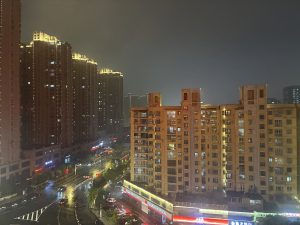
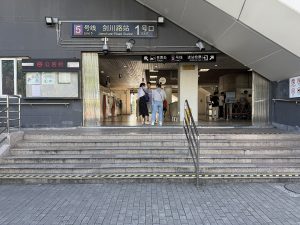
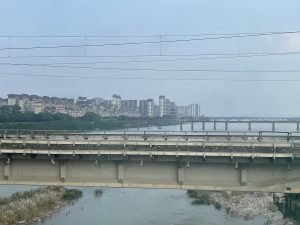
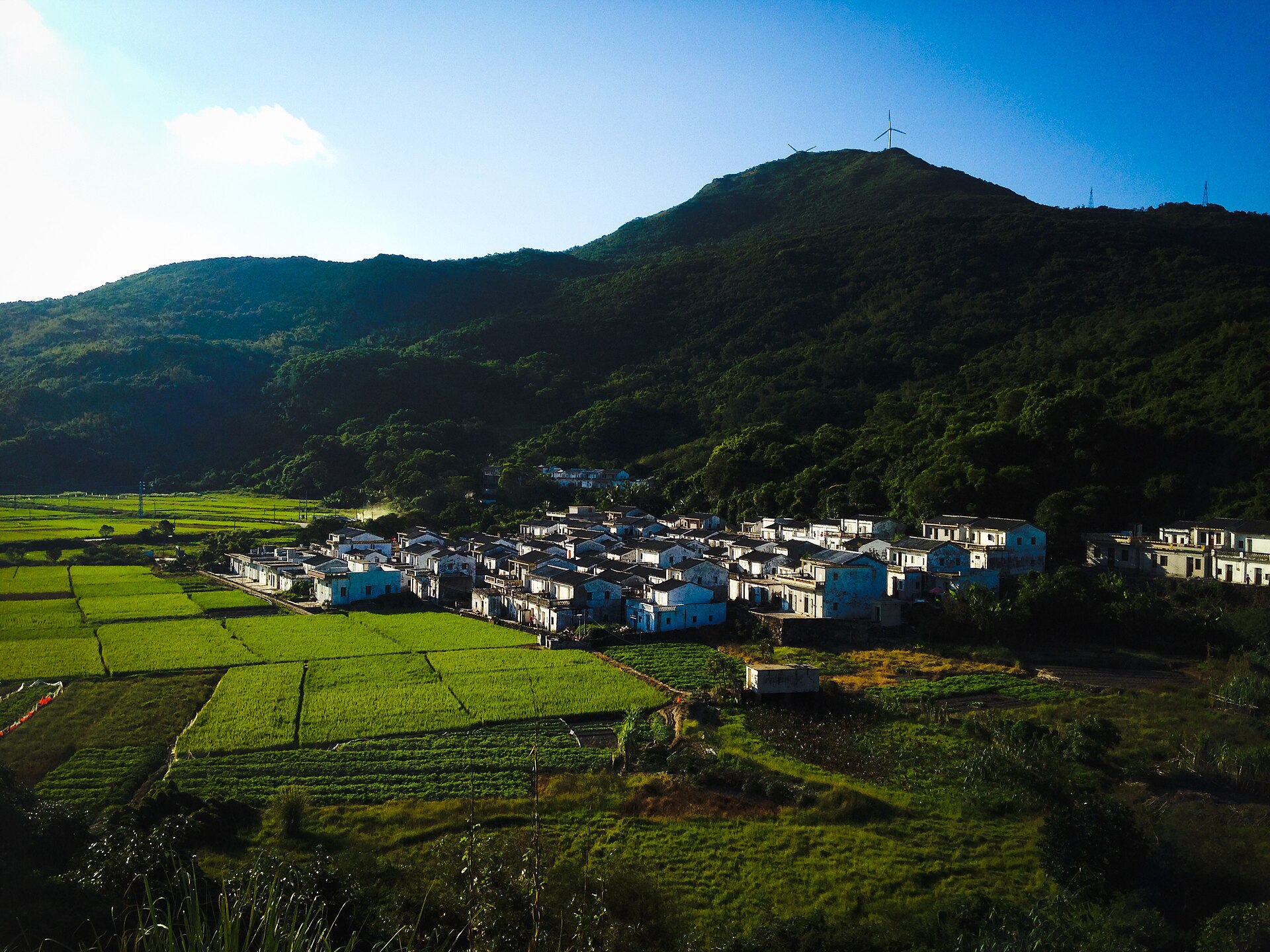
Jiangmen sits where the Xi River fans out before hitting the South China Sea. The three urban districts — Pengjiang, Jianghai, Xinhui — form a compact core linked by bridges and a metro line that opened a few seasons ago. West of the city, the land rises into low hills dotted with banyan trees and the silhouette of Kaiping’s diaolou. South toward the coast, Enping’s hot springs steam in valleys. North, Heshan rolls toward the industrial zones of Foshan. Taishan stretches farthest west, its coastline jagged with fishing harbors and ancestral halls.
High-speed rail now stops at Jiangmen Station in Pengjiang and Jiangmen East in Xinhui. Trains from Guangzhou South take thirty-five minutes. From Shenzhen North, it’s just over an hour. If you arrive by rail, the metro’s Line 1 runs north-south through the main districts; buses and ride-hailing apps cover the county-level cities. Renting a car makes sense only if you plan to chase diaolou clusters deep in Kaiping’s countryside — parking in the old town lanes is a headache.
Kaiping: stone sentinels in the rice paddies
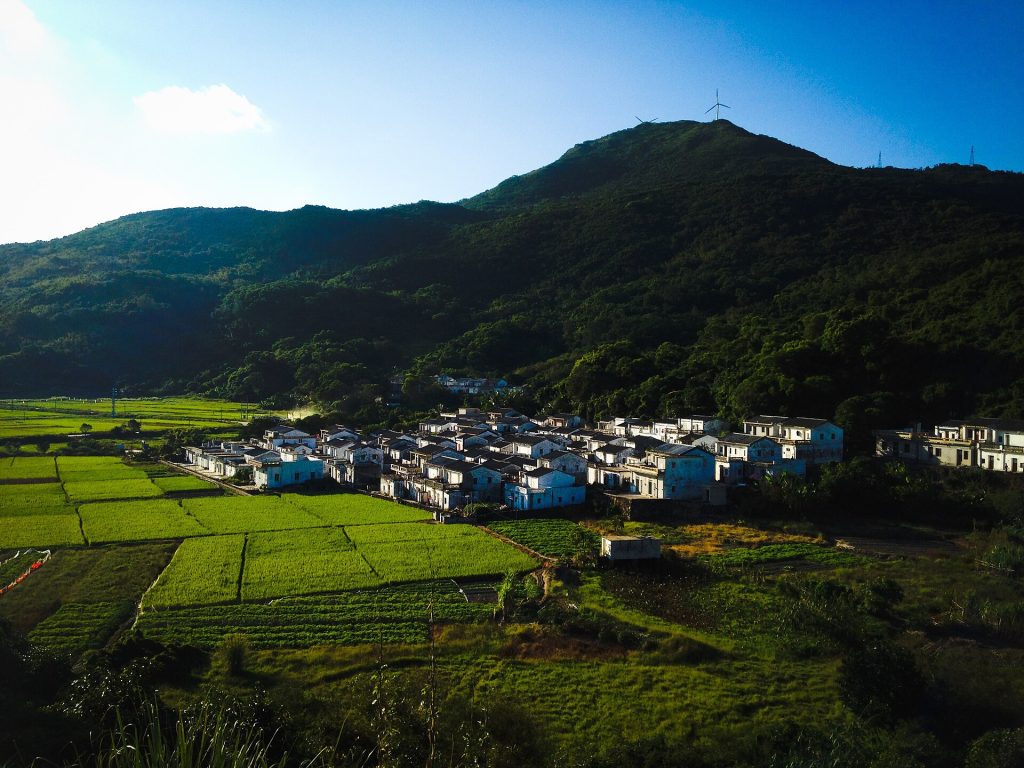
Kaiping’s UNESCO-listed watchtowers rise from flooded fields like chess pieces left on a board. Most were built between the 1890s and 1930s by families who struck gold in California or ran grocery stores in the Mississippi Delta. They fused Roman arches, Baroque balconies, and Chinese feng shui into structures meant to withstand bandits and floods. Zili Village holds the densest cluster — nine towers within walking distance. Li Garden in Beiyi Xiang is quieter, a wealthy merchant’s private estate with artificial waterways, birdcages, and a rooftop pavilion where the owner once scanned the horizon for pirates.
Go early, before the tour buses from Guangzhou arrive at ten. Rent a bicycle at the Zili entrance — ten yuan for the morning — and pedal the raised dikes between lotus ponds. The towers’ interiors are bare: wooden staircases, gun slots, a shrine to the Kitchen God on the top floor. Bring water and a hat; shade is scarce. Lunch in Cangdong village: a family kitchen serves steamed pork belly with preserved mustard greens, the meat falling apart between chopsticks.
Taishan: roots and sea salt
Taishan calls itself the “First Home of Overseas Chinese.” The claim shows in the details: a memorial arch inscribed with names of donors from Chicago’s Chinatown, a museum displaying a trunk carried across the Pacific in 1922, a dialect that still uses “gum saan” for Gold Mountain. The city center feels lived-in, not curated. Morning market on Wenhua Road spills onto sidewalks — baskets of mud crabs, bundles of Chinese chives, pyramids of dried shrimp the size of thumbnails.
Take a half-day for Shangchuan and Xiachuan islands. Ferries leave from Shanzui Port every forty minutes in season. Shangchuan’s main beach curves around a bay where Portuguese traders once anchored; now it’s families flying kites and vendors grilling squid on charcoal. Xiachuan is quieter, its interior threaded with hiking paths past abandoned watchtowers. Stay overnight in a fisherman’s guesthouse — concrete rooms, shared bathroom, windows rattling when the tide surges. Wake at dawn for congee topped with century egg and peanuts, served in a melamine bowl on a plastic stool.
Xinhui: the peel that ages like wine
Xinhui’s claim to fame fits in a teacup. Chenpi — sun-dried tangerine peel aged three, five, ten, twenty years — is the district’s liquid gold. The best orchards sit on the alluvial flats of the Tanjiang River, where the peel absorbs river mist and subtropical sun. Visit a drying yard in autumn: concentric circles of peel on bamboo mats, turned by hand every few hours. The scent is sharp, floral, medicinal. A ten-year peel sells for hundreds of yuan per fifty grams; a twenty-year can buy a decent bicycle.
Tour the Chenpi Museum in Huicheng town to understand the grading system, then walk the old street behind it. Shops sell peel by the gram, brewed as tea, stewed with pork ribs, or candied. Try a bowl of chenpi beef brisket noodles at a stall near the bus station: rice noodles in clear broth, slices of tendon melting into gelatin, a curl of aged peel floating like amber. Don’t buy vacuum-sealed “gift boxes” at highway rest stops — they’re often young peel sprayed with essence. Seek shops that let you smell the jar before weighing.
Enping: steam rising from the earth
Enping’s hot springs bubble from a fault line that runs beneath limestone hills. The Japanese developed the first bathhouses during occupation; now resorts cluster around Quanlin and Datian towns. Some are sprawling complexes with slides and wave pools. Others are simple: a concrete pool fed by a pipe from the mountain, steam obscuring the tiles. Locals come at dusk after work, soaking shoulders, arguing politics in Enping dialect.
If you want quiet, drive twenty minutes up the hill to Jinjiang Reservoir. A trail circles the water through bamboo groves and camphor trees. No entry fee, no lights. Bring a headlamp and a thermos of chrysanthemum tea. The springs here are wild — rock pools warmed by geothermal seepage, deep enough to submerge your shoulders. No changing rooms. No attendants. Just the sound of water dripping from stalactites and the occasional splash of a frog.
Heshan: where the river bends
Heshan gets fewer visitors. Its draw is the Xi River’s broad curve at Gulao Water Town — a restored quarter of arcaded shophouses, stone bridges, and a guildhall where Cantonese opera troupes once performed. The restoration feels fresh; some storefronts still await tenants. But the morning market is real: women in wide-brimmed hats selling river snails, lotus root, fermented bean curd in ceramic crocks. Eat a bowl of Gulao beef noodles at the stall beside the banyan tree — hand-pulled noodles, broth simmered with star anise and dried tangerine peel, beef sliced paper-thin against the grain.
From Gulao, a narrow road follows the river north toward the Yunxiang Mountains. Villages cling to slopes, their diaolou smaller, simpler — square towers with slit windows, built for defense against river pirates. Hike the section from Shuanghe to Niujiang: three hours on stone paths through longan orchards. In late summer, the fruit hangs in clusters, skin brown and brittle, flesh translucent and honeyed. Farmers dry the surplus on rooftops, turning them with bamboo poles.
Eating across the five counties
Jiangmen cuisine sits at the intersection of Cantonese technique and overseas influence. The diaspora brought back Worcestershire sauce, ketchup, condensed milk — ingredients that appear in “Western-style” dishes still served at old-school tea houses. Order a plate of baked pork chop rice at a cha chaan teng in Pengjiang: tomato-based sauce, melted cheese, a fried egg crowning the chop. Drink iced yuan yang — coffee and tea mixed, sweetened with condensed milk — from a thick glass that sweats on the table.
- Kaiping braised goose: whole bird simmered in soy, ginger, sand ginger, and star anise until the skin turns mahogany and the meat slides off the bone. Served cold with a dip of minced ginger and vinegar.
- Taishan steamed fish: whole white pomfret or threadfin, topped with julienned ginger, scallion, and fermented black beans, steamed eight minutes exactly. Hot oil poured over at the table.
- Xinhui chenpi pork ribs: spare ribs blanched, then braised with aged peel, rock sugar, and dark soy until the sauce clings like lacquer.
- Enping stuffed tofu: firm tofu triangles hollowed and filled with minced pork, shrimp, and water chestnut, pan-fried golden, then simmered in superior broth.
- Heshan river snails: wok-tossed with perilla leaf, chili, and fermented black bean — suck the meat through the shell’s aperture.
Sleeping: from courtyard to concrete
In Kaiping, book a room in a restored diaolou — Chikan’s Yinglong Lou has three guest chambers on the upper floors, original teak floors, shared bathroom in the annex. No elevator. In Taishan, the Mei Family Compound in Duanfen town rents courtyard rooms with tiled roofs and a communal kitchen where guests simmer herbal tea. Xinhui’s Huicheng district has business hotels near the metro; ask for a high floor facing the river. Enping’s hot spring resorts range from three-star to luxury; midweek rates drop sharply after the autumn holiday. Heshan’s Gulao Water Town offers boutique inns in converted shophouses — wooden ladders to loft beds, windows opening onto the canal.
What newcomers get wrong
Assuming one day covers Kaiping’s diaolou. The clusters are spread across thirty kilometers of countryside; two days lets you see Zili, Majianglong, and Jinjiangli without rushing. Buying chenpi from the first shop that offers a “certificate” — real dealers show you the peel, let you brew a cup, quote price by weight and vintage. Skipping the ferry to the islands because “beaches are better in Hainan” — Shangchuan’s value is the layering of history, not the sand. Expecting English menus outside Jiangmen city center — carry photos of dishes on your phone, learn to say “bu yao la” (no chili) and “shao yao” (less salt). Treating the watchtowers as photo backdrops — many are still family property; ask before entering, don’t climb unstable stairs, don’t touch ancestral tablets.
Seasonal rhythm
Spring brings the Dragon Boat Festival races on the Xi River — teams from each village practicing at dawn, drums echoing off the water. Early summer is lychee season; roadside stalls sell the fruit by the kilogram, skins cracked open to reveal pearl-white flesh. Autumn is chenpi harvest: the air in Xinhui turns fragrant, drying yards hum with activity. Winter is mild — temperatures rarely dip below ten Celsius — making it the best season for hiking Kaiping’s dikes and Heshan’s mountain paths. The lunar new year shuts down museums and many restaurants for three to five days; plan around it or embrace the quiet.
When the ferry pulls away from Jiangmen Port on your last morning, the watchtowers on the distant hills catch the light. You carry a vacuum-sealed bag of ten-year chenpi, a jar of fermented bean curd, and the memory of an old man in Taishan who showed you his grandfather’s trunk — the brass corners dented, the leather handles worn smooth by generations of hands. The delta doesn’t perform. It endures.