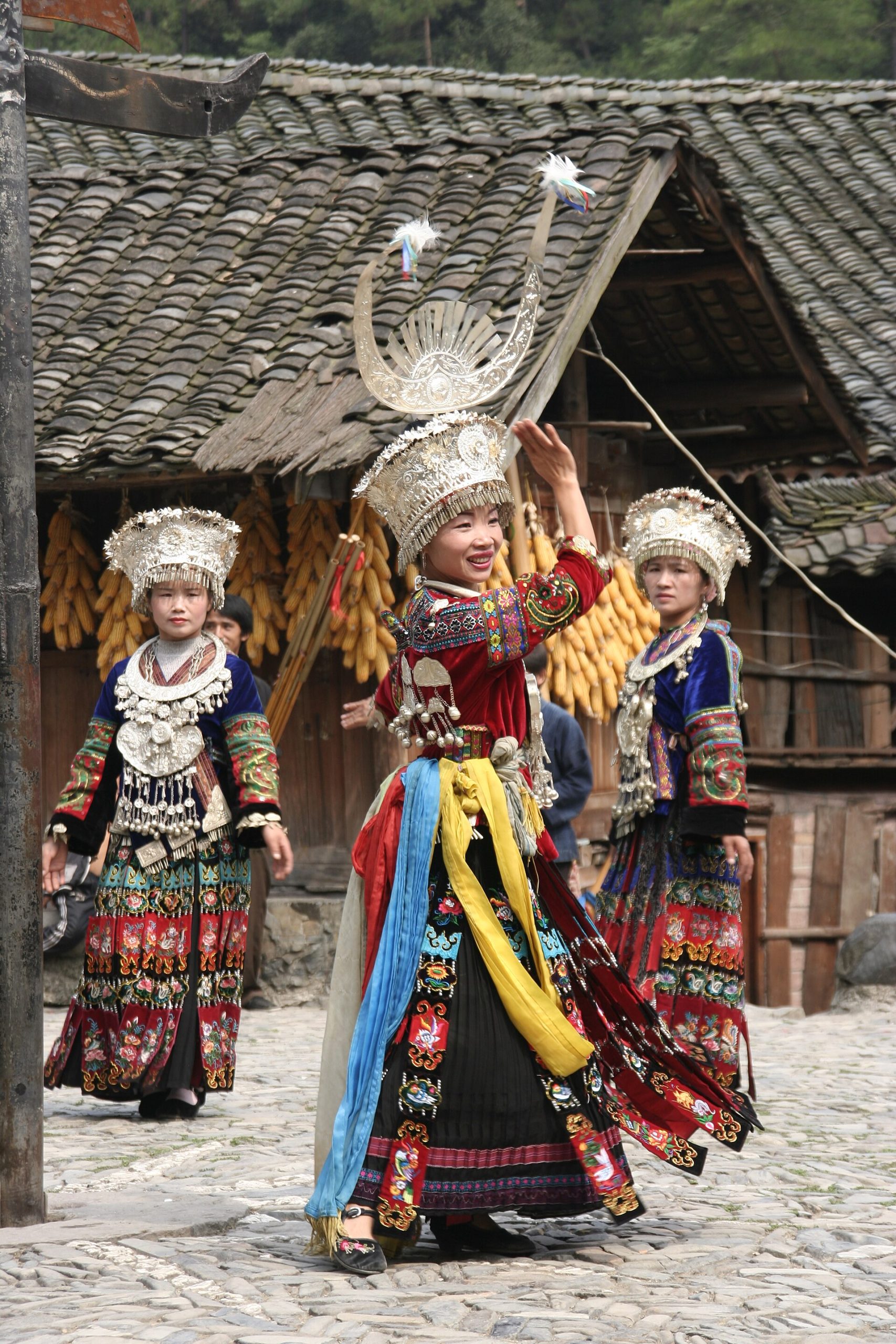
The minibus shudders to a halt on a gravel pull‑out beside a stone archway painted with silver phoenixes. Mist clings to the rice terraces above the village, and the sound of a lusheng reed pipe drifts down from somewhere near the drum tower. You step off the bus, adjust your pack, and follow the flagstone lane that climbs past wooden granaries raised on stilts. This is Upper Langde, where the road ends and the walking begins.
Getting there from Kaili
Head to the long‑distance bus station on the east side of Kaili before noon. Buses marked for Langde leave at forty minutes past each hour; the ride takes about forty minutes and costs roughly thirteen yuan. The driver drops passengers at the upper village entrance, so you avoid the steep climb from the main road. Return buses pull out from the same spot at thirty minutes past the hour. If you miss the last one, a shared taxi from the village square will run you back to Kaili for a few dozen yuan — negotiate before you climb in.
Where to sleep
Family guesthouses line the cobbled lane that runs between the drum tower and the river. Most rooms are simple: wooden floor, heavy quilt, a squat toilet at the end of the corridor. Ask for a bed on the second floor if you want the sound of the stream instead of the late‑night card games downstairs. Rates usually include a breakfast of rice porridge, pickled radish, and fried chili paste. Book a night in the spring planting season or the autumn harvest festival and you’ll wake to the smell of wood smoke and steaming glutinous rice.
Walking the village and the terraces
Start at the drum tower. The carved eaves depict dragons chasing pearls; inside, elders sometimes gather to play chess on a cracked marble table. From there, follow the stone path that hugs the river upstream. After ten minutes you reach the lower village, where the lane widens and women sit on low stools embroidering baby carriers. Cross the arched footbridge and pick up the dirt trail that climbs through the paddies. The track is marked with red paint on tree trunks — stay on it, because the terraces are private fields, not parkland.
- Wear shoes with grip; the flagstones turn slick after rain.
- Carry a liter of water — there are no shops on the ridge trail.
- Allow two hours for the loop to the next Miao hamlet and back.
- If you hear firecrackers, a wedding or a house‑raising is underway; pause and watch from a respectful distance.
Eating with a host family
Most guesthouses will cook dinner if you tell them by mid‑afternoon. The table arrives crowded with dishes: sour fish soup bright with wild tomato and fermented chili, stir‑fried bitter melon with smoked pork, a bowl of glossy oil‑tea made by pounding tea leaves, ginger, and puffed rice in a wooden mortar. You’ll be offered rice wine in a horn cup — sip, don’t gulp. Refusing the first toast is polite; accepting the second shows you’re a guest, not a tourist. Leave a few grains of rice in your bowl to signal you’re full.
Festivals and the calendar
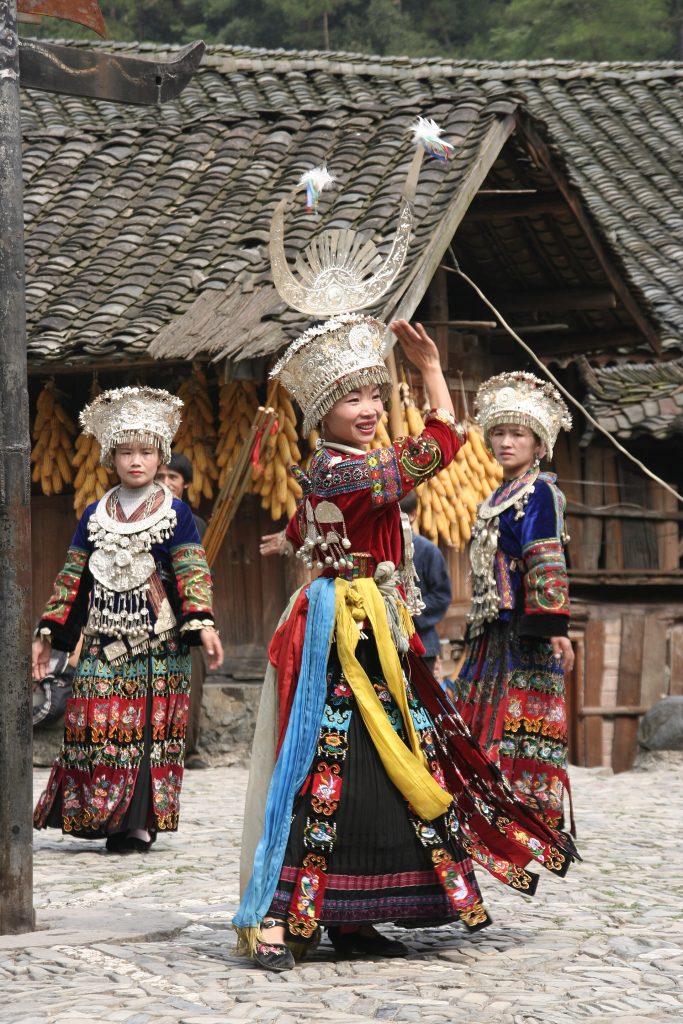
The biggest gatherings fall on the lunar calendar. The Sisters’ Festival arrives in the third month, when young women in silver headdresses sing call‑and‑response songs along the riverbank. The Lusheng Festival follows in the ninth month, when men from surrounding villages parade with reed pipes, their steps kicking up dust on the threshing ground. If your dates line up, stay an extra night. The village square fills with bonfires, and the air turns thick with roasted corn and rice wine vapor. Outside those windows, the village quiets down after dusk — don’t expect nightlife.
Common missteps
First-time visitors often treat the village like a theme park: stepping into courtyards uninvited, pointing cameras at elders without asking, or bargaining over a hand‑woven belt as if it were a market trinket. The Miao here live in these houses; the granaries store their winter grain, not souvenirs. Ask before you photograph a person. If you’re invited inside, remove your shoes at the threshold and wait to be seated. And never touch the spirit altar — a small shelf of incense, rice, and chicken feathers — that sits in the corner of the main room. A careless hand can offend more than a missed bus.