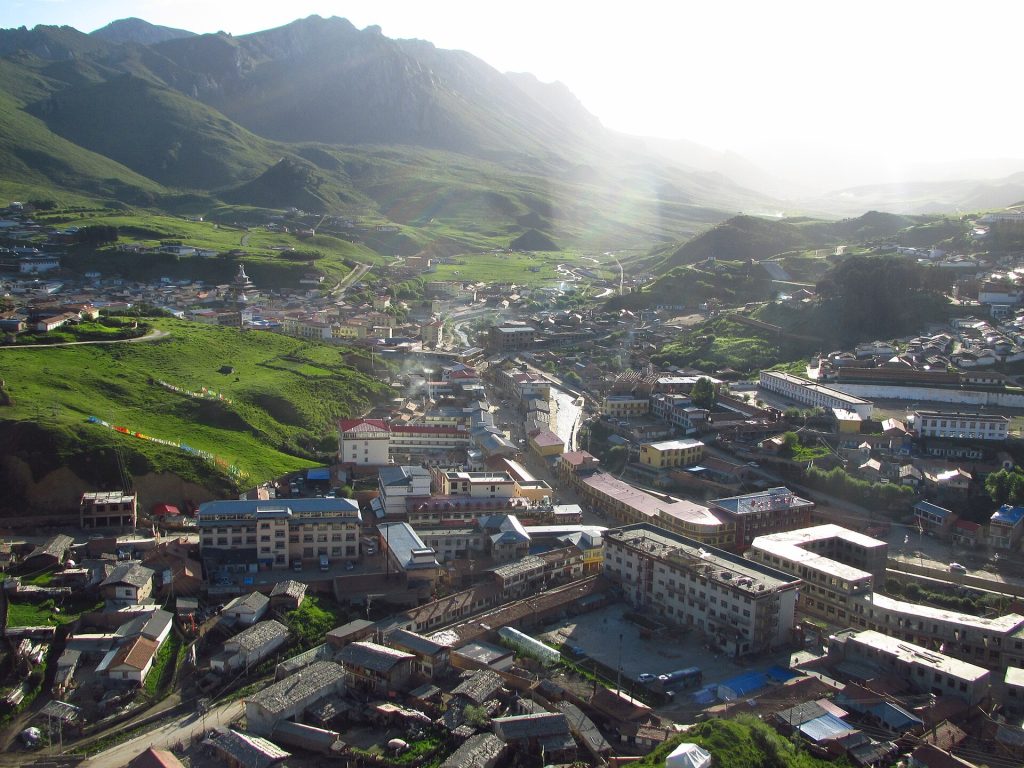
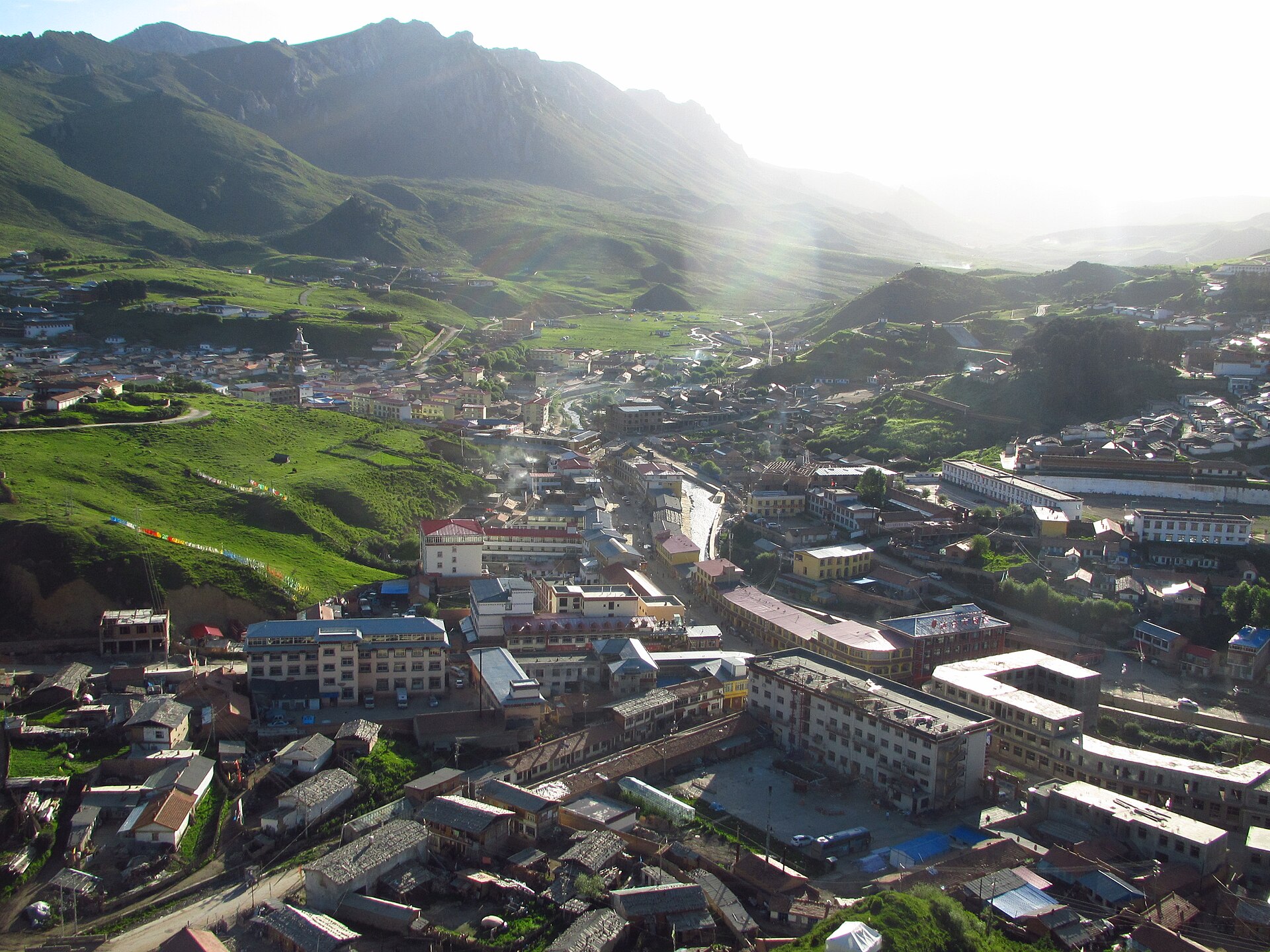
The minibus from Xiahe rattles over the pass just as the sun clears the ridge, spilling light across a valley that looks like a patch of the Alps dropped onto the Tibetan Plateau. Prayer flags snap in the wind above a cluster of whitewashed walls and dark timber frames. By the time the engine cuts out in the dirt parking area, the smell of yak butter and woodsmoke is already drifting from the tea houses. This is Langmusi, straddling the invisible line between Sichuan and Gansu, where the day begins with the clang of a monastery bell and the clatter of hooves on cobblestones.
Getting There Without Losing a Day
The direct bus from Xiahe leaves the main station around seven in the morning. It is a single departure, so the ticket window opens early and the queue forms before dawn. If you arrive late or the seats are gone, do not panic. Catch any early bus toward Hezuo — about an hour down the valley — and switch at the South Bus Station (Nan Zhan) on the far side of town. A taxi ride across Hezuo costs a few yuan and takes ten minutes. From that station, two or three buses a day continue to Langmusi; the most reliable rolls out around 10:20. The whole detour adds perhaps two hours, but it runs even when the direct bus is full.
Drivers on the Hezuo leg know the route cold. They slow for the hairpins above the Bailong River, honk at the blind corners, and pull over at a roadside shrine where passengers toss scraps of paper into the wind. Keep your passport handy; a checkpoint just before the village sometimes asks for it, sometimes waves you through. In winter, ice can close the pass for days. Ask at your Xiahe guesthouse the night before — they usually know if the road is open.
Two Monasteries, One Village
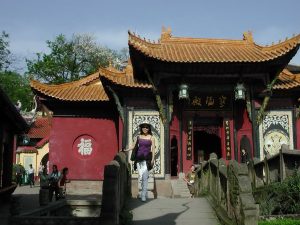
The provincial border slices through the main street. On the Gansu side sits Sertri Gompa, its assembly hall painted in deep reds and blues, the roof bristling with gilt deer and dharma wheels. On the Sichuan side, Kirti Gompa sprawls up the slope, its white stupas marching toward a cliff face honeycombed with meditation caves. Monks in crimson robes cross the street to buy noodles, then cross back, ignoring the invisible line.
Visit Sertri in the morning when the light hits the main altar. The air inside is thick with juniper smoke and the low murmur of sutras. Kirti is quieter in the afternoon; climb the stone steps behind the kitchen to a small courtyard where an old lama spins a prayer wheel the size of a wagon wheel. Photography inside the main halls is usually forbidden — watch for the red-crossed camera signs. Outside, ask before pointing a lens at a monk. A nod and a smile often grants permission; a raised hand means no.
Walking the Valley Floor and the High Meadows
The easiest hike follows the river upstream from the bridge behind Kirti. The trail is a dirt track used by herders, wide enough for two horses. After twenty minutes you pass a stone chorten draped in khata scarves. Another half hour brings you to a meadow where yaks graze beside a glacial stream. The water is numbing cold — good for a quick dunk of swollen ankles after a long walk.
For a full day, hire a horse and a guide at the guesthouse courtyard. The standard loop climbs the ridge behind Sertri, crosses a pass at 3,600 meters, and drops into a hidden valley where a solitary nunnery clings to a cliff. The guide will point out marmot burrows, edible thistle stems, and the tracks of blue sheep. Bring a wind layer; the ridge wind cuts through fleece in minutes. Lunch is usually a thermos of butter tea and tsampa the guide packs — eat it sitting on a boulder watching lammergeiers ride the thermals.
Eating, Sleeping, and the Rhythm of the Day
Guesthouses line the main street on both sides of the border. Most are family-run: a common room with a stove, bedrooms with heavy quilts, and a shared bathroom down the hall. Hot water runs on a schedule — usually mid-morning and early evening when the solar tanks have heated. Ask the host to write your name in Tibetan on the registration slip; it saves time at the police check-in.
Meals revolve around yak meat, potatoes, and hand-pulled noodles. A typical dinner arrives on a metal tray: a bowl of thukpa with chunks of stewed meat, a plate of fried potato shreds with dried chili, and a small dish of pickled radish. Butter tea comes in a wooden bowl — sip, don’t gulp. The Hui-run noodle shop near the bus stop serves beef lamian with a broth that remembers every bone ever boiled in it. Vegetarians can ask for “su thukpa” — the kitchen swaps meat for tofu and wild mushrooms.
What Trips Up Newcomers
- Assuming the direct bus runs daily year-round. It does not — snow, landslides, or festival closures cancel it without notice.
- Arriving after dark. The village has no streetlights beyond the monastery gates, and the guesthouse doors lock early.
- Skipping altitude prep. At 3,300 meters, headaches hit fast. Spend a night in Xiahe (2,900 m) first, drink water, and avoid alcohol on arrival day.
- Treating the monasteries as photo backdrops. They are working institutions. Step aside when monks pass, keep voices low, and never step on the threshold.
- Packing only light layers. Nights drop below freezing even in summer. A down jacket and wool hat belong in every pack.
Leaving the Same Way You Came — Or Not
The bus back to Xiahe departs at 7:30 from the same dirt lot. Be there by seven; the driver does not wait. If you are headed north toward Jiuzhaigou or Chengdu, the Hezuo connection works in reverse — catch the 7:00 AM bus from Langmusi, transfer in Hezuo, and you reach the Chengdu night bus by early evening. Some travelers hire a private driver for the long haul to Songpan or Ruo’ergai, splitting the cost four ways. The road crosses flower-strewn grasslands where herders wave from horseback. However you leave, the last view is the same: the two golden roofs glowing in the slant light, the river flashing below, and the mountains holding the valley in a quiet grip.