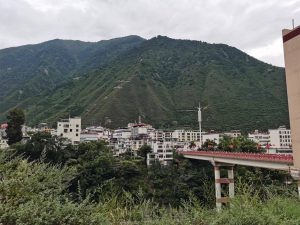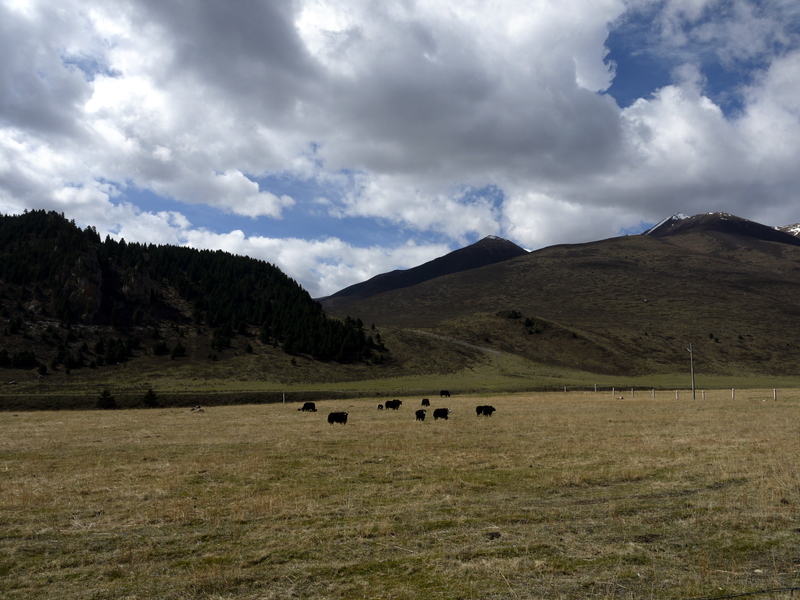
The minibus from Ganzi had been climbing for four hours when the driver slammed on the brakes, not for a pass but for a herd of yak blocking the single lane of the G317. Steam rose off their shaggy flanks in the freezing air. Through the windshield I saw the first prayer flags of Manigango snapping above a cluster of concrete buildings painted white and blue, perched on a river terrace at 3,800 meters. There was no welcome sign, no ticket booth, just a truck stop radiating the smell of diesel and boiling tea, and a dozen khampa men in sheepskin chubas leaning against the guardrail, watching the new arrivals with the slow curiosity of people who have all the time in the world.
Finding the Place on the Map
Manigango sits almost exactly halfway between Ganzi town and Dege, straddling the main artery of the G317 in northern Ganzi Prefecture. It is not a destination you stumble upon; it is a deliberate stop on the overland route connecting the Sichuan Tibetan plateau to the cultural heart of Kham. The altitude hits 3,800 meters (roughly 12,500 feet), so the air is thin enough to make a simple walk to the corner shop feel like cardio. Most travelers pass through in a single afternoon, using it as a high-altitude pit stop to stretch legs and gulp oxygen before pushing on to the Derge Parkhang or the high passes beyond. If you are driving yourself, the town is an obvious landmark: the road narrows, the traffic slows for pedestrians and livestock, and the cluster of guesthouses appears on the north bank of the river.
Getting There: The Bone-Shaker Express
There is no airport, no train, and no scheduled long-distance coach that terminates here. The only public way in is the network of minibuses—locally called *zhongba*—that shuttle the G317 corridor.
- From Ganzi Town: Buses leave the main passenger station when full, usually early morning. The ride takes four to five hours over pavement that ranges from fresh asphalt to washed-out gravel.
- From Dege: Same deal, departing Dege’s bus station in the morning for the three-to-four-hour run west.
- From Shiqu (Sershul): Less frequent, often just one departure a day heading south. Confirm the time the afternoon before at the Shiqu station.
- Private Driver: Most foreign travelers hire a 4WD and driver in Chengdu or Kangding for the full western Sichuan loop. This buys you the freedom to stop at viewpoints and the Yihun Lhatso turnoff without begging a bus driver to wait.
Tickets are bought on board. Keep small bills; the conductor rarely has change for a hundred-yuan note. Luggage goes on the roof rack, tied down with frayed rope—wrap your pack in a trash bag if rain or dust is in the forecast.
Yihun Lhatso: The Lake That Holds the Sky
Thirteen kilometers west of town, the road to Dege skirts the shore of Yihun Lhatso. The water is a startling, opaque turquoise, colored by glacial flour, backed by the jagged white wall of the Chola Mountains. It is the single sight that justifies an overnight stay.
- Entry: A booth at the parking area collects a small fee (around twenty yuan) per person.
- By Taxi: Negotiate a round-trip from the truck stop in town. Expect to pay 100–150 yuan for the car, including waiting time while you walk the lakeshore.
- By Horse: The most atmospheric approach. Arrange horses through the Pani Hotel (see Sleep). A guide leads the string; the ride takes two to four hours each way depending on pace and photo stops. The trail climbs gently through alpine meadow before dropping to the shore.
- On Foot: If you are acclimatized and the weather holds, you can walk the road shoulder or cut across the pasture. It is a three-hour hike one way. Carry water, wind layer, and snacks—there are no shops at the lake.
Morning light hits the peaks behind the lake first. If you want the classic reflection shot, be on the shore by 8 a.m. before the afternoon wind chops the surface. Nomad families sometimes camp nearby with herds of dzomo; ask before photographing their tents or animals, and a small tip (ten or twenty yuan) is polite if they pose.
Sleeping at 3,800 Meters
Accommodation is basic, heated by yak-dung stoves in the common areas and electric blankets on the beds. Hot water is not guaranteed—ask to test the shower before committing.
- Pani Hotel (潘尼宾馆): The de facto headquarters for foreign travelers. The owner’s wife and daughter speak functional English. They can book horses for Yihun Lhatso, store luggage if you day-trip to the lake, and point you to the best noodle stall. Rooms are clean, with thick quilts and squat toilets down the hall.
- Truck Stop Guesthouses: A row of two-story buildings behind the main restaurant. Cheaper (80–120 yuan a bed), noisier, and the shared bathrooms are colder. Fine if you just need a crash pad before an early bus.
- Camping: Possible on the grassy flats near the river bridge, but night temperatures drop below freezing even in summer. Only attempt it with a four-season bag and a stove for melting snow.
Power cuts are common after 10 p.m. Bring a headlamp and a power bank charged in Chengdu. Wi-Fi is either non-existent or a single hotspot at the Pani reception that chokes on more than two users.
Eating: Noodles, Butter Tea, and Little Else
The culinary scene begins and ends at the truck stop restaurant on the highway frontage. The menu is handwritten on a plastic sheet: hand-pulled noodles in beef broth, fried rice with yak meat, and the ubiquitous butter tea.
- Hand-pulled Noodles (拉面): Thick, chewy strands in a clear broth with slices of boiled yak, a handful of cilantro, and a spoonful of chili oil. Order “da wan” (large bowl) if you are hungry; the small bowl is a snack.
- Yak Butter Tea (酥油茶): Salty, oily, and essential for altitude hydration. The proprietor churns it in a wooden piston churn behind the counter. Drink it hot; it coats the throat and settles the stomach.
- Tsampa (糌粑): Roasted barley flour. Ask for a bowl, pour in butter tea, and mix with your fingers into a stiff dough. It is the traditional travel food—dense calories that don’t spoil.
- Chinese Tea: Green tea in a glass jar, free with any meal. Refill yourself from the thermos on the windowsill.
Vegetarians will struggle. The “vegetable” stir-fry usually contains yak fat for flavor. Bring instant oatmeal, nuts, and electrolyte powder from Chengdu if you have dietary restrictions. There is no market in town selling fresh produce; the nearest selection is back in Ganzi or Dege.
What Newcomers Get Wrong
Treating it like a day trip from Dege. The round-trip drive is eight hours of high-altitude driving. You will arrive exhausted, see the lake in flat noon light, and miss the morning glow on the Chola peaks. Sleep one night.
Ignoring the altitude. At 3,800 meters, headaches, insomnia, and nausea are common even for fit people. Spend the first afternoon sitting still, drinking butter tea, and avoiding alcohol. Diamox helps if you started it before ascending; the truck stop pharmacy sells small blister packs, but don’t count on stock.
Expecting English signage. There is none. Bus schedules are chalked on a blackboard in Tibetan and Chinese. Learn the characters for Ganzi (甘孜), Dege (德格), and Shiqu (石渠), or carry a photo of them on your phone.
Photographing nomads without asking. The khampa men leaning on the guardrail are not props. Make eye contact, smile, point to your camera, and wait for a nod. If they wave you off, lower the lens. A few words of Tibetan—“Tashi delek” (hello), “Kadrin chhe” (thank you)—shift the interaction from extraction to exchange.
Leaving trash at the lake. There is no cleanup crew. Pack out every wrapper, tissue, and bottle. The wind carries plastic into the water and the pastures where yaks graze.
Manigango does not perform for visitors. It is a working truck stop, a nomad waypoint, and a gateway to a lake that looks like a piece of sky fallen to earth. Stay long enough to watch the light turn the Chola Mountains from white to gold, and you will understand why the road was built through here at all.