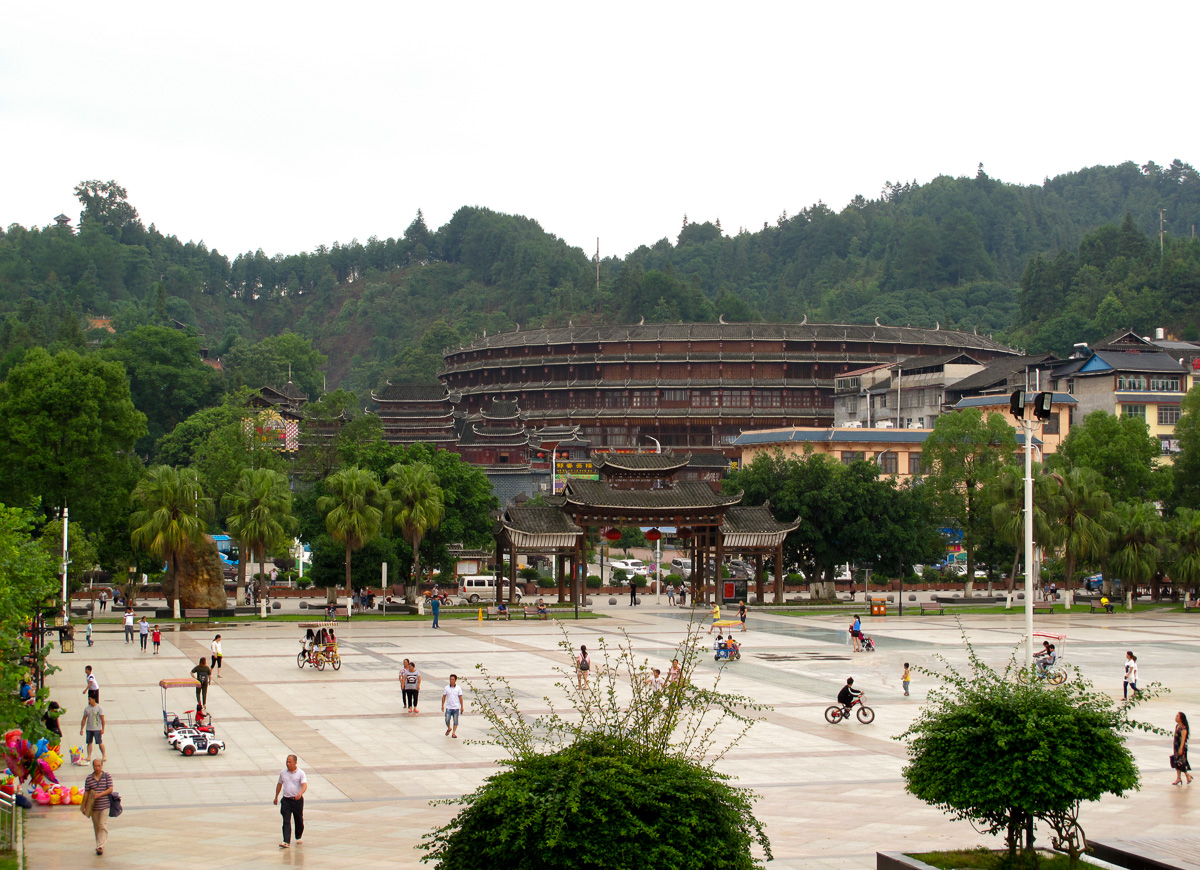
The minibus from Guilin rattles through the last mountain pass just as the morning mist lifts off the Rong River. Below, Sanjiang County spreads out along the water — a grid of concrete towers, a knot of bus stations, and the constant chatter of vendors selling smoked bacon and sticky rice cakes wrapped in banana leaves. Most travelers barely pause here. They shoulder their packs, hop a local bus, and ride twenty minutes north to Chengyang, where the famous wind-and-rain bridges span the river. But the county seat itself holds its own rhythm if you linger past lunch.
Arriving and Getting Oriented
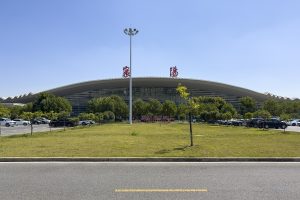
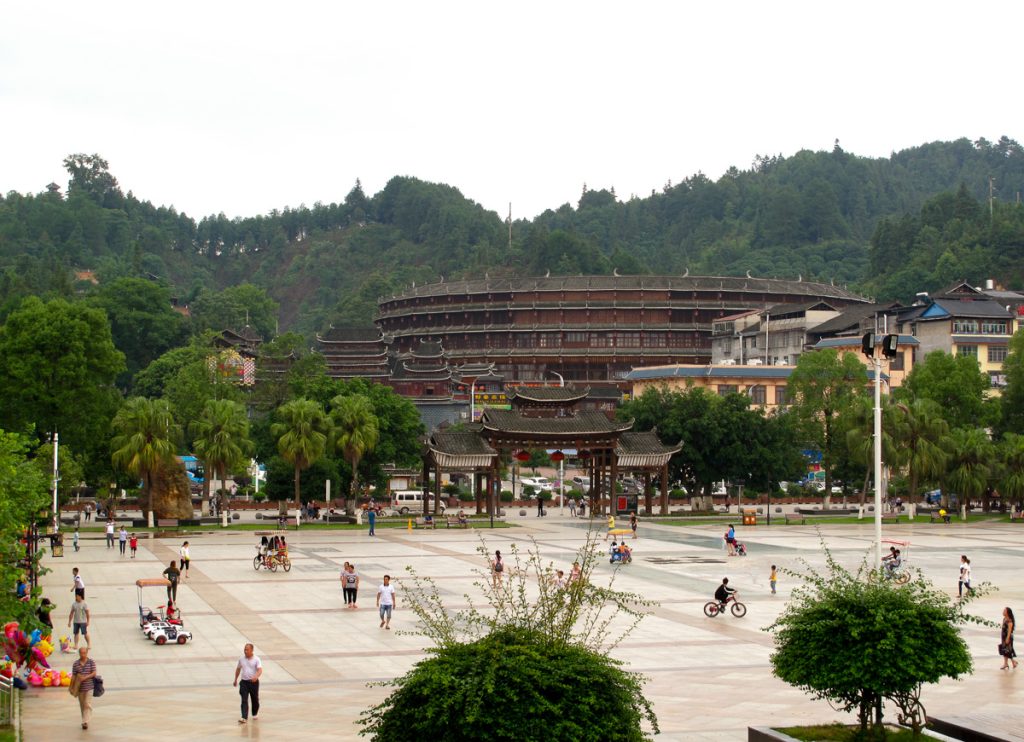
Buses from Guilin pull into the main passenger station on Jiefang Road after four and a half hours of hairpin turns. If you come by train, the high-speed station sits ten kilometers south of town; a shared minivan waits in the forecourt and drops you at the central square for a few yuan. Once on foot, the layout is simple: the river runs east-west, the main commercial streets run parallel to it, and the bus depot for the Dong villages fans out from the north gate. I usually grab a bowl of rice noodles at a stall near the bridge, watch the delivery tricycles weave through pedestrians, and check the departure board for the next run to Chengyang, Ping’an, or the more remote Zhaoxing.
Choosing Your Village Base
Chengyang gets the guidebook ink — eight drum towers, five covered bridges, a paved loop that tour groups can walk in an hour. Stay there if you want guesthouses with hot showers and English menus. Ping’an, twenty minutes further by minibus, sits higher on the slope; its drum tower leans against a banyan tree and the rice terraces climb the hills behind the village like stairs. I prefer the upper hamlet of Ma’an, where the road ends at a stone archway. Fewer day-trippers reach it, the family-run inns serve home-cured pork with fermented chili, and the morning rooster chorus starts before dawn.
Moving Between Villages
Minibuses leave the north station every thirty minutes for the main clusters. Flag one down, pay the driver directly, and squeeze in beside baskets of tea leaves. For the terraced valleys around Danzhou, you need a motorbike taxi — negotiate the fare before you straddle the back rack. The best days are market days, which follow the lunar calendar: every third, sixth, and ninth day of the cycle, the village squares fill with indigo-dyed cloth, live carp in plastic tubs, and old women silver-smithing bracelets on the spot. Arrive early, before the tour buses from Guilin unload.
Walking the Terraces and Bridges
The rice terraces here don’t cascade in the dramatic amphitheaters of Longsheng; they hug narrower valleys, fed by bamboo aqueducts that click in the wind. A solid half-day hike connects Ping’an to the abandoned village of Tang’an — stone paths, chestnut groves, and a collapsed drum tower slowly swallowed by fig roots. Bring water; shade vanishes by mid-morning. The wind-and-rain bridges are more than crossings. Each one shelters a shrine, a few benches, and sometimes a card game. Pause in the center, lean on the rail, and you’ll hear the river rush through the wooden slats — a sound that carries the same cadence as the Dong grand choir songs performed on festival nights.
Eating With a Dong Family
Most guesthouses arrange a family dinner if you ask at check-in. The table arrives crowded: oil-tea soup puffed with popped rice and peanuts, pickled fish sour enough to wake the sinuses, blood sausage steamed in bamboo tubes, and a mound of purple rice dyed with maple leaves. The host pours rice wine from a ceramic jug into horn cups — refuse the first pour politely, accept the second with both hands. Chopsticks never point at elders. Bones go on the table, not in a separate dish. And when the grandmother offers a second helping of fermented tofu, you take it; saying you’re full is read as rejecting hospitality.
- Oil-tea base: tea leaves pounded with ginger, garlic, and salt, then boiled
- Toppings: popped rice, fried peanuts, diced scallions, crisp soybeans
- Purple rice: glutinous rice soaked with maple or perilla leaves overnight
- Pickled fish: small river fish layered with chili, rice bran, and star anise in clay jars
- Blood sausage: pork blood mixed with sticky rice, stuffed into cleaned intestines, steamed two hours
Festivals and the Calendar
The Dong calendar turns on the lunar cycle. The New Year falls on the first new moon after winter solstice — three days of bull-fighting in the village square, lusheng pipe circles, and antiphonal singing that lasts until voices crack. The “Sama” festival arrives in the seventh month, when families clean ancestral altars and share sticky rice dumplings wrapped in lotus leaves. If your dates align, ask your host which village hosts the lusheng competition; the players march between drum towers, reeds trembling, and the crowd follows like a slow current. Outsiders are welcome to watch, not to join the dance unless invited.
Common Missteps
First-timers often book a single night in Chengyang, rush the bridge loop, and leave before dusk. The villages breathe differently after the day-trippers depart — smoke curls from kitchen fires, elders gather on bridge benches to mend nets, and the drum towers glow amber from within. Another mistake: photographing inside the drum tower without asking. The upper floors hold ancestral tablets; a flash feels like intrusion. And don’t assume every villager speaks Mandarin fluently. Many elders converse in Kam, the Dong language. A smile, a nod, and a few words of “gao xing” (happy) go further than perfect pronunciation.
Leaving Without Regret
On departure morning, the minibus back to Sanjiang town fills with baskets of tea, sacks of rice, and students in blue uniforms. The driver honks at a water buffalo blocking the lane. You’ll pass the same terraces, the same bridges, the same mist rising — but the light has shifted. If you have an hour before your Guilin bus, walk the riverfront promenade in the county seat. Old men practice calligraphy with water brushes on the pavement; the characters vanish in the sun. That impermanence — ink drying, mist lifting, seasons turning — stays longer than any photograph.