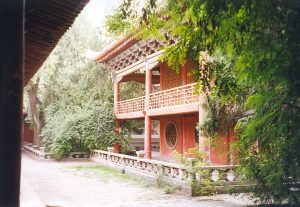
The minibus from Ya’an rattles up the valley, the road clinging to the edge of a gorge where the river runs the color of strong tea. After forty minutes the driver calls out the stop, and you step onto a flagstone lane that curves away from the parking lot toward a cluster of gray-tiled roofs. No ticket booth blocks the entrance. An old woman in a blue apron waves from a doorway where steaming bowls of rice noodles wait on a wooden counter. The air smells of woodsmoke, wet stone, and chili oil.
Getting There Without a Tour Bus
Most travelers reach Shangli as a side trip from Ya’an, which sits about two hours by express bus southwest of Chengdu. From Ya’an’s main long-distance station, flag a motorized rickshaw or hop a local taxi for the short ride to the tourist bus station — a low shed behind a row of noodle shops. Minibuses to Shangli leave when full, usually every twenty minutes in the morning. The fare is a handful of yuan. If you are coming from Leshan or Emeishan, the direct bus to Ya’an drops you at the same hub; no need to backtrack into the city center. Drivers heading toward Kangding often pause at the Shangli turnoff if you ask, but the minibus is steadier and lets you watch the terraced hillsides unfold.
Walking the Lanes and Bridges
The town fits inside a twenty-minute stroll, but the real measure is how often you pause. Eight stone bridges span the canals that lace the settlement. Erxian Bridge is the showpiece: a single high arch of fitted limestone with no mortar visible, its parapet worn smooth by generations of shoulders. Cross it at midday and the sun cuts a sharp line across the water; cross it at dusk and lanterns flicker in the reflection. The bamboo water wheel still turns beside the lower canal, its paddles slapping a slow rhythm that once powered rice hullers. Up the hill behind the main street, a narrow stair climbs to a small pagoda perched on a ridge. From there you see the whole valley — red lanterns strung between eaves, the pass that leads toward the Tibetan plateau, and the patchwork of rapeseed fields that blaze yellow in early spring.
Reading the Walls
History here is not behind glass. Slogans carved by the Red Army during the Long March remain etched into cliff faces and courtyard lintels. Characters faded to ochre still urge “Unity” and “Victory” beside shop signs selling smoked tofu. The town was a horse-and-tea caravan halt long before the 1930s; muleteers tethered animals in the same courtyards where grandchildren now scroll phones. Ask the woman fanning coals at the blacksmith’s forge — she will point out the groove in the doorframe where a pack saddle rubbed for decades. No museum label explains it. The past lives in the texture of the stone.