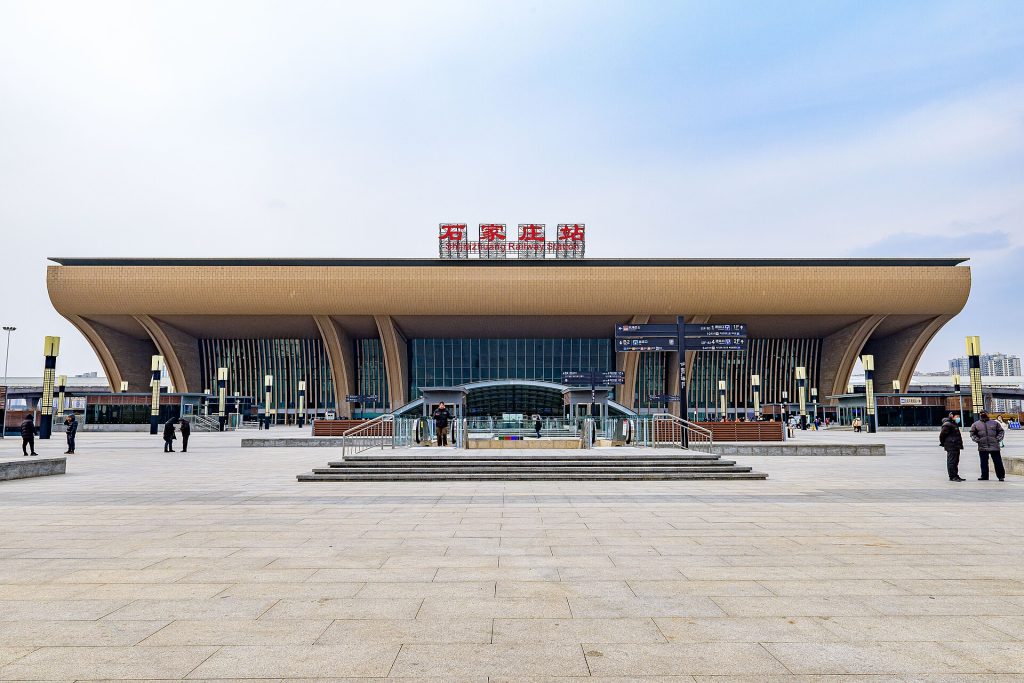
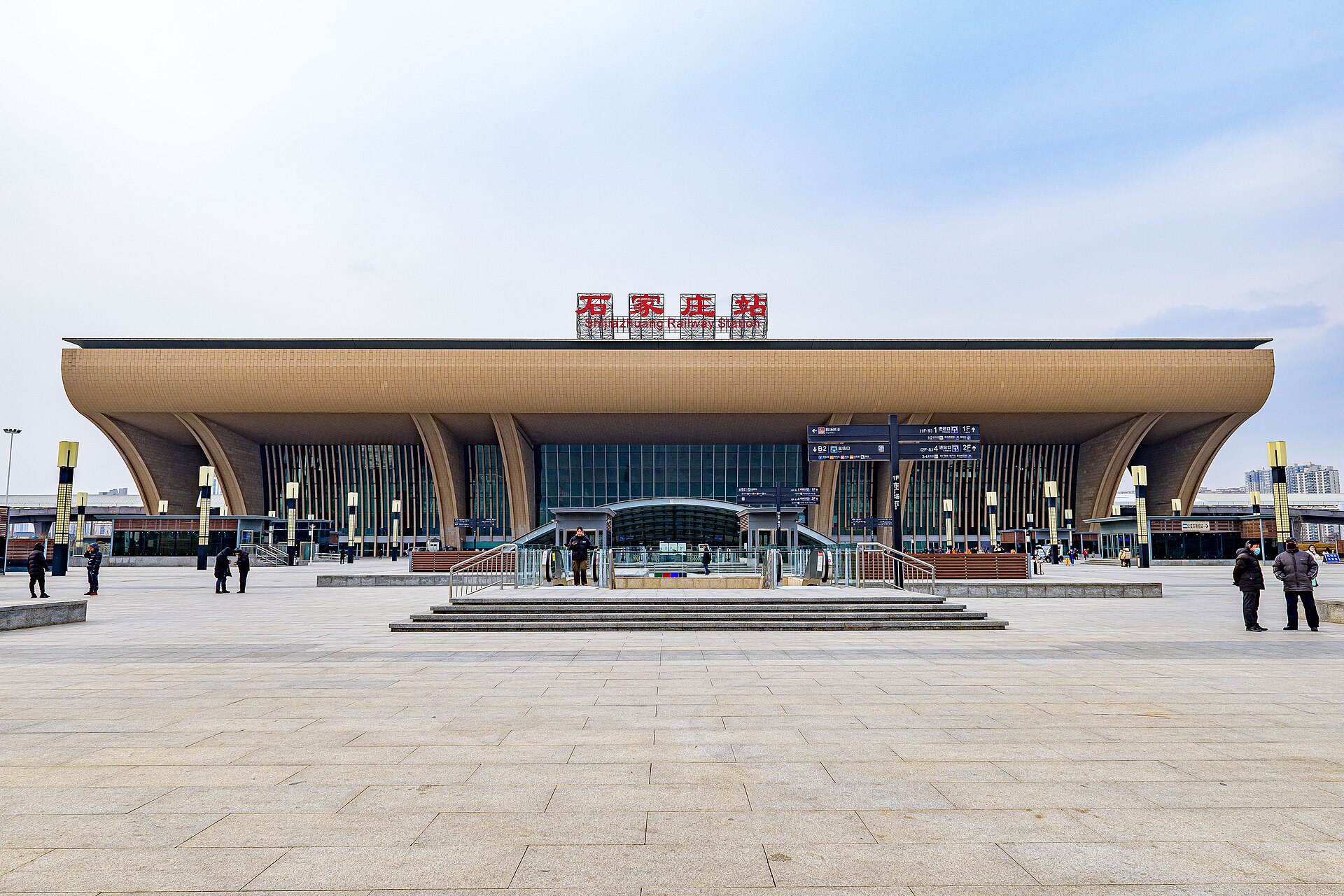
The high-speed train hisses to a halt at Shijiazhuang Station, and the blast of heated air from the platform hits you before you even step off the carriage. It is late autumn, the ginkgo trees lining Zhongshan Road have turned a sharp, bright yellow, and the smell of roasting sweet potatoes from a cart near Exit B cuts through the diesel fumes. Most travelers treat this city as a transfer point—a quick swap from the Beijing line to a bus bound for the mountains—but the ones who stay the night find a rhythm that has nothing to do with timetables.
Reading the Map Before You Move
Shijiazhuang spreads out flat and wide, gridded by broad avenues that make navigation deceptively simple on paper. The reality is a tangle of ring roads and construction detours that shift by the season. The city center clusters around the intersection of Zhongshan Road and Jiefang Street, where the old department stores still sell woolen socks next to smartphone cases. North of here, the districts thin out into Zhengding County within twenty minutes by car. Westward, the foothills of the Taihang Mountains rise toward Pingshan. If you are basing yourself here to hit the surrounding sites, book a hotel near the North Railway Station or the Metro Line 1 terminus—both put you on the expressway north before the morning rush chokes the Second Ring Road.
The Northern Loop: Pagodas, Walls, and a Temple That Breathes
Zhengding is the reason you came. The county town sits inside a rammed-earth wall that has survived Mongols, warlords, and the Cultural Revolution. You enter through the South Gate just as the morning market is packing up—vendors folding tarps over stacks of persimmons and bundles of firewood. The target is Longxing Temple, but the approach matters. Walk the length of the wall top first. From up there you see the layout: a dense knot of grey-tile roofs, the pagoda of Linji Temple stabbing the sky, and beyond them, the plain stretching to the horizon.
Inside Longxing, the Moni Hall is the showstopper. A rotating wooden sutra cabinet sits in the center, its gears still turning smoothly after eight centuries. The attendant monk will demonstrate it if you ask quietly; do not touch the mechanism yourself. The bronze Buddha in the Dabei Pavilion stands twenty-two meters tall, cast in sections and assembled inside the hall. Light falls through high windows onto its face at specific hours—mid-morning in the tenth lunar month is one of them. Sit on the stone steps until the tour groups move on. The air smells of sandalwood, cold stone, and the faint metallic tang of the ancient bells hanging in the courtyard.
West to the Mountains: Glass, Water, and a Cave
The drive to Pingshan takes ninety minutes on a good day, longer when the weekend crowds clog the mountain passes. The target is the Tuoliang scenic area, but the famous glass bridge is only the headline. The real draw is the hiking trail that follows the ridge behind the visitor center. Start early, before the shuttle buses begin their loop. The path climbs through stands of Chinese pine and oak, crossing streams that feed the reservoir below. In the tenth lunar month, the maples turn a deep, bruised red against the grey rock.
The bridge itself is a test of nerve. It spans a gorge where the wind funnels hard enough to rattle the tempered glass panels. Locals walk it fast, phones tucked away. Tourists creep, gripping the rail. If the queue exceeds forty minutes, skip it and take the side trail to the waterfall—an hour round trip, mostly downhill, ending at a pool where the water stays cold enough to numb your fingers in seconds. Pack instant noodles and a thermos; the mountaintop restaurant serves overpriced fried rice that tastes of reused oil.
The Revolutionary Pilgrimage: Xibaipo
An hour further west, the valley opens into Xibaipo. This was the Communist Party headquarters for the final push toward national victory, a cluster of mud-brick courtyards where leaders slept on kang beds heated by straw fires. The memorial hall is modern, air-conditioned, and heavy on multimedia displays. The original site sits behind it, preserved under a corrugated steel canopy. You can peer into the room where the “Two Musts” were drafted—simple wooden desks, a map pinned to the wall, a charcoal brazier in the corner.
School groups arrive in waves, matching red scarves bright against the grey bricks. They recite passages in unison, voices echoing off the courtyard walls. Stand back and watch the guides herd them. The solemnity is performed, but the history is real. An elderly volunteer in a faded Mao suit will sometimes sit near the old well, willing to talk if you approach alone. He remembers carrying water here as a boy. His hands are cracked and dark. Listen. Do not record without asking.
Eating Where the Drivers Eat
Back in the city, skip the hotel buffet. Follow the taxi drivers to the alley behind the Hebei Provincial Museum. A row of storefronts with steaming metal vats serves donkey meat sandwiches—roujiamo, but with shredded, braised donkey instead of pork. The bread is baked in a clay oven set into the counter, crisp on the outside, steaming within. The meat falls apart in dark, soy-stained strands, topped with cilantro and a spoonful of chili oil that carries the numbing heat of Sichuan peppercorns. Eat standing at the stainless steel counter. A bowl of kelp-thread salad on the side cuts the grease.
For a sit-down meal, order the “Four Great Dishes” of the local Hui cuisine: braised beef tendon with radish, stir-fried kidney flower with scallions, steamed gluten puffs stuffed with minced mutton, and a clear soup of winter melon and dried shrimp. The tendon should wobble on the chopsticks, the radish translucent from long stewing. The kidney flower—actually pork kidney scored and blanched—must be cooked exactly ninety seconds; any longer and it turns rubber. The gluten puffs arrive swollen like balloons, bursting with juice when pierced. The soup is the palate cleanser, sweet from the melon, salty from the shrimp.
- Donkey sandwich: clay-oven flatbread, braised donkey meat, cilantro, chili oil, Sichuan pepper.
- Braised tendon: beef tendon, white radish, star anise, cassia bark, soy sauce, rock sugar.
- Kidney flower: pork kidney, scallions, ginger, cooking wine, salt, vegetable oil.
- Stuffed gluten: gluten puffs, minced mutton, ginger, soy sauce, sesame oil.
- Winter melon soup: winter melon, dried shrimp, ginger, scallions, salt, white pepper.
Moving Around Without Losing Time
The metro has three lines now, clean and on time, but it does not reach the outer counties. For Zhengding, take the suburban S-train from the North Station—twenty minutes, departs every half hour. For Pingshan and Xibaipo, you need wheels. Hire a driver for the day rather than relying on ride-hailing apps; the mountain roads have dead zones where no signal penetrates. A reliable driver knows which village restaurant has fresh tofu that week and which mountain pass is closed for rockfall. Negotiate the price the night before over WeChat. Include waiting time. Tip with cigarettes or a good thermos of tea, not cash.
If you must self-drive, rent from the agency at the high-speed rail station. They provide a temporary plate and a GPS preloaded with English voice guidance. Check the tires and the spare before you leave the lot. The expressways are toll-heavy; keep small denomination cash for the booths that do not accept mobile pay. Fuel up in the city—mountain stations charge a premium and often run dry on holidays.
Mistakes That Cost You a Day
First: assuming the high-speed station and the North Station are walkable. They are five kilometers apart across a construction zone with no pedestrian path. Take a taxi or the subway transfer. Second: arriving at Longxing Temple after 3 p.m. in the tenth lunar month. The Moni Hall demonstration ends at 4, and the last entry to the Dabei Pavilion is 4:30. The gates lock at 5 sharp. Third: wearing city shoes on the Tuoliang ridge trail. The stone steps are polished slick by millions of soles; a sudden frost turns them to ice. Fourth: skipping the Xibaipo village site because the memorial hall “covers it.” The hall tells the official story. The village tells the human one. Fifth: ordering the donkey sandwich “without spice.” The chili oil is not a condiment; it is the preservative that keeps the meat safe in the unheated vats. Without it, the vendor will refuse the sale, and rightly so.
Stay three nights. One for the city, one for the northern loop, one for the western mountains. Wake early. The light on the pagodas at dawn is the only thing that runs on schedule here.