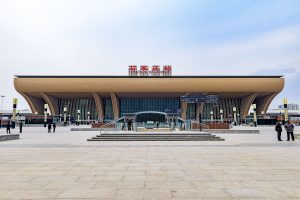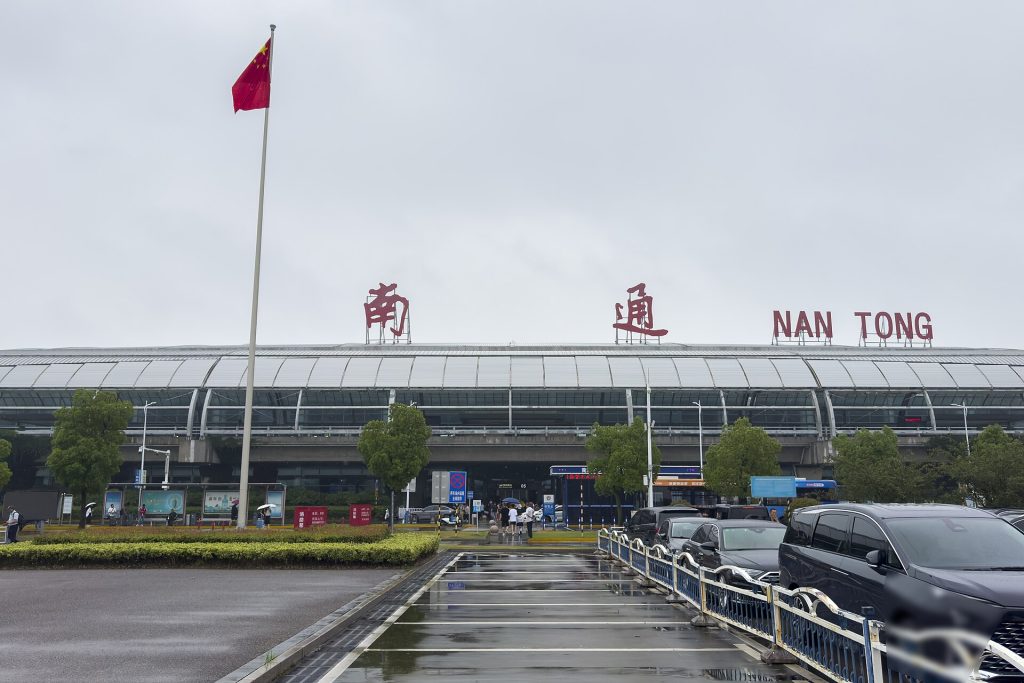
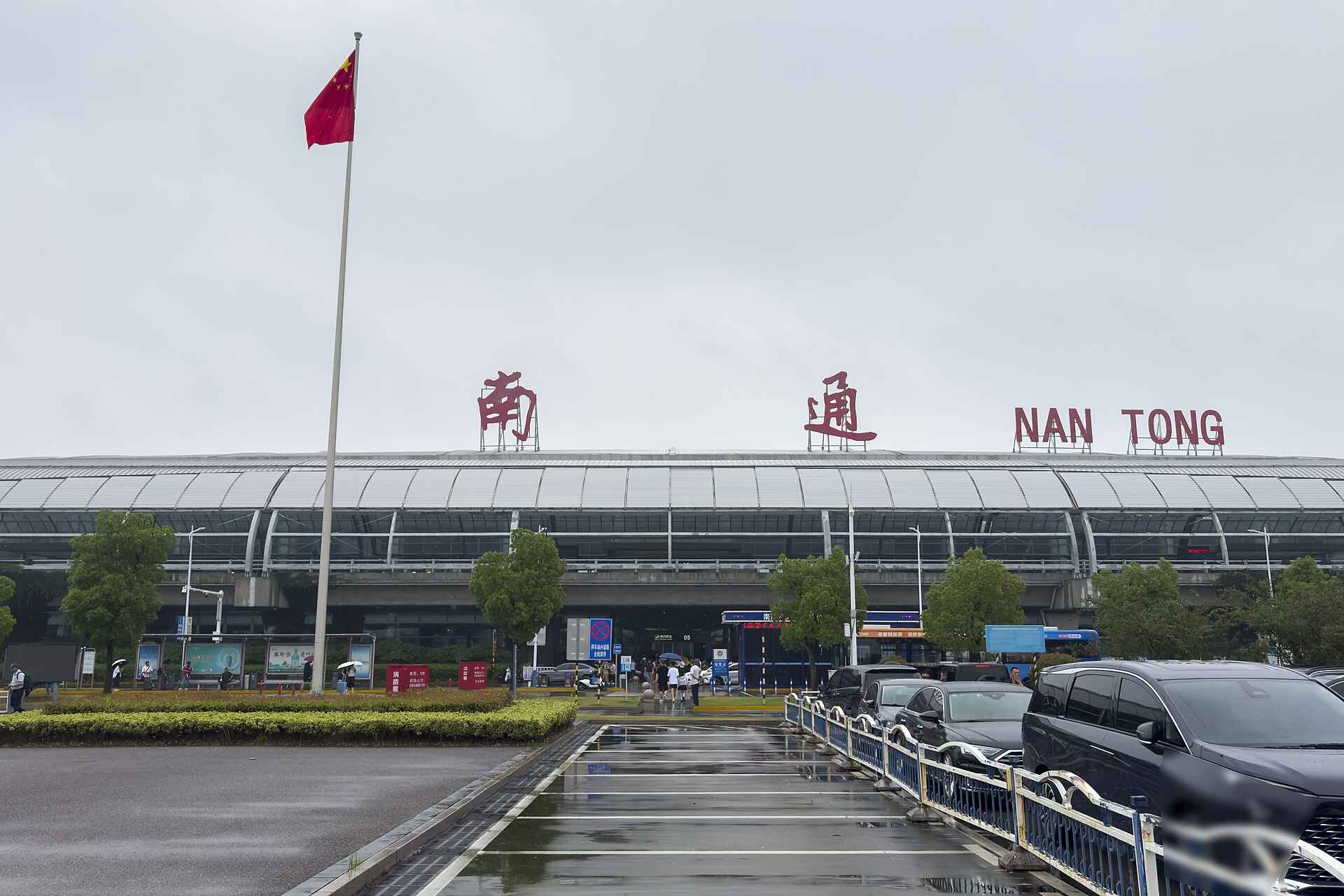
The high-speed train from Shanghai Hongqiao slides across the Yangtze on a bridge that feels like it never ends. On a clear autumn morning you can see cargo ships lined up like beads below, the river wide and gray-green, the far bank lost in mist. Twenty minutes later the train brakes at Nantong West, and the station’s vaulted roof funnels you straight into a taxi queue that smells of diesel and steamed buns.
Getting there without the guesswork
Most visitors come from Shanghai. The fastest way is the G-series train from Hongqiao or Shanghai Railway Station — thirty-five minutes to Nantong West, fifty to the older Nantong Station near the city center. Trains run every twenty minutes from early morning until late evening. If you land at Pudong, the airport express bus to Nantong takes about two hours and drops you at the long-distance bus hub on Renmin Road. Driving yourself? Take the G40 expressway; the Sutong Bridge toll is around ninety yuan each way, and the bridge deck gives you the best river panorama in the region.
- High-speed rail: Shanghai Hongqiao → Nantong West, 35 min, ¥70–¥120 second class.
- Airport bus: Pudong T1/T2 → Nantong Bus Terminal, 2 hr, ¥100–¥130.
- Self-drive: G40 via Sutong Bridge, 1.5 hr from Hongqiao, toll ¥90.
Where to drop your bag
The most convenient zone is the rectangle bounded by the Haohe River moat, Renmin Road, and the railway line. Inside this loop you’re a ten-minute walk from the museum, the garden, and the night market. I stayed in a renovated shikumen courtyard on Xiaohe Street — blue brick, wooden lattice, a tiny koi pond in the atrium. The hostess left a thermos of ginger tea on the windowsill every dawn. Chain hotels cluster around Nantong West station if you prefer elevators and English-speaking front desks; boutique guesthouses hide in the alleys behind the Confucian Temple. Book early during the spring kite festival; rooms vanish a month ahead.
Two days on foot and ferry
Start at the Haohe moat at first light. The water is still, reflecting willow fronds and the stone arches of the five ancient gates. Rent a shared bike — scan the QR on the handlebar, deposit twenty yuan — and circle the entire 13-kilometer loop. You’ll pass the textile museum where a working loom clatters, the former British consulate with its red brick chimneys, and a cluster of centenarian plane trees that shade chess players. Stop at the north gate for a bowl of hand-pulled noodles in pork-bone broth, the noodles springy enough to bounce a coin.
Mid-morning, cross the river on the passenger ferry from Langshan Wharf. The ride costs two yuan and lasts twelve minutes. On the far bank, Wolf Mountain (Langshan) rises steep and green. The paved path to the summit takes forty minutes; monks in saffron robes sweep the steps with bamboo brooms. From the top you see the Yangtze splitting into silver threads around sandbars, the port cranes moving containers like matchboxes. Descend by the same path or take the cable car down if your knees protest.
Afternoon calls for the Nantong Museum Garden, China’s first public museum, founded by Zhang Jian in 1905. The grounds blend classical Suzhou-style rockeries with a neoclassical exhibition hall. Inside, a hall of blue-print cloth (lan yin hua bu) shows indigo patterns that once clothed half the delta. Try the rubbing station: lay rice paper on a carved block, tap ink with a cotton pad, peel back a souvenir you made yourself.
Evening drifts toward the Xiaohe Street night market. Smoke curls from grills skewering river shrimp brushed with garlic-chili paste. Order a plate of “drunken crab” — raw crab marinated in Shaoxing wine, ginger, and salt — and a steamer basket of xiaolongbao with crab roe that bursts hot and sweet. Locals wash it down with yellow rice wine served in tiny porcelain bowls. Find a plastic stool, toast the neon lanterns, and watch kite vendors test-fly diamond shapes that glow like fireflies.
What locals expect (and what trips you up)
Nantong people speak a Wu dialect that sounds softer than Shanghainese but shares the same clipped vowels. Mandarin works everywhere, yet a few dialect words earn smiles: “mō” for “eat,” “xiǎo” for “little” (used as a term of endearment). Queueing at the ferry is loose; bodies press forward like tide. Hold your ground politely — elbows out, eyes forward — and you’ll board fine. Tipping is not customary; rounding up the taxi fare by a yuan or two is plenty.
The biggest rookie mistake is treating Nantong as a day trip from Shanghai. You’ll miss the river light at dusk, the morning chant from Wolf Mountain’s temple, the way the moat turns gold when the plane trees drop their leaves in late autumn. Another error: assuming the textile market on Heping Road sells only factory bolts. The second floor hides tailors who can cut a custom qipao in an afternoon if you bring fabric and a photo. Bring cash for the market; many stalls still don’t take WeChat Pay from foreign cards.
Seasonal rhythms worth timing
The kite festival rises with the east wind in the third lunar month — usually April. Families flood the riverside park, strings humming, the sky a mosaic of centipedes, dragons, and phoenixes. Summer brings plum rains; the moat overflows, and the air turns thick. If you visit then, carry a compact umbrella and eat cooling mung-bean soup from street carts. Autumn, especially the ninth lunar month, paints the ginkgo avenues along Renmin Road a pure yellow. Winter is quiet, misty, and the best time for hot-pot lamb in the alley behind the Confucian Temple — thin slices swirled in a copper pot, dipped in sesame-chili sauce, eaten while steam fogs your glasses.
Before you leave, walk the moat one last time at midnight. The water is black glass, the city lights doubled in reflection. A lone fisherman casts a net from a wooden skiff, the splash barely audible. That silence, broken only by a distant ship’s horn, is the Nantong nobody puts in brochures — and the reason you’ll come back.