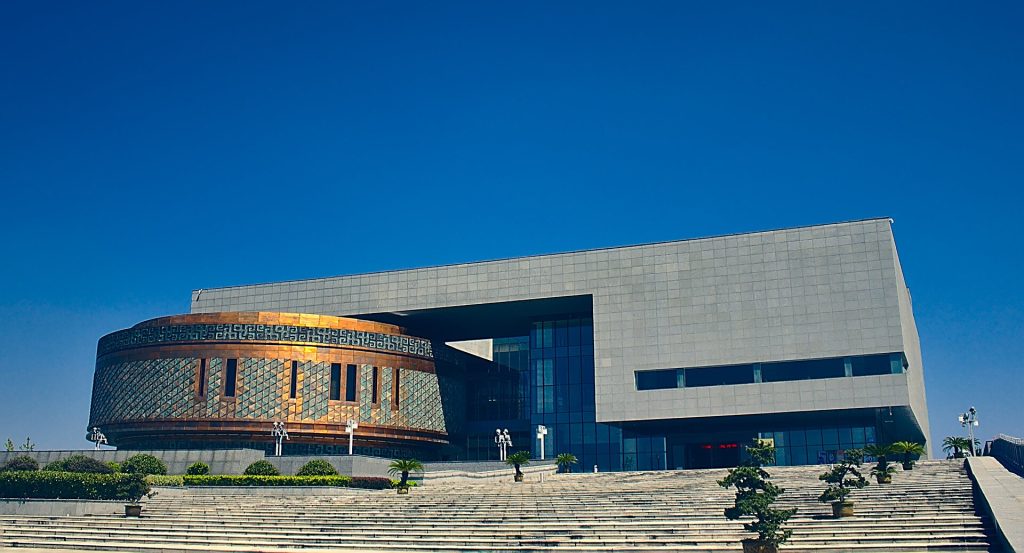
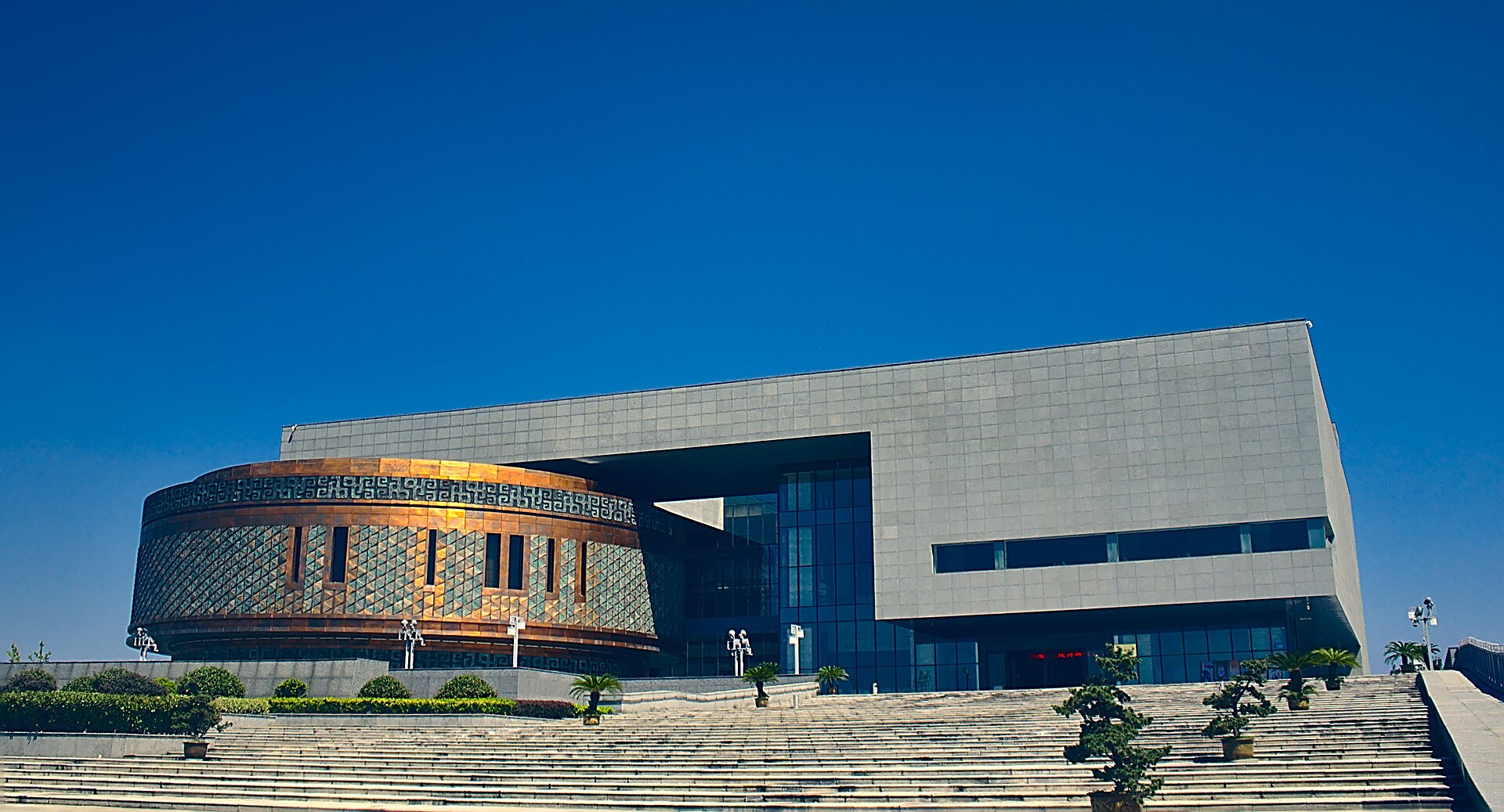
The copper smell hits you before you see the furnace. It’s a metallic tang, sharp and green, rising from the slag heaps behind the Tongling Museum on a humid spring morning. I stood there with a thermos of tea, watching a tour group of retirees from Hefei argue over which dynasty a particular bronze ding belonged to, while a kid poked at a chunk of malachite with a stick. That contrast — heavy industry and quiet river life — is the city in a nutshell.
Getting There and Getting Around
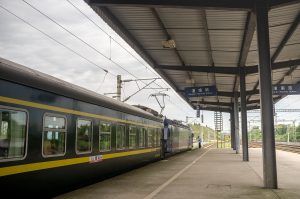
High-speed rail is the only sane way to arrive. The station sits on the northern edge of the urban area, a twenty-minute taxi ride from the old copper districts. Trains from Nanjing take just over an hour; from Shanghai, about three. If you’re coming from Huangshan or Jiuhuashan, the slow train still runs on the old line and drops you closer to the river, but it adds hours. Once in town, the public bus network connects the museum, the university campus, and the river park, but the stops are only announced in Mandarin and the local dialect. I learned to screenshot the Chinese characters for my destination and show them to the driver. Didi works fine, though drivers sometimes cancel if the pickup is down a narrow alley in the older neighborhoods. Renting a shared e-bike via the Meituan app is faster for short hops — just scan the QR code on the handlebar and watch for the silent electric scooters coming the wrong way down one-way streets.
The Copper Trail: Museums and Mine Sites
Start at the Tongling Museum on Changjiang Road. The building looks like a stack of oxidized copper plates, and inside the air conditioning fights the humidity. The star pieces are the Shang Dynasty bronze vessels excavated from Tongguanshan — thin-walled, intricately cast, with taotie masks that seem to follow you. Labels are bilingual, but the English captions skip the metallurgical details. Ask for the audio guide; the narrator explains how ancient smelters achieved temperatures high enough to separate copper from ore using only charcoal and bellows. Allow two hours.
Ten kilometers west, the Tongguanshan Ancient Mine Site sits behind a locked gate most days. You need to book a slot through the museum’s WeChat mini-program at least a day ahead. The guide walks you through a reconstructed shaft shored with timber, pointing out tool marks left by bronze chisels. The ground is still stained green. Wear closed shoes; the path is uneven and slick after rain. I went in late autumn when the ginkgo trees along the access road turned gold, and the contrast made the slag heaps look almost deliberate, like land art.
- Book the mine tour: Search “铜官山古矿遗址预约” in WeChat, select a morning slot, bring your passport for the QR code scan at the gate.
- Museum hours: Typically 9:00 to 17:00, closed Mondays. Last entry an hour before closing.
- What to bring: Water, a hat for the open-air mine site, and a mask if you’re sensitive to dust.
River Time: The Yangtze Bank and Datong Ancient Town
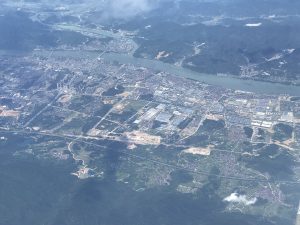
The city faces the Yangtze on its southern flank. The riverside park stretches for kilometers, paved with broad stones that absorb heat. In the evening, the promenade fills with square dancers, kite flyers, and old men fishing with long poles. I bought a skewer of grilled river shrimp — shells on, heads crisp — from a cart near the ferry dock and sat on a stone bench watching barges push upstream, their lights painting the water yellow. The ferry to the north bank still runs, mostly for trucks and commuters, but foot passengers can hop on for a few yuan. The crossing takes ten minutes and gives you the best view of the city’s skyline: the museum’s copper roof, the university’s white towers, the smokestacks of the still-operating smelter glowing at dusk.
Half an hour downstream by car, Datong Ancient Town clings to the river’s curve. Its main street is a slab of blue flagstone worn smooth by centuries of cart wheels and footsteps. The shops sell copper tea trays, bronze mirrors, and hand-hammered incense burners — tourist grade, but the workshop behind the showroom is real. I watched a master named Lao Chen beat a flat disc into a lotus-shaped bowl, the rhythm of his hammer steady as a heartbeat. He let me try; the copper sings when you strike it true. The town’s temple fair happens on the fifteenth day of the first lunar month. Lanterns hang from every eave, and the air thickens with incense and the smell of sugar-coated hawthorn sticks. If you’re there off-season, the streets are quiet enough to hear the river lapping the stone quay.
Eating: River Fish, Copper Pot Hotpot, and Street Snacks
Tongling cuisine leans on the Yangtze. The signature dish is copper pot hotpot — a wide, shallow vessel of beaten copper set over charcoal. The broth starts clear with ginger, scallion, and a splash of rice wine. You add slices of mandarin fish (guìyú), lotus root, tofu skin, and local greens. The copper conducts heat evenly, so the fish cooks in seconds, staying tender. Dip in a sauce of sesame paste, fermented bean curd, chili oil, and minced garlic. I ate the best version at a family-run place down a lane behind the People’s Hospital, where the broth has been topped up daily for twenty years. No English menu; point at the picture of the pot on the wall.
- Copper pot hotpot basics: Mandarin fish slices, lotus root, tofu skin, crown daisy greens, rice noodles. Broth: water, ginger, scallion, Shaoxing wine. Dip: sesame paste, fermented red bean curd, chili oil, garlic, cilantro.
- Ordering shorthand: “Yi guo tong guo huo guo, jia gui yu” — one copper pot, add mandarin fish.
- Street snack crawl: Grilled river shrimp (skewered whole), stinky tofu fried black and served with chili sauce, rice dumplings stuffed with red bean paste and steamed on lotus leaves.
Breakfast is a bowl of beef noodle soup from a stall near the train station — hand-pulled noodles, clear broth, a spoonful of chili oil, and a side of pickled mustard greens. Eat standing at a stainless steel counter; the broth wakes you faster than coffee.
Sleeping: Where to Drop Your Bag
Chain hotels cluster around the high-speed rail station and the university district — clean, predictable, and priced for business travelers. For atmosphere, look at the boutique guesthouses in Datong Ancient Town. They occupy restored Ming-Qing courtyard houses with tiled roofs and interior gardens. My room had a copper bathtub, reclaimed from an old factory, and windows that opened onto the flagstone lane. The owner, a woman who grew up in the town but worked in Shenzhen for a decade, serves breakfast on a lacquered tray: steamed buns, soy milk, and a tiny dish of fermented tofu. Book directly through her WeChat; the platforms take a cut and she’ll upgrade you to the courtyard suite if she likes your message.
If you prefer the river view, the Jiangbin Hotel on Binjiang Avenue has balconies facing the water. Ask for a high floor on the west side to catch the sunset behind the smelter stacks. The carpet smells of old smoke, but the windows seal tight.
Mistakes I Made (So You Don’t)
First, I assumed the mine site was open daily. It isn’t. The gate stays locked unless a group is booked. I showed up on a Wednesday in the plum rain season and waited an hour before a guard told me to check the WeChat calendar. Second, I tried to walk the entire river park in July at noon. The shade is sparse, the humidity wraps around you like a wet blanket, and the reflection off the water burns. Go early or late. Third, I ordered “stinky tofu” at a night market stall without specifying “fried.” They brought me a bowl of gray brine with soft cubes floating in it — the fermented version, eaten cold with rice. Not wrong, just not what I wanted. Specify “zhá chòu dòufu” for the crisp kind. Fourth, I paid a tout near the museum for a “private tour” of a closed smelter. He took my money and vanished. Official guides wear badges; anyone else is a gamble. Last, I forgot cash. The ancient town’s craft shops and food stalls still prefer paper yuan or Alipay/WeChat Pay linked to a Chinese bank card. International cards work at the big hotels and the station, but not at Lao Chen’s workshop.
Seasonal Rhythm
Spring brings the plum rains — weeks of drizzle that turn the slag heaps slick and the museum floors damp. The ginkgoes leaf out pale green. Summer is furnace-hot; the smelter runs night shifts and the river steams. Autumn is the sweet spot: clear skies, cool mornings, the ginkgoes turning gold along the mine access road, and the temple fair in Datong if the lunar calendar aligns. Winter is quiet, cold, and dry. The copper pot hotpot tastes best then, the charcoal warming your knees under the table. The museum stays open through the Spring Festival, but the mine site closes for two weeks. Check the WeChat mini-program before you commit.