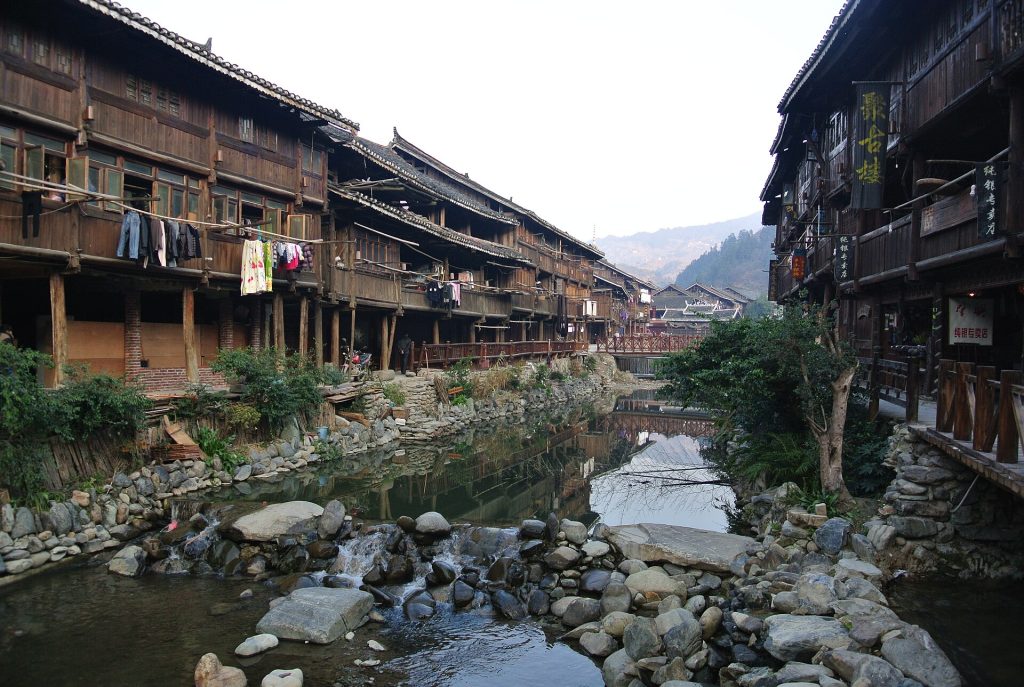
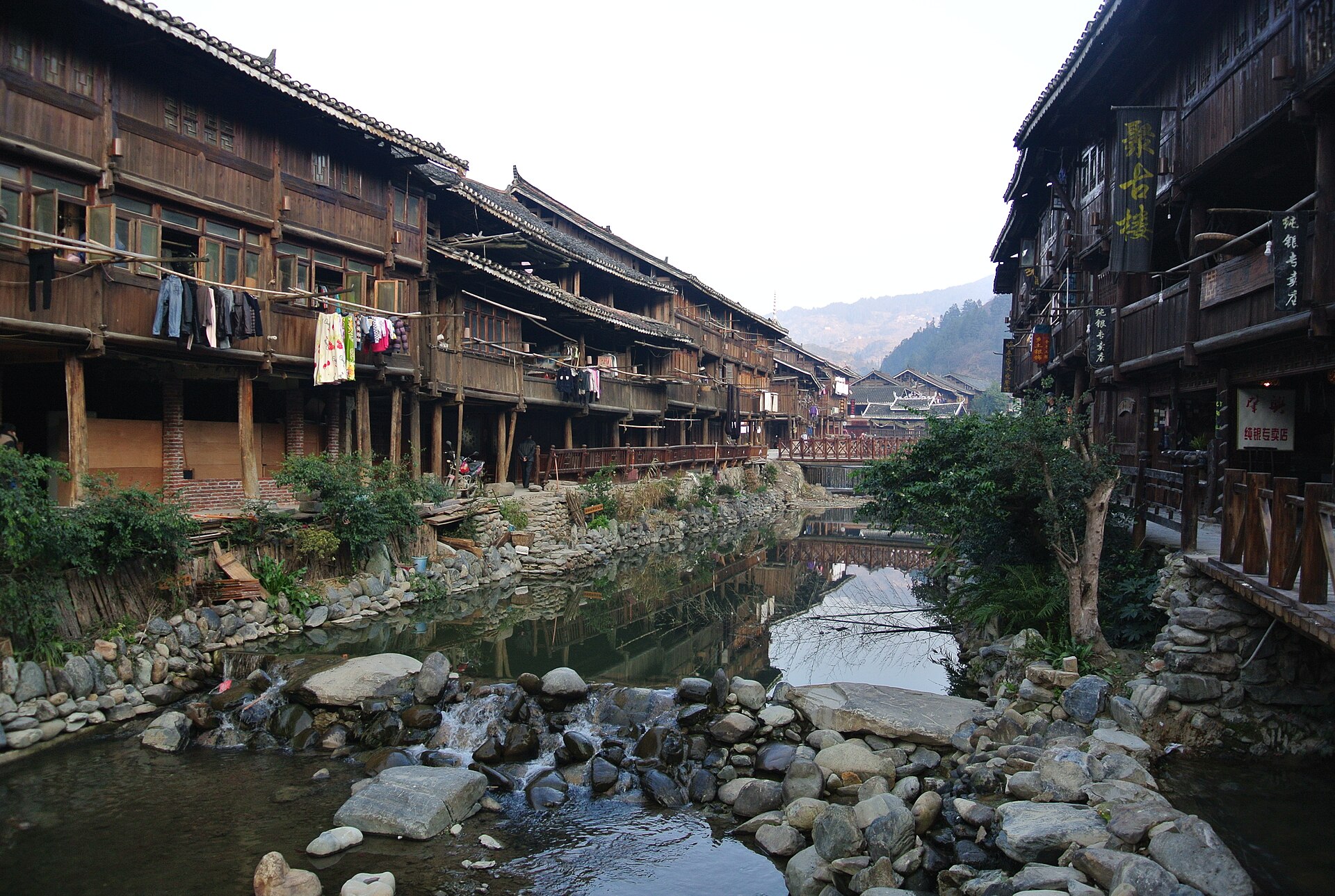
The minibus from Congjiang East station rattles over a cattle guard and suddenly the valley opens up. Five drum towers rise from the mist like wooden sentinels, their tiered eaves catching the last light. A stone arch bridge spans the river, its tiled roof sagging gently in the middle. You step off the bus onto a plaza of worn flagstones, the air thick with woodsmoke and the sour tang of fermenting rice. This is Zhaoxing — Shaoxing to the Dong grandmothers selling sticky rice bundles from bamboo baskets — and it feels less like a destination than a place that simply kept going while the world moved elsewhere.
Finding the Village
High-speed rail is the only sensible way in unless you have days to burn on mountain roads. The Guiyang–Guangzhou line stops at Congjiang and Rongjiang; Congjiang is closer. From the station forecourt, white minibuses with blue stripes wait beside a hand-painted sign. The driver shouts “Zhaoxing!” and gestures to the sliding door. Ten yuan, fifteen minutes. The road climbs through tunnels blasted from limestone, then drops into the valley through a gap in the hills. You pass Luoxiang — a sprawl of concrete and construction dust — before the pavement narrows to a single lane flanked by wooden houses.
The minibus stops at a ticket booth before the village proper. A woman in a blue vest takes your phone, scans a QR code, and hands back a paper receipt. Eighty yuan for the “scenic area” — the term still feels wrong for a living village. Keep the receipt; guards check it at the drum tower gates after dark. If you arrive on the last bus from Congjiang, around seven in the evening, the booth may be unattended. Walk through anyway. No one stops a traveler with a backpack at that hour.
Sleeping Above the River
Guesthouses cluster along the main cobbled lane that follows the river. Most are converted family homes: ground floor for pigs and firewood, upper floors opened to travelers. Look for a place with a balcony over the water. The sound of the river masks the karaoke from the restaurant across the way. Rooms are simple — tatami mats, a low table, a squat toilet down the hall — but the quilts are thick and the hosts wake before dawn to boil water for tea.
Book nothing in advance. Walk the lane at dusk when the tour groups have left for the nightly “bonfire party” (a staged performance for package tourists). Peek into courtyards. If you see an elderly woman sorting chilies on a bamboo tray, ask “You ke ma?” — have guests? She will lead you up steep stairs to a room that smells of cedar and dried corn. Pay cash in the morning. No receipts, no apps.
Eating What the Dong Eat
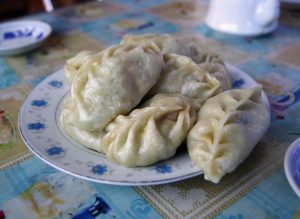
Dong cuisine is sour, spicy, and built on preservation. Every household keeps jars of pickled vegetables, fermented fish, and chili paste buried in the earthen floor. Breakfast is a bowl of rice noodles in broth sharpened with vinegar and crowned with fried peanuts. Lunch might be oil-tea — pounded tea leaves, ginger, and rice puffs stirred into a salty slurry — served with pickled bean curd and cold pig ear sliced paper-thin.
- Sour fish soup: whole river carp simmered with tomatoes, wild celery, and three-year pickled mustard greens. The broth turns milky white. Eat the meat off the bones with chopsticks; sip the broth from the bowl.
- Sticky rice bundles: glutinous rice wrapped in banana leaves with pork fat, chestnuts, and a dab of fermented bean paste. Steamed in a wooden barrel over coals. Unwrap the leaf like a present.
- Blood tofu cubes: congealed duck blood cut into squares, fried until the edges curl, then tossed with garlic chives and dried chili. Slippery, iron-rich, addictive.
Order by pointing. Most menus are photo-only, captions in Chinese. Find a family restaurant where the kitchen opens onto the lane — you’ll see the wok toss, smell the garlic hit oil. Sit on a plastic stool. A bowl of sour fish soup and two rice bundles feeds two people. Pay when you leave; the owner calculates on a calculator worn smooth by thumbs.
Walking the Drum Towers
Five drum towers anchor the village, one for each clan: Zhen, Wu, Luo, Zhao, and Chen. They are not museums. Elders sit on the ground floor playing cards, spitting sunflower seeds into the gaps between floorboards. The upper levels store grain and festival costumes. Climb the notched log ladder of Zhen tower — the tallest — just before sunset. The view stretches over grey-tiled roofs to the rice terraces marching up the hillsides.
Wind-and-rain bridges connect the banks. The longest, Chengyang-style but smaller, has benches built into its rafters. Old men nap there in the heat of the day, fanning themselves with palm-leaf fans. Cross at night when lanterns glow red through the latticed windows. The river reflects the light in broken columns. You will hear singing before you see the singers — grandmothers in indigo headscarves, voices threading through the rafters in polyphonic Dong choruses. No amplification. No tickets. Just songs passed down without notation.
What Newcomers Get Wrong
They come for the “ancient village” photo and leave before the morning market. The market — set up on the main lane every third day by the lunar calendar — is where the village actually lives. Women from surrounding hamlets arrive before light, balancing baskets on shoulder poles: live eels in blue tubs, bundles of wild fern shoots, stacks of indigo-dyed cloth. They squat on their heels, bargaining in Dong language, money changing hands folded into cigarette packets. Go. Buy a handful of fried soybeans wrapped in newspaper. Eat them walking.
They treat the drum towers as climb-and-tick attractions. The towers belong to clans. Enter quietly. Do not touch the drum unless invited. Do not photograph the ancestral tablets on the upper floor. A sign in Chinese warns against “uncivilized behavior” — but the real rule is simpler: this is someone’s living room.
They expect English. The under-thirty crowd speaks Mandarin and maybe a few words of English from TikTok. The elders speak only Dong. Learn three phrases: “Ga bai” (thank you), “Mo lao” (excuse me), “A ni hao” (hello, respectful). Write “肇兴” on your phone to show taxi drivers. Write “Shaoxing” in pinyin for the minibus driver at Congjiang station — he reads the characters, not the sound.
They stay one night. The village reveals itself in the hours between tour buses. Dawn, when mist clings to the terraces and the first rooster cracks the silence. Mid-afternoon, when the lane empties and you can hear a woman pounding rice in a stone mortar three courtyards away. The night the power fails and the whole village sits by candlelight, someone starts a song, and twenty voices answer. That is Zhaoxing. Not the bridges. Not the towers. The singing in the dark.