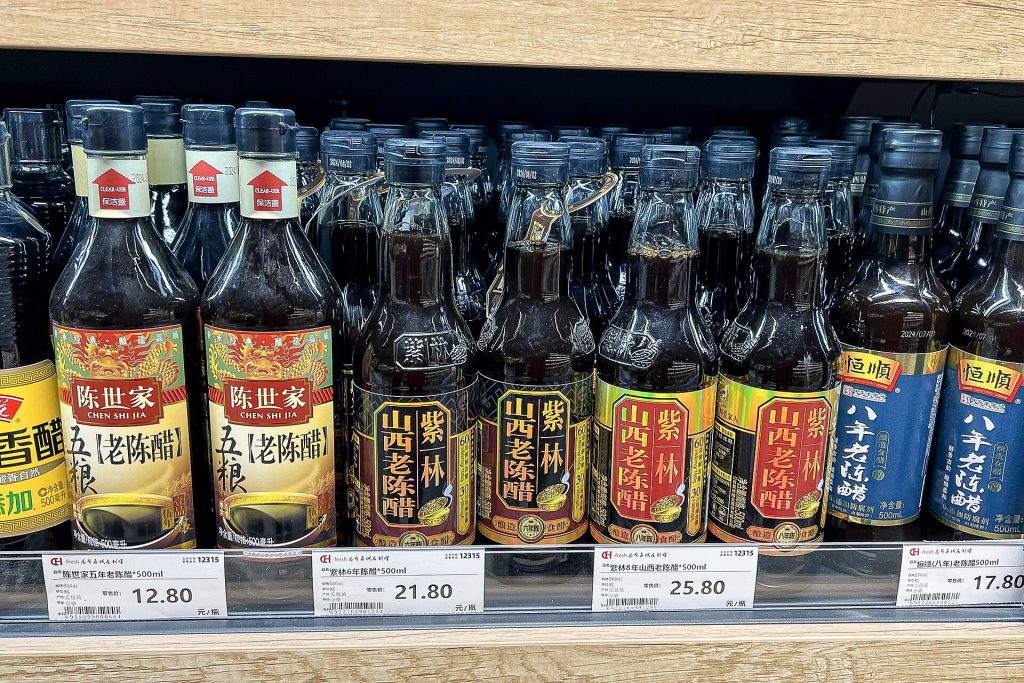
On almost every dumpling table in China there is a small pot or bottle of dark vinegar. It’s 醋 (cù), and for many Chinese diners a plate of dumplings without it is unthinkable. Shanxi province is famous across China for its love of vinegar; in Shanghai and Suzhou, a dish of vinegar with shredded ginger comes with soup dumplings and hairy crab.
Outside China, “Chinese black vinegar” usually means one of two famous types: Shanxi aged vinegar (山西老陈醋) and Zhenjiang vinegar (镇江香醋, also spelled Chinkiang). This guide explains how they differ, how to use them when you eat in China, and what to look for if you want to bring a bottle home.
What is Chinese black vinegar?
Unlike Western vinegars made from wine, cider or malt, traditional Chinese vinegars are brewed from grains and fermented in solid form — a mash of grain and husks — rather than only as a liquid. The long fermentation and ageing give a dark colour, a mellow sourness and savoury, malty or smoky notes.
China often speaks of its “four famous vinegars”. Lists vary slightly, but they usually include Shanxi aged vinegar, Zhenjiang vinegar, Sichuan’s Baoning vinegar from Langzhong, and a Fujian red-yeast vinegar. The first two are the ones you’ll meet most often.
Shanxi aged vinegar (山西老陈醋)
Where: Shanxi province in northern China, with its traditional centre in Qingxu county south of Taiyuan.
Made from: mainly sorghum. China’s intangible cultural heritage register describes Qingxu aged vinegar as made from locally grown red sorghum with bran and husks, fermented with a daqu starter, then smoked (熏醅) and aged.
Flavour: strong, deep and slightly smoky, with a sharp but rounded sourness. The heritage register notes its folk nickname, 透瓶香 — “fragrant right through the bottle”.
Status: “Qingxu aged vinegar brewing technique” was listed in China’s first batch of national intangible cultural heritage in 2006. Shanxi’s provincial congress also passed a law protecting the product. The Paper reported in 2021 that the Shanxi Aged Vinegar Protection Regulations, in force from 1 January 2022, require traditional methods, ageing for more than 12 months, and no food additives such as preservatives.
Use it with: northern wheat foods. In Shanxi, vinegar goes on knife-cut noodles, dumplings and almost everything else. It’s also used in sweet-and-sour dishes and cold salads.
Visit: vinegar shops and factories near Taiyuan offer tastings. Combine with our Taiyuan and Pingyao trip guide or a visit to Jinci Temple.
Zhenjiang vinegar (镇江香醋)
Where: Zhenjiang, a city on the Yangtze in Jiangsu province, between Nanjing and Yangzhou.
Made from: glutinous rice. According to the national heritage register, Zhenjiang Hengshun vinegar dates from 1840 and is made from high-quality glutinous rice, first fermented into a rice wine with a wheat-based starter, then fermented in solid layers with wheat bran and rice husks. The register says the process involves more than 40 steps and takes more than 60 days before storage, after which the vinegar is aged in clay jars outdoors for at least six months and up to eight years.
Flavour: the register sums it up as “sour but not harsh, fragrant and slightly sweet” (酸而不涩,香而微甜). Compared with Shanxi vinegar it is lighter, sweeter and more aromatic.
Status: “Zhenjiang Hengshun aromatic vinegar brewing technique” was also listed as national intangible cultural heritage in 2006. “Zhenjiang Xiang Cu” is a protected geographical indication in China and was registered as a PGI in the European Union in 2012.
Use it with: Jiangnan food. It’s the classic dip, with shredded ginger, for xiaolongbao, shengjianbao and hairy crab, and it gives many sweet-and-sour Jiangsu and Zhejiang dishes their tang.
Visit: combine Zhenjiang with nearby Yangzhou; see our Zhenjiang first-timer guide.
Shanxi vs Zhenjiang at a glance
- Main grain: Shanxi — sorghum; Zhenjiang — glutinous rice
- Taste: Shanxi — stronger, smoky, sharper; Zhenjiang — lighter, sweeter, more fragrant
- Region of use: Shanxi — north China, noodles and dumplings; Zhenjiang — Jiangnan, soup dumplings and crab
- Label words: 老陈醋 (aged vinegar) vs 香醋 (aromatic vinegar)
Either works as a dumpling dip. If a recipe calls for “Chinkiang vinegar”, Zhenjiang is the one; if it calls for “Shanxi mature vinegar”, choose a bottle labelled 山西老陈醋.
How to use vinegar at the table in China
- Dumplings: pour a little vinegar into your dish, add chilli oil or garlic if you like. Our jiaozi guide covers etiquette.
- Soup dumplings: vinegar with ginger shreds, then nibble the skin and sip the soup.
- Noodles: a splash brightens beef or wheat noodles. In Shanxi, ask for 多放醋 (duō fàng cù, more vinegar).
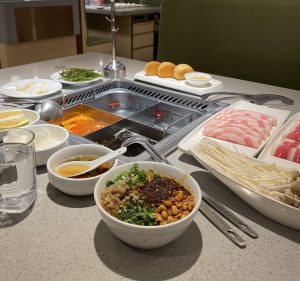
- Hot pot: some people add vinegar to a soy-garlic dip. See hot pot broth bases explained.
Phrases: 醋 (cù) vinegar; 有醋吗? (yǒu cù ma?) is there vinegar?; 姜丝 (jiāng sī) ginger shreds.
A cultural note: 吃醋 (chī cù), literally “eating vinegar”, is slang for being jealous, so don’t be surprised if a friend laughs when you ask for more.
Reading a vinegar label
On Chinese vinegar bottles, look for:
- The product name: 山西老陈醋 or 镇江香醋. Generic 陈醋 or 香醋 from elsewhere is a different product.
- Brewing method: 酿造食醋 means brewed vinegar. Some cheaper products are blended (配制食醋), made from brewed vinegar mixed with acetic acid.
- Acidity: listed as 总酸 (total acid), in grams per 100 ml.
- Ingredients (配料): Zhenjiang-style vinegars often list wheat or bran; check if you avoid gluten. Our gluten-free China guide explains more.
- Geographical indication marks on genuine regional products.
Buying vinegar to take home
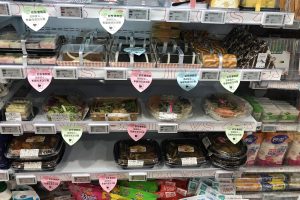
Supermarkets in every Chinese city sell both types. Bottles are glass and heavy, so wrap them well in checked luggage. Liquids over 100 ml can’t go in carry-on bags at airport security. Check your home country’s customs rules for food; vinegar is generally low-risk, but rules vary. For other things to buy, see our supermarket guide.
Health notes
Vinegar has a long history in Chinese folk medicine, and you will hear many health claims. Treat them with caution. Vinegar is acidic, so people with reflux or sensitive teeth may want to go easy. Some brands add sugar or salt — check the label.
FAQs
What is Chinese black vinegar called? 醋 (cù). The two main types are 山西老陈醋 (Shanxi aged vinegar) and 镇江香醋 (Zhenjiang aromatic vinegar).
Is Chinkiang vinegar the same as Zhenjiang vinegar? Yes. Chinkiang is an older spelling of Zhenjiang.
Which is better for dumplings? Both. Northerners often use Shanxi aged vinegar; in Shanghai and Jiangsu, Zhenjiang vinegar with ginger is standard.
Is Chinese black vinegar gluten-free? Not reliably. Many traditional recipes use wheat bran, barley or wheat starters.
Can I substitute balsamic vinegar? In a pinch, but the taste is different — sweeter and fruitier.
Does Chinese vinegar go off? It keeps well when sealed. Store it in a cool, dark place.
Before you go
On your next dumpling stop, taste the vinegar on its own first. In the north it’ll probably be Shanxi aged vinegar, in Jiangnan probably Zhenjiang. Once you can tell them apart, you’ll understand why so many Chinese kitchens keep both.
Sources
- China Intangible Cultural Heritage Network (ihchina.cn), “清徐老陈醋酿制技艺” (Qingxu aged vinegar brewing technique, item VIII-61, first national batch 2006).
- China Intangible Cultural Heritage Network (ihchina.cn), “镇江恒顺香醋酿制技艺” (Zhenjiang Hengshun aromatic vinegar brewing technique, item VIII-62, first national batch 2006).
- The Paper (thepaper.cn), report on the Shanxi Aged Vinegar Protection Regulations, October 2021.
- Commission Implementing Regulation (EU) No 501/2012 of 13 June 2012, entering “Zhenjiang Xiang Cu” (PGI) in the EU register.
Lovely China was founded in 2025 to publish practical English guides for travellers and expats in China. Questions or a broken link? Email [email protected].
Cover photo: N509FZ / Wikimedia Commons (CC BY-SA 4.0).