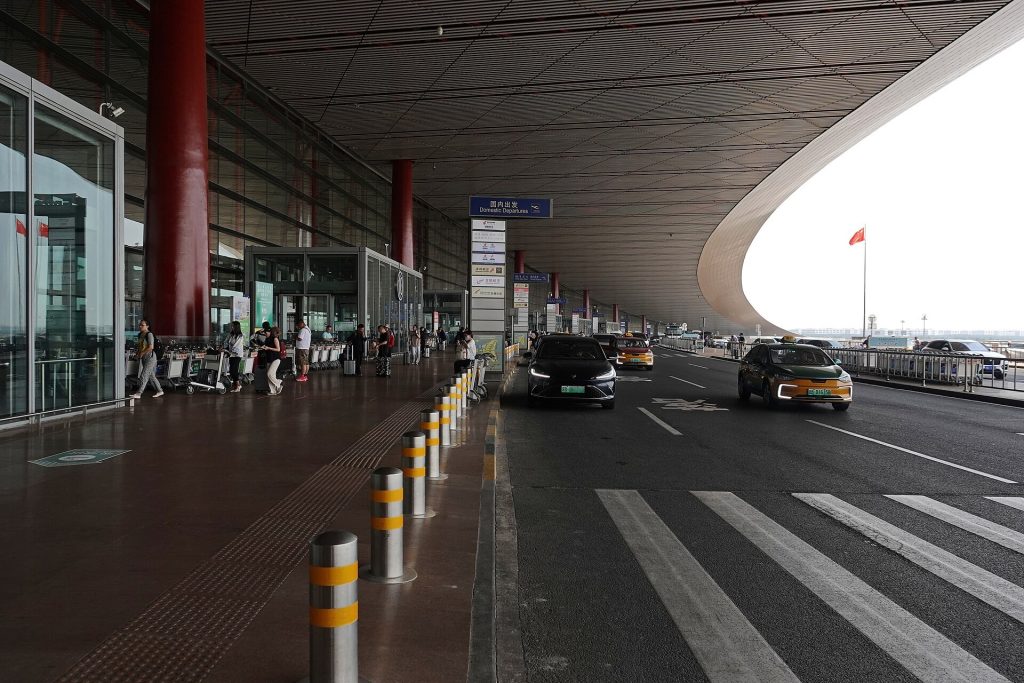
China’s immigration landscape has evolved dramatically, shifting from restrictive entry frameworks to some of the most flexible transit-without-visa (TWOV) policies in the world. Leading this transformation is the expanded 240-hour (10-day) visa-free transit policy administered by the National Immigration Administration (NIA). Replacing or upgrading older, more restrictive regional schemes—such as the legacy 72-hour and traditional China 144-Hour Visa-Free Transit: Who Qualifies and How to Use It frameworks—this 10-day option gives international travelers significantly more breathing room to explore multiple cities, handle short-term business, or enjoy an extended stopover. For travelers weighing their options alongside the broader China 30-Day Visa-Free Entry in 2026: Which Countries Qualify and the Rules, understanding the mechanics, rules, and restrictions of the 240-hour transit scheme is essential for a seamless journey.
—
What Is the 240-Hour Visa-Free Transit Policy?
The 240-hour visa-free transit policy allows eligible foreign nationals holding ordinary passports to enter mainland China through designated ports of entry and stay for up to 10 days (240 hours) without obtaining a visa in advance. Crucially, this is a transit policy, meaning it is strictly meant for travelers passing through China from one country (or region) to a third country (or region).
How the 240 Hours Are Calculated
According to official National Immigration Administration guidelines, the 240-hour permitted stay does not start the moment your plane touches down. Instead, the calculation begins at 12:00 a.m. (midnight) on the day following your entry.
* Example: If you land in Shanghai on the afternoon of November 1, your official 240-hour counter starts at 12:00 a.m. on November 2, maximizing your actual time on the ground.
—
Who Qualifies? Eligible Countries
As of late 2026, nationals from 57 countries are eligible for China’s 240-hour visa-free transit policy. Recent updates have continued to expand this list—including the inclusion of countries like Kyrgyzstan and Vietnam. Eligible nationalities typically span:
* North & South America: United States, Canada, Brazil, Mexico, Argentina, Chile
* Europe: Members of the Schengen Area, UK, Ireland, Russia, and several other European nations.
* Oceania: Australia, New Zealand
* Asia: Japan, South Korea, Singapore, Brunei, UAE, Qatar, Indonesia, Vietnam, Kyrgyzstan, etc.
(Note: Always check the official National Immigration Administration portal for the exact, real-time list of qualifying nationalities before booking flights.)
—
The Core Rule: The Third-Country Itinerary
To successfully utilize the 240-hour transit option, your travel pattern must strictly follow an A–China–B routing where A and B are distinct countries or regions.
* Qualifying Itinerary: Los Angeles (US) $\rightarrow$ Shanghai (China) $\rightarrow$ Tokyo (Japan). Your origin and destination are different countries.
* Qualifying Itinerary (Special Regions): New York (US) $\rightarrow$ Guangzhou (China) $\rightarrow$ Hong Kong or Macau. Hong Kong and Macau count as separate customs regions, meaning entering mainland China from abroad and exiting to HK/Macau (or vice versa) fulfills the third-region requirement.
* Non-Qualifying Itinerary: Sydney (Australia) $\rightarrow$ Beijing (China) $\rightarrow$ Sydney (Australia). This is considered a round-trip ticket to your origin and will be rejected by border control.
—
Step-by-Step Arrival Process: What Happens at the Airport
Navigating the transit-without-visa channel at a Chinese port of entry requires following a specific sequential workflow. Knowing what to expect reduces airport stress and ensures you clear immigration smoothly.
1. Check-In at Your Departure Airport: When checking in for your flight to China, airline agents (who are legally liable if you are denied entry) will examine your passport, third-country onward ticket, and visa status for your final destination. Ensure they issue your boarding pass all the way through and recognize the 240-hour TWOV scheme.
2. Filing the Temporary Arrival Card: Upon landing, follow signs for “Transit Without Visa” or “Temporary Entry.” Before reaching immigration counters, locate the designated filling desks to complete the Temporary Entry/Arrival Card for Foreigners.
3. Immigration Counter Inspection: Present your passport, confirmed onward ticket out of China within 240 hours, and your completed arrival card to the border officer. Be prepared to state your travel itinerary clearly if asked.
4. Temporary Entry Permit Stamping: Once approved, the officer will stamp a special temporary entry sticker or seal into your passport, indicating your authorized duration of stay and permitted geographic zone.
5. Baggage Claim and Customs: Collect your checked luggage, pass through customs green/red channels, and exit into the arrivals hall.
—
Permitted Ports of Entry and Geographic Travel Areas
Unlike standard visas that grant nationwide access, the 240-hour transit policy confines travelers to specific designated zones and entry ports managed across 24 provinces, municipalities, and autonomous regions (encompassing over 65 authorized ports, including major airports, seaports, and railway stations).
* Provincial-Level Access: In major regions like Beijing, Tianjin, Shanghai, Jiangsu, Zhejiang, Guangdong, and Hainan, travelers can move freely across the entire province or municipality boundaries. For instance, you can fly into Shanghai, take a high-speed train to Suzhou or Hangzhou within Jiangsu/Zhejiang, and depart from Nanjing.
* City-Specific Restrictions: In other areas, travel is restricted to specific cities. For example, if entering via Shanxi, permitted areas are limited to Taiyuan and Datong; in Jiangxi, travel is limited to Nanchang and Jingdezhen.
Review the exact port map corresponding to your itinerary to ensure your travel doesn’t accidentally breach geographic boundaries.
—
What Foreigners Must Prepare
Border officials inspect transit applications meticulously upon arrival. To ensure smooth clearance, you must present:
1. A Passport valid for at least 3 months beyond your expected date of entry.
2. A Confirmed Onward Ticket to a third country or region scheduled within the strict 240-hour window (featuring confirmed seat numbers and dates).
3. Valid Entry Documents for your final destination country (such as a visa or passport eligibility for that next stop).
4. A Completed Temporary Entry/Arrival Card for Foreigners (typically filled out at kiosks or paper forms right at the immigration hall).
—
Staying Connected and Navigating China Smoothly
Traveling in China without a standard pre-arranged visa means you’ll want your digital infrastructure fully optimized the moment you clear customs. Because major global apps like Google, WhatsApp, and Instagram are blocked behind the Great Firewall, and cash is rarely used for day-to-day transactions, preparation is key:
* Connectivity: Set up your data solution ahead of time by looking into a China SIM and eSIM for Foreign Visitors in 2026 to ensure seamless internet access right upon landing.
* Payments: Virtually all vendors, restaurants, and transit systems rely on mobile QR codes. Link your international credit cards via Alipay and WeChat Pay for Foreign Visitors in China 2026 before you depart.
* Navigation: Ditch standard western map apps and download How to Use Amap (Gaode Maps) in China as a Foreigner: 2026 English Guide to navigate local subway systems, find walking directions, and hail rides seamlessly.
—
Frequently Asked Questions (FAQ)
* Can I leave the city or province where I landed?
It depends entirely on the region. In major municipal and provincial hubs like Beijing, Shanghai, Guangdong, or Zhejiang, you can travel freely across the entire provincial boundary. In other regions, your movement is legally restricted to specific designated cities. Always verify the boundary rules for your port of entry.
* Does a layover flight with two stops inside mainland China qualify?
No. Your journey must be a direct transit through China from country A to country B. Making multiple domestic stops within mainland China before exiting to a third country can complicate your transit eligibility and is generally not permitted under standard TWOV rules.
* What happens if my flight out of China is delayed past the 240-hour limit?
Overstaying your permitted transit window is a serious legal infraction resulting in fines, detention, and potential travel bans. Always factor in a safe buffer when booking your onward flight to protect against unforeseen weather or mechanical delays.
—
Final Reminder: Verify Before You Travel
Immigration policies, eligible port lists, and bilateral agreements are subject to adjustment by the Chinese government. Always cross-check your specific routing, airline transit desk rules, and official announcements directly through the National Immigration Administration (NIA) portal or your carrier before booking non-refundable travel segments.