Often celebrated as the “Venice of the East,” Suzhou is a masterclass in classic Chinese aesthetics. Located just a short hop away from China’s bustling commercial capital, this ancient canal city offers a tranquil escape filled with UNESCO-listed classical gardens, willow-lined waterways, and a rich cultural heritage rooted in silk and tea. Visiting Suzhou in November 2026 puts you right in the sweet spot of late autumn: the oppressive summer humidity is long gone, the autumn foliage is at its peak, and the peak national holiday crowds have thinned out, leaving behind a crisp, contemplative atmosphere.
Whether you are planning a standalone weekend getaway or pairing your trip with Shanghai in November 2026: Weather, What to Wear and What to Do, here is your complete guide to experiencing Suzhou to the fullest this autumn.
—
1. November Weather & What to Pack
November brings crisp, clear autumn days to Suzhou, though temperatures can vary significantly between day and night.
* Temperature Range: Daytime highs typically hover around 16°C to 20°C (61°F to 68°F), making it exceptionally comfortable for walking outdoors. However, nighttime lows can drop sharply to around 8°C to 11°C (46°F to 52°F).
* Rainfall: November is generally one of the drier months in the Yangtze River Delta, with mostly clear skies or gentle, overcast days.
What to Pack
* Layering is Key: Bring light sweaters, cardigans, and long-sleeve shirts for the daytime. You will definitely want a medium-weight coat, jacket, or trench coat for chilly mornings and evenings along the canals.
* Comfortable Footwear: Suzhou’s historic districts feature uneven stone pathways, pebble-mosaic garden floors, and arched stone bridges. Supportive walking shoes or sneakers are non-negotiable.
* Practical Tech Essentials: Before you set off to navigate the maze-like alleyways, make sure you have your digital tools ready. Setting up local transit and navigation is seamless if you check out the How to Use Amap (Gaode Maps) in China as a Foreigner: 2026 English Guide. Additionally, if you are arriving from abroad, verify your entry requirements ahead of time via the China 30-Day Visa-Free Entry in 2026: Which Countries Qualify and the Rules.
—
2. Navigating Suzhou’s Classical Gardens in Autumn
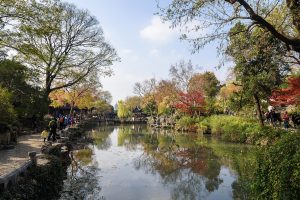
Suzhou’s classical gardens are world-renowned achievements of landscape architecture, designed by scholars and literati to mirror natural wonders in miniature. While an entire guide could be dedicated to them alone, first-timers should focus on a couple of key masterpieces where late-autumn foliage—particularly turning maples and ginkgo trees—elevates the scenery to poetry.
* The Humble Administrator’s Garden (Zhuozheng Yuan): As the largest and most famous garden in Suzhou, it features expansive lotus ponds, intricate pavilions, and zigzagging bridges. In November, the changing leaves frame the traditional whitewashed walls and dark-tiled roofs spectacularly.
* The Master of the Nets Garden (Wangshi Yuan): Much smaller and more intimate, this garden is celebrated for its exquisite spatial layout. Visiting in the late afternoon offers a remarkably serene perspective.
* The Lingering Garden (Liu Yuan): Famous for its clever spatial arrangement that makes a relatively compact area feel like an expansive countryside. Its rockeries and towering ginkgo trees turn striking shades of golden-yellow by mid-to-late November.
> Important Planning Note: To manage visitor flows, most major cultural sites in Suzhou require advance online reservations. Be sure to check Suzhou’s official garden reservation channels or WeChat mini-programs ahead of your visit to secure your entry time slot, and double-check current booking procedures rather than relying on outdated ticket prices.
—
3. Canal Culture: Pingjiang Road, Shantang Street, and Water Towns
No trip to Suzhou is complete without wandering along its historic canal pathways.
* Pingjiang Road: Running parallel to a historic canal that has existed for over 800 years, this stone-paved alleyway is lined with traditional tea houses, indie boutiques, silk shops, and local snack vendors. It is the perfect place to grab a cup of local Biluochun green tea and watch flat-bottomed wooden boats glide past.
Shantang Street: Established over a millennium ago, Shantang Street offers a more vibrant, lantern-lit evening atmosphere. Cross the arched bridges to sample regional street bites like sweet osmanthus rice cakes and fried river shrimp, or duck into a cozy parlor to catch a snippet of traditional Pinghe* (Suzhou storytelling and ballad singing).
* Side Trip to Tongli Water Town: Located about an hour outside the central urban area, Tongli is an ancient water town crisscrossed by fifteen small canals and bridged by nearly fifty stone structures dating back to the Ming and Qing dynasties. Visiting in November allows you to stroll the quiet towpath without the heavy crowds typical of warmer months.
—
4. Modern Architecture Meets Ancient Art: The Suzhou Museum
While Suzhou is fiercely proud of its ancient roots, it also embraces cutting-edge contemporary design. No November itinerary is complete without carving out time for the Suzhou Museum.
* Architectural Masterpiece: Designed by world-renowned architect I.M. Pei, the museum itself is a work of art. It brilliantly reinterprets traditional Suzhou vernacular architecture—featuring white plaster walls, dark grey tile roofs, and geometric stone gardens—through a distinctly modern structural lens.
* Exhibits: Inside, you will find extensive collections of ancient Chinese paintings, calligraphy, jade artifacts, and historic crafts that deep-dive into the cultural evolution of the Wu region. Because indoor galleries offer a comfortable escape if a chilly autumn wind picks up, it is an ideal afternoon stop.
—
5. Seamless Day Trip from Shanghai by High-Speed Rail
One of Suzhou’s greatest advantages for travelers is its proximity to Shanghai. You don’t even need to pack up your hotel room to visit.
* The Train Journey: High-speed trains depart from Shanghai Railway Station or Shanghai Hongqiao Station multiple times an hour. The journey to Suzhou Station takes a mere 25 to 30 minutes.
* Getting Around Locally: Once you arrive at Suzhou Station, you can easily connect to the city’s modern metro system or hop on a rideshare using your digital map apps to reach the old town within minutes.
—
6. Silk and Tea Shopping Etiquette
Suzhou has been the epicenter of China’s silk industry for centuries, and the neighboring region is famed for exceptional teas. If you plan on picking up souvenirs:
* Buying Silk: Look for reputable government-run silk emporiums or established cultural stores if you want certified 100% mulberry silk quilts, scarves, or garments. Feel the weight and inspect the weave—genuine silk has a soft, shimmering luster and a smooth drape.
Tea Tasting: If you visit a local tea house to sample Biluochun* (a delicate local green tea with fruity notes), expect a gracious ritual. It is customary to sample before you buy. While polite bargaining can happen in open-air markets, fixed-price specialty shops will expect standard retail transactions.
—
7. Where to Eat: Beyond Local Delicacies
While Suzhou cuisine is famous for its sweet-and-savory flavor profile—highlighted by dishes like squirrel-shaped mandarin fish and sweet pork belly—your culinary adventures don’t have to stop at regional canalside diners. After a long day of walking through chilly autumn gardens, nothing hits the spot quite like a communal, interactive meal. For a lively dining experience with stellar hospitality, noodles, and rich broths, treat yourself to a dinner inspired by the Haidilao Hot Pot in China: A First-Timer’s Guide for Foreigners.
—
Frequently Asked Questions (FAQ)
Is November a good time to visit Suzhou?
Yes, November is widely considered one of the best months of the year to visit Suzhou. The summer humidity and crowds are gone, and the autumn foliage reaches its peak across the classical gardens.
Do I need to book garden tickets in advance?
Yes. To manage visitor volume, major attractions like the Humble Administrator’s Garden require online reservations ahead of time. Check official local mini-programs or ticketing platforms a few days before your trip.
How many days do I need in Suzhou?
While Suzhou is easily managed as a day trip from Shanghai, spending 2 days allows you to explore the major classical gardens, wander Pingjiang Road and Shantang Street by night, and take a relaxed half-day trip to a nearby water town like Tongli.