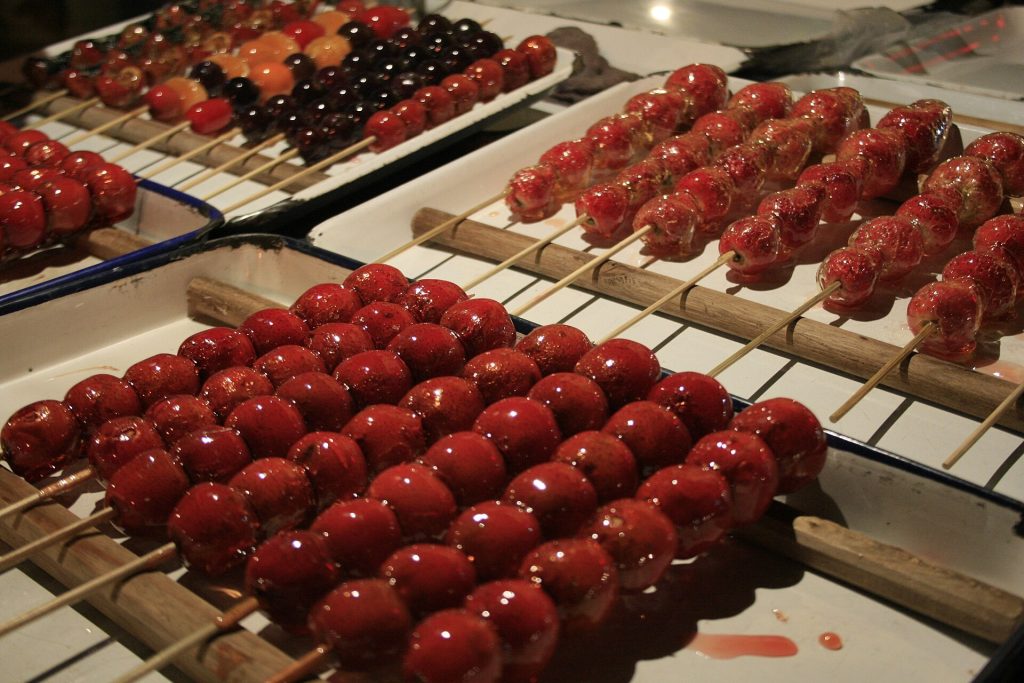
As autumn deepens into the crisp, biting cold of late October and November, a vibrant red glow begins to appear along historic alleys, bustling night markets, and temple fairs across northern China. It’s not lanterns or maple leaves—it’s tanghulu (冰糖葫芦, bīngtáng húlu): glistening skewers of ruby-red fruit locked inside a shattering, mirror-finish shell of hardened rock sugar. For first-timers, tanghulu looks almost too good to be true, resembling polished glass or Christmas ornaments on a stick. But sinking your teeth into one delivers an irresistible sensory contrast—a sharp, glass-like crunch followed by a burst of tart, juicy fruit. If you are planning a trip to experience China’s autumn and winter street food culture—perhaps taking advantage of expanded policies like China 30-Day Visa-Free Entry in 2026: Which Countries Qualify and the Rules—mastering how to track down, purchase, and eat tanghulu without turning your face into a sticky disaster is an essential rite of passage.
—
What is Tanghulu?
Tanghulu is a traditional Chinese snack consisting of fruit skewered on bamboo sticks and coated in a hardened syrup made from melted rock sugar and water. The name literally translates to “ice sugar gourds” because the traditional shape of the skewered mountain hawthorn berries resembles a cluster-bell gourd (hulu). The snack has a history stretching back hundreds of years, originating during the Song Dynasty as a medicinal remedy before evolving into a beloved seasonal street comfort.
Historically, imperial physicians prescribed hawthorn boiled with rock sugar to soothe poor digestion, loss of appetite, and fevers. Over centuries, street hawkers adapted the medicinal recipe into a portable treat by dipping the fruit skewers into boiling syrup and rushing outside into the freezing northern air to flash-set the sugar. While it is enjoyed year-round in modern tourist hubs, its spiritual home remains northern China (particularly Beijing and Tianjin), where the dry, freezing winter air provides the ideal micro-climate to instantly crystallize the hot syrup into a crisp, non-sticky shell without melting the fruit underneath.
—
Hawthorn vs. Modern Fruit Variations
The Traditional: Chinese Hawthorn (Shanzha)
The undisputed classic features Chinese hawthorn berries (shanzha, 山楂). These small, bright-red pomes are naturally tart, tangy, and deeply fruity—somewhere between a crabapple and a cranberry. Because hawthorn is aggressively sour, the thick jacket of sweet rock sugar provides a brilliant balancing act. Inside each berry lie a few small, flat seeds, which means eating traditional tanghulu requires a bit of active mindfulness (more on that below).
The Modern Interpretations
While hawthorn remains the historical standard, modern street vendors and boutique dessert shops have expanded the tanghulu universe dramatically. If you wander through bustling commercial streets, university districts, or night markets today, you will frequently see transparent skewers featuring:
* Strawberries: Extremely popular for their juicy sweetness, striking bright color, and tender texture beneath the hard shell.
* Grapes & Shine Muscat: Large, seedless green grapes coated in sugar that snap delightfully between your teeth, creating a dual-crunch sensation.
* Cherry Tomatoes & Mandarin Orange Segments: Tangy, unexpected twists that cut through the sweetness of the sugar shell wonderfully.
* Stuffed Varieties: Premium modern vendors now pit hawthorn berries and stuff them with sweet red bean paste, crushed walnuts, sesame paste, or sticky rice before coating them in sugar, adding layers of nutty or earthy depth.
—
How to Make Tanghulu at Home (Step-by-Step)
If you aren’t traveling to China anytime soon or want to recreate the winter street market experience in your own kitchen, making tanghulu is a fun, albeit high-stakes, science experiment.
Ingredients & Equipment
* Fruit: 1 pound of fresh fruit (strawberries, seedless grapes, or small apples), washed and thoroughly dried with a paper towel. (Any residual surface moisture will prevent the sugar from adhering).
* Sugar: 2 cups of white granulated sugar or rock sugar crystals.
* Water: 1 cup of water.
* Tools: Wooden bamboo skewers, a heavy-bottomed saucepan, a digital candy thermometer (optional but helpful), and a baking sheet lined with parchment paper or heavily oiled.
Step-by-Step Instructions
1. Skewer the Fruit: Thread 3 to 4 pieces of fruit firmly onto each bamboo stick. Ensure they are pushed close together so the fruit doesn’t spin around while dipping.
2. Boil the Syrup: Combine the sugar and water in your heavy-bottomed saucepan over medium-high heat. Do not stir the mixture once it begins to heat up, as this can cause crystallization.
3. Monitor the Temperature: Let the syrup bubble until it reaches the hard-crack stage on a candy thermometer (around 150°C to 155°C / 300°F to 310°F). The syrup should turn a pale, golden amber color.
4. The Flash-Dip: Tilt the pan slightly so the liquid pools. Quickly roll each skewer through the hot syrup 1 to 2 times to coat it evenly, letting excess syrup drip back into the pan.
5. Set and Cool: Immediately transfer the coated skewers onto your prepared parchment paper. Let them cool and harden for 5 to 10 minutes before serving. Enjoy immediately!
—
Where Do You Find Tanghulu Vendors?
You won’t typically find tanghulu sitting on menus in upscale sit-down restaurants; it is an outdoor street food phenomenon. Keep an eye out for vendors stationed around:
Historic Temple Fairs and Old Alleys: Particularly in northern cities like Beijing, where traditional cart vendors display their skewers slotted into massive, straw-wrapped wooden upright posts called hulu bazi*.
* Bustling Night Markets and Pedestrian Shopping Streets: Throughout major metropolitan areas like Shanghai, Chengdu, and Xi’an, modern vendors push illuminated glass carts keeping rows of colorful skewers cool, hygienic, and crisp.
To navigate local transit, alleyways, and hidden market squares efficiently, you can download and set up navigation apps ahead of time by following How to Use Amap (Gaode Maps) in China as a Foreigner: 2026 English Guide.
—
How to Eat Tanghulu Without Sticky Disasters
The sugar shell on a well-made tanghulu is practically glass. If you approach it the wrong way, you risk chipping a tooth, cutting your lip, or melting the sugar into a sticky web across your fingers and clothes. Follow these golden rules for a mess-free experience:
1. Bite, Don’t Lick: Licking a sugar shell takes forever and leaves a sharp, jagged edge that can nick your tongue. Instead, apply firm, deliberate pressure with your front teeth to crack the shell cleanly, then bite straight into the fruit.
2. Watch for Seeds: If you are eating traditional hawthorn tanghulu, remember that the berries contain small seeds. Do not bite down with full force on your molars; gently nibble around the center or use your tongue to isolate and spit out the seeds discreetly into a napkin.
3. Beware of the Weather: Tanghulu hates humidity and warmth. On a hot or humid day, the sugar shell will quickly absorb moisture from the air, turning tacky and dissolving into liquid syrup. Always eat it immediately after purchasing, and keep a pack of wet wipes handy in your pocket or bag.
—
Allergy and Dietary Notes for First-Timers
* Sugar Content: The primary ingredient encasing the fruit is pure boiled sugar (sucrose). Travelers monitoring their blood sugar or managing diabetes should exercise caution.
* Cross-Contamination & Allergies: Traditional tanghulu is naturally gluten-free and vegan, consisting only of fruit, water, and sugar. However, modern stuffed variations may include sesame seeds, walnut pieces, or red bean paste. If you have nut allergies, always confirm whether the filling contains tree nuts or peanuts before purchasing from modern artisan stalls.
—
Pairing Your Cold-Weather Street Food Adventure
If you are exploring China during the chilly late-autumn or winter months, balance out the icy crunch of tanghulu with other warming seasonal specialties. Warm up after a street walk by pairing your culinary adventures with a steaming bowl of Rock Sugar Pear Soup (Bingtang Xueli) for Autumn, or dive into a sprawling social dining experience with Haidilao Hot Pot in China: A First-Timer’s Guide for Foreigners. Embrace the season, grab a glossy skewer of ruby-red fruit, and enjoy one of China’s most iconic and joyful street snacks!
—
Frequently Asked Questions (FAQ)
Does tanghulu hurt your teeth?
If you bite it incorrectly using your back molars or try to crunch down on a thick, uneven section too forcefully, it can feel jarring. However, using your front teeth to crack the glass-like shell cleanly prevents dental strain.
Why is traditional tanghulu sour?
The base fruit—Chinese hawthorn—is intensely tart. The heavy layer of hardened rock sugar was historically intended to balance this sharp acidity, creating a sweet-and-sour flavor profile that stimulates the palate.
Can I find tanghulu outside of winter?
While winter is prime season because the cold air sets the sugar perfectly, modern indoor night markets, specialty dessert shops, and tourist streets in major Chinese cities sell refrigerated versions year-round.