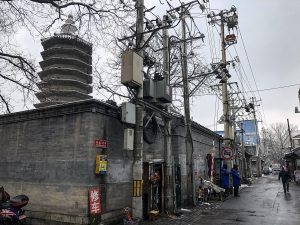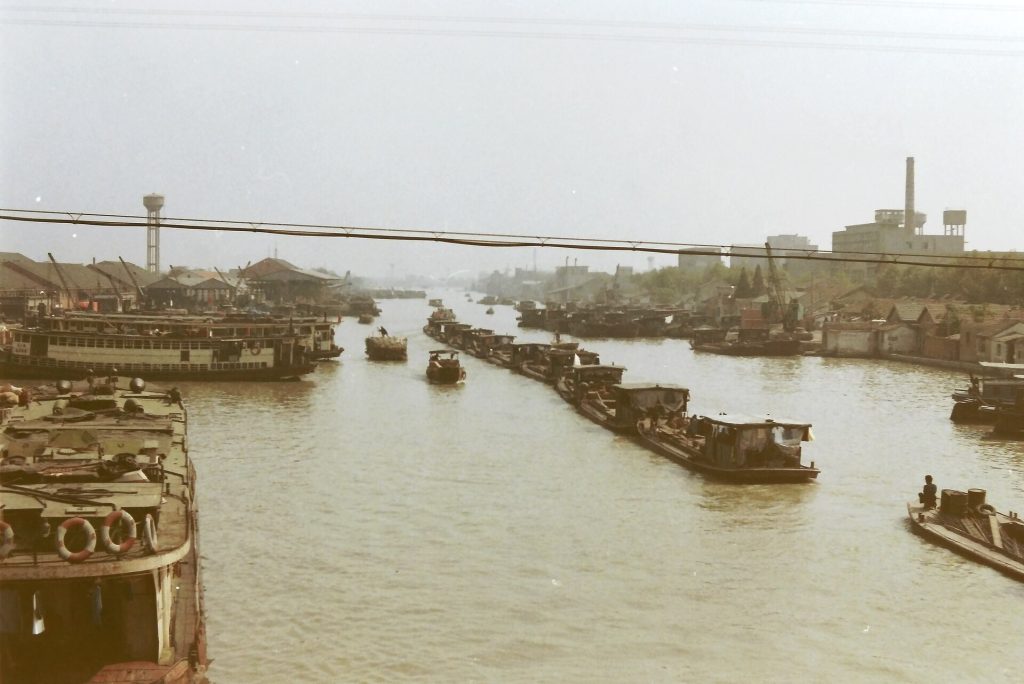
The canal does not hurry in November. Mist sits low enough that stone bridges look unfinished at the top, as if the builders stopped for tea and forgot to return. A cleaner’s broom scratches the lane before the souvenir shutters open. Somewhere a kettle clicks off.
You walk because the map said this lane connects two famous gardens, and because the hotel breakfast will still be there when you get back. The first shop to wake sells warm soy milk. The second sells nothing yet; its owner waters a potted orange tree and nods as if you are a neighbour who simply woke earlier than usual.
Light on plaster walls
Whitewashed walls take on a blue tone before sunrise proper. Reflections in the water double every window, then shatter when a small work boat passes with coiled hose and quiet purpose. You photograph once, then put the phone away because the battery already fears the cold—an ordinary China travel lesson you also meet in essential apps for foreigners checklists and power-bank debates.
Sounds that are not for tourists
A radio murmurs news you cannot follow. Someone practises a wind instrument behind a courtyard door, stopping whenever footsteps near. Bicycles bell softly; delivery carts negotiate corners that were not designed for cardboard towers. None of this is staged for you, which is precisely why it feels like travel rather than a queue.
Crossing the bridge
From the crown of the arch you see laundry poles, a sleeping cat, and a tea house arranging tables. If you later sit down, QR codes will appear (Alipay and WeChat Pay hub); if you keep walking, the canal will offer another bridge and another nearly identical promise of quiet. Suzhou’s fame is gardens and silk, but mornings like this are the interstitial tissue that makes those sites human.
What you carry home
Not a statistic. Not a fake quote from a stranger you invent for colour. Just the temperature of stone under your palm, the smell of oil heating for breakfast noodles, and the knowledge that November rewards early alarms. When you return to louder cities—Shanghai’s pace in the Shanghai first-visit guide hub, or Beijing’s scale in the Beijing first-visit guide guide—you will remember that China also contains lanes where mist does the talking.
Practical aside for readers who will copy this walk
Save the hotel address in Chinese, dress in layers, and do not chase every side canal to exhaustion before your timed garden ticket. Offline maps help when alleys fork (China travel tools page). Leave space in the day for doing nothing on a bridge. That, too, is itinerary.
Related Lovely China reading
For payments and wallets, start with Alipay and WeChat Pay hub and WeChat Pay vs Alipay for tourists. For trains and long-distance moves, keep high-speed rail first-timers guide and 12306 passport signup for foreigners handy. For city orientation, the Beijing first-visit guide and Shanghai first-visit guide hubs remain useful even when your trip centres on another province. Bookmark China travel tools page so you can jump between logistics topics without searching from scratch on hotel Wi-Fi at midnight.
Practical checklist
- Confirm official rules on the relevant government, park, airline, or bank page near your travel week
- Screenshot bookings, tickets, and QR codes while you still have stable Wi-Fi
- Save hotel and attraction names in Chinese characters in your phone notes
- Carry passport, a backup payment method, and a small cash float (why cash is still needed)
- Test one small mobile payment before you rely on wallets at a gate or taxi
- Build time buffers for security lines, November weather, and bilingual navigation
- Prefer refundable holds until visas, trains, or park tickets are confirmed
- Keep the China travel tools page page bookmarked for related Lovely China hubs
How to verify information without panicking
English travel blogs lag policy changes. When something critical is at stake—entry permission, ticket validity, or whether a card works—use primary sources: embassy or VAC pages, National Immigration Administration notices, official park reservation platforms, airline apps, and the screens inside Chinese super-apps. Lovely China articles such as Alipay and WeChat Pay hub, high-speed rail first-timers guide, and essential apps for foreigners help you orient, but they are not substitutes for the live rule in front of you.
If two sources conflict, choose the stricter one until you can ask a human at the counter. That habit prevents most arguments that begin with “I read online that…” at gates.
FAQ
Is this a real itinerary tip or pure story?
Both—an observational piece with light practical asides for visitors.
Which canal is the ‘correct’ one?
Suzhou has many; ask your hotel for a quiet morning lane near where you stay.
Are gardens open at dawn?
Opening hours vary—verify official times; canal lanes themselves are often walkable earlier.
What should I wear?
Layered autumn clothes and shoes that grip damp stone.
Notes for late 2026 travellers
Late October and November bring cooler mornings, earlier sunsets, and comfortable train weather across much of eastern and central China. Pack layers, keep phone batteries warm outdoors, and leave extra time whenever a clear weekend coincides with popular sightseeing.
This article does not invent ticket prices, opening hours, processing times, consular fees, or official statistics. When a number matters, verify it on the official site, consulate page, app screen, or ticket board near your travel week.
Write key Chinese addresses into your phone notes before you leave Wi-Fi. Screenshot tickets and booking codes. Carry a small cash float even if you prefer wallets—see why cash is still needed. Reconfirm last-mile transport the evening before early starts.
If an official rule page disagrees with this guide, follow the official page. Lovely China orients English-speaking travellers; we are not an immigration, banking, or medical authority. Keep the China travel tools page bookmarked for other logistics hubs.
Traveller mindset
Move slowly through paperwork moments. A calm queue is cheaper than a missed train or a refused visa file. When language fails, show passport pages, booking screens, and maps with Chinese labels. Hotel front desks and station information booths are used to helping foreigners through routine steps.
Keep expectations honest: China is highly digital, but edge cases remain. Your job is not to memorise every exception—it is to carry backups (second card, cash, offline maps, written addresses) so one failure does not end the day. For everyday apps, start with essential apps for foreigners.