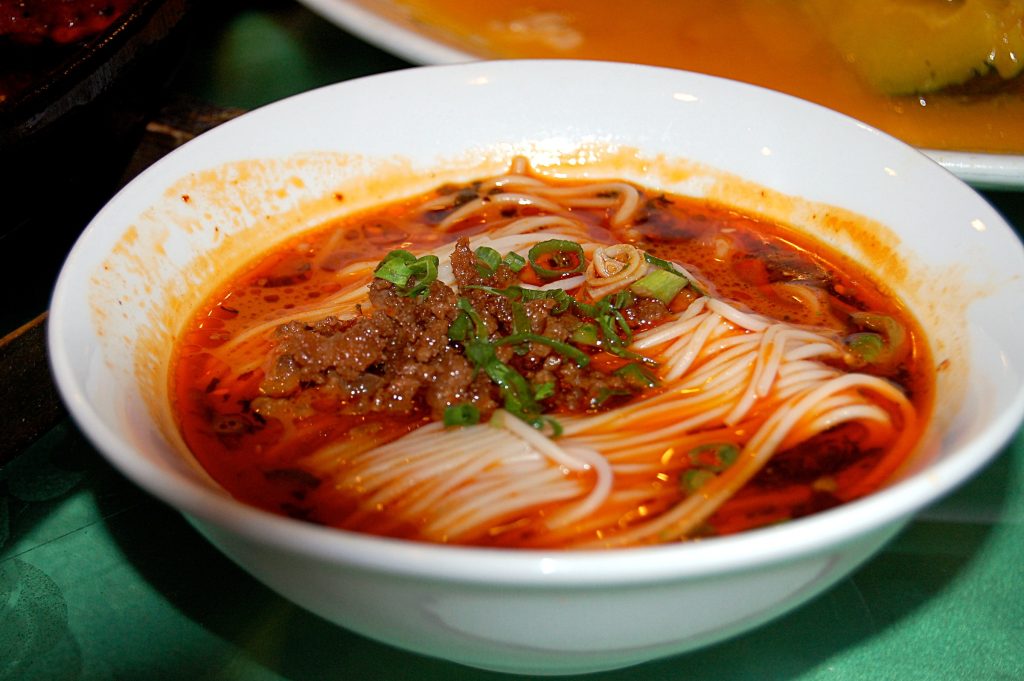
What dan dan noodles are — and what they are not
Dan dan noodles (担担面) are a Chengdu classic built around wheat noodles, a savoury meaty topping, and a sauce that leans into chilli heat plus Sichuan peppercorn numbness (málà). The name nods to the carrying pole vendors historically used to hawk noodles; today you will meet the dish in noodle shops, snack dens, and full Sichuan restaurants more often than on a street pole.
For a first-timer, the key is not chasing the “most authentic secret stall” on day one. It is learning how spice and numbness feel in your mouth, how dry-style bowls differ from soupier cousins, and how to order without guessing every character on a handwritten board. If you are building a Chengdu food week, pair this with mapo tofu for first-timers and Sichuan hotpot for first-timers, and keep QR menu tips for foreigners handy.
Early autumn 2026 context: Mid-Autumn Festival is Friday 25 September (~25–27 September), with a makeup workday on Sunday 20 September. Golden Week runs roughly 1–7 October. Noodle shops stay busy around holidays; go slightly off-peak if you want a quieter first bowl.
Dry vs soup: know what you are ordering
The classic dry-style idea
Many Chengdu bowls arrive “dry”: noodles tossed or pooled with sauce at the bottom, minced meat (often pork) on top, maybe ya cai (preserved mustard stem), spring onion, and peanuts or sesame notes depending on the shop. You mix before eating so every bite carries sauce.
Soupy and hybrid bowls
Some shops serve a brothier dan dan or related noodle bowls. If you want the denser sauce experience, look for dry-style wording or ask. Picture menus help. Pointing at a neighbouring table’s bowl is a universal backup when translations fail.
Ordering phrases worth saving offline:
- 担担面 — dàn dàn miàn — dan dan noodles
- 微辣 — wēi là — mild spicy
- 少辣 — shǎo là — less spicy
- 不要太麻 — bù yào tài má — not too numbing
- 干的 — gān de — dry style (when clarifying)
- 要香菜 / 不要香菜 — with / without coriander
Staff may still interpret “mild” as medium by your home standards. That is normal. Start milder than your pride suggests.
How málà actually feels
Chilli heat (là) and Sichuan peppercorn numbness (má) are different channels. Heat warms and burns; numbness tingles and buzzes the lips and tongue. Together they define much of Chengdu’s noodle identity.
First-bowl strategy:
1. Mix thoroughly so the topping oil and sauce coat the noodles.
2. Take a small bite with meat and noodle together.
3. Pause. Let numbness register before you decide you “need more chilli.”
4. Drink warm tea or soy milk if available — not ice water as your only plan.
5. Eat rice on the side if the shop offers it and the bowl is stronger than you expected.
If your mouth feels overwhelmed, stop adding chilli oil from the table. Finish what you can, order a mild side, and treat the rest as learning. There is no prize for emptying a bowl that hurts.
Where first-timers usually eat them
Dedicated noodle shops
Fast, focused, often excellent for a lunch stop between museums and metro rides. Seating turns quickly. Point-and-order works. Keep bags off neighbouring seats during peak times.
Full Sichuan restaurants
Dan dan may appear as an appetiser-sized bowl among shared dishes. Useful if your group wants mapo tofu, greens, and noodles in one sitting. Share etiquette still applies: use serving chopsticks when provided.
Hotel and mall food courts
Milder, more bilingual, sometimes less thrilling — perfectly valid for night-one hunger after a flight. You can chase neighbourhood fame later.
Wherever you go, mobile pay is the default. Set up Alipay and WeChat Pay before you are staring at a QR code with a growling stomach. For city orientation around these meals, Chengdu first visit in early autumn helps you place noodle stops on a walking map.
What to pair with the bowl
Classic calm pairings:
- Plain rice if the noodles run hot.
- Simple clear-ish soups or mild vegetable dishes.
- Soft tofu sides that cool the palate.
- Warm tea; many locals drink tea through spicy meals.
- Soy milk (sweet or savoury) at breakfast-leaning shops.
What to be careful stacking on day one:
- Hotpot the same lunch as your first aggressive dan dan bowl.
- Multiple “extra spicy” experiments back-to-back.
- Cold beer as your only cooling strategy if you are dehydrated from walking.
A practical first-timer meal: one dan dan (mild), one vegetable dish, tea, and fruit later. Save the chili-oil ladder climb for bowl two tomorrow.
Hygiene, pace, and holiday timing
Busy noodle shops are normal. Watch your bag, keep the aisle clear with luggage, and do not occupy a four-top alone at peak lunch if smaller seats exist. Turn the table when you finish; lingering with empty bowls frustrates the lunch rush.
Around Mid-Autumn (~25–27 September 2026) and Golden Week (~1–7 October):
- Popular shops may queue longer at standard meal hours.
- Go for late breakfast / early lunch or mid-afternoon bowls.
- Pre-decide payment and order words so you do not freeze at the counter.
If you work in China and your leave overlaps these holidays, meal timing may shift with colleagues’ travel — see working Golden Week as a foreign employee for the broader rhythm, then still eat noodles when hunger hits.
A first-bowl walkthrough
1. Enter, notice whether you order at a counter or scan a QR menu.
2. Choose dan dan; request mild / less spicy / less numbing as needed.
3. Pay, take a seat number or wait for the bowl.
4. Mix, taste, adjust with table condiments only if you truly want more heat.
5. Eat at a steady pace; numbness builds.
6. Clear trash if self-serve culture applies; thank staff briefly.
7. Walk outside for air before you judge whether bowl two should be spicier.
Red flags to skip on day one: mystery “challenge” spice levels, pressure to buy large souvenir chilli sauces before you know your preference, and copying the reddest bowl at the next table without asking what was ordered.
Taste notes without fake poetry
Expect savouriness from meat and fermented vegetables, fragrance from oil and aromatics, heat from chilli, and buzzing numbness from peppercorn. Sweetness is usually background, not dessert-like. Texture should be springy noodles plus crumbly or saucy topping — if noodles sit too long they soften, so eat while they still have bite.
If a bowl tastes mostly of oil heat without depth, you may have hit a tourist-mediocre version. Try a different neighbourhood shop tomorrow rather than declaring the entire genre guilty.
Calm first-timer checklist
- Know the characters 担担面 and mild-spice phrases offline.
- Decide dry-style preference before you order.
- Start milder than your home chilli bravado.
- Pair with tea, rice, or vegetables.
- Pay with apps already set up.
- Avoid stacking hotpot + max spice the same hour.
- Time bowls off peak near Mid-Autumn and Golden Week.
- Leave room for a second Chengdu classic (mapo tofu, hotpot) on another meal slot.
Dan dan noodles in Chengdu are a small bowl with a large lesson: Sichuan flavour is a conversation between heat and numbness, not a shouting match you must win. Mix well, taste slowly, and let the city teach your tongue across several meals — not one heroic lunch.