On 12306, the label 无座 (wúzuò) means you have a valid ticket to ride and no assigned seat. It is not a free upgrade to any empty row you like, and it is not automatically a disaster. For visitors, the useful questions are when standing inventory appears, how boarding still works with a passport, what to do with luggage, and when it is wiser to wait for a seated option or change the ticket.
This piece sits beside HSR seat types explained, 12306 English interface tips, same-day 12306 refund and change, and high-speed rail first-timers guide. It is not a window-versus-aisle explainer (12306 window vs aisle seats) and not a sleeper-class comparison (soft vs hard sleeper 12306). We will not invent standing-capacity rules or claim every high-speed train sells 无座 on every date.
What you are buying
A standing ticket is a contract to travel on that train number, on that date, between those stations, without a seat number. Conductors know the product. Fellow passengers know the product. The person whose reserved seat you casually occupy also knows the product—and will return to it.
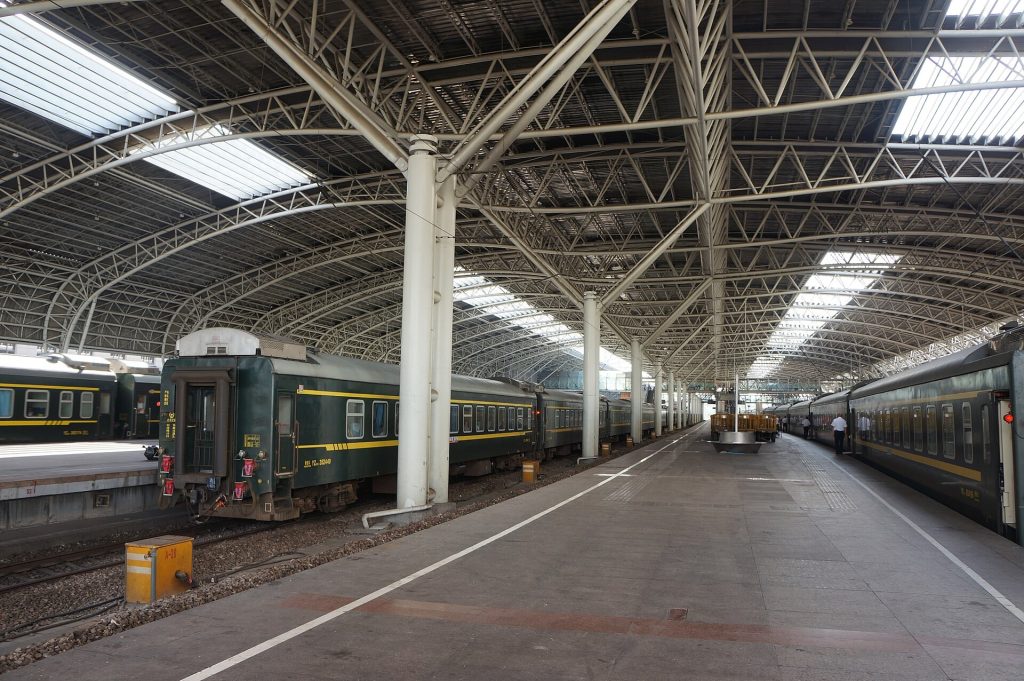
On many conventional (slower) trains, standing room in vestibules and aisles is a long-standing reality, especially around holidays and Friday evenings. On high-speed G and D services, standing tickets are less of a default comfortable plan; whether they appear at all depends on the train, the season, and official inventory. Read the live 12306 label rather than a memory of what a friend bought years ago (G / D / C train types explained, 12306 versus Trip.com train booking).
If the English interface is confusing, confirm the Chinese characters 无座 before you pay (12306 English interface tips, 12306 passport signup for foreigners). Screenshots of the order help if a later window conversation is needed (train ticket window with passport).
Boarding with a passport and no seat number
Boarding still follows the usual station flow: security, waiting area, gate, platform (train station security and luggage, train platform ticket gates passport). Your passport identity must match the ticket (12306 e-ticket gates with a foreign passport). At the gate, staff or machines check that you are allowed on this train; they do not assign you a last-minute seat as part of the scan.
On board:
- Store luggage where standing passengers are expected to keep it—often near doors or in designated racks—without blocking the aisle (luggage storage at stations and airports)
- Leave reserved seats to the people who paid for those numbers
- If a conductor later offers a paid upgrade into an empty seat, that is a separate transaction; we do not invent the price or promise it will be offered
- Keep your ticket details available; inspections still happen
Long conventional journeys as a standing passenger are physically harder than a two-hour high-speed hop. Factor your own stamina, not only the clock.
Luggage realities
Large suitcases and standing tickets are a poor pairing. Vestibules fill with bags, food carts need to pass, and doorways become crowded at every stop. If you must stand with luggage:
- Use a backpack plus one manageable suitcase rather than a pair of giant cases
- Stand where you are not blocking door sensors
- Keep valuables on your body
- Be ready to shift at stations when people alight
If the only available product is 无座 and you are moving house-worth of luggage, wait for a seated train, split the journey, or use a different departure time. Pride is a bad reason to stand for six hours beside two rigid suitcases.
When to wait, change, or refund
Standing can be acceptable when the ride is short, the train is a conventional service you understood in advance, and you have little luggage. It is a weaker idea when you are exhausted from a long-haul flight, travelling with children or older relatives, or facing a night arrival into an unfamiliar station.
12306 change and refund rules depend on timing and train type (12306 refund and change rules, same-day 12306 refund and change, 12306 refund with passport). We do not invent fee ladders. Open the order and read the live options. A seated ticket on a slightly later train is often a better memory than a standing ticket that “saved the day” in theory.
Related Lovely China reading
For payments, start with Alipay and WeChat Pay hub and WeChat Pay vs Alipay for tourists. For trains, keep high-speed rail first-timers guide and 12306 passport signup for foreigners handy. City hubs: Beijing first-visit guide, Shanghai first-visit guide. Connectivity: roaming vs local SIM honest guide, pocket Wi-Fi vs eSIM for China, offline maps for foreigners. Bookmark China travel tools page.
Practical checklist
- Confirm official rules on the relevant government, park, airline, or bank page near your travel week
- Screenshot bookings, tickets, and QR codes while you still have stable Wi-Fi
- Save hotel and attraction names in Chinese characters in your phone notes
- Carry passport, a backup payment method, and a small cash float (why cash is still needed)
- Test one small mobile payment before you rely on wallets at a gate or taxi
- Keep the China travel tools page page bookmarked for related Lovely China hubs
FAQ
Does 无座 mean I am allowed to sit in any empty seat?
No. A standing ticket is a valid ride without an assigned seat. Sitting in someone else’s place creates conflict when they board. Ask a conductor if an upgrade path exists.
Are standing tickets common on high-speed trains?
They appear more often on busy conventional or holiday services than as a comfortable HSR plan. Read the live 12306 label; do not assume every G-train offers standing inventory.
What should I screenshot before I lose Wi-Fi?
The 无座 label, train number, date, passport-name preview, and any later seated change confirmation.
Notes for late 2026 travellers
November and early December bring cooler mornings, earlier sunsets, and comfortable walking weather across much of eastern and central China. Pack layers and leave extra time on clear weekends at popular sights.
This article does not invent ticket prices, opening hours, processing times, consular fees, or official statistics. When a number matters, verify it on the official site, app screen, or ticket board near your travel week.
If an official rule page disagrees with this guide, follow the official page. Lovely China orients English-speaking travellers; we are not an immigration, banking, or medical authority.