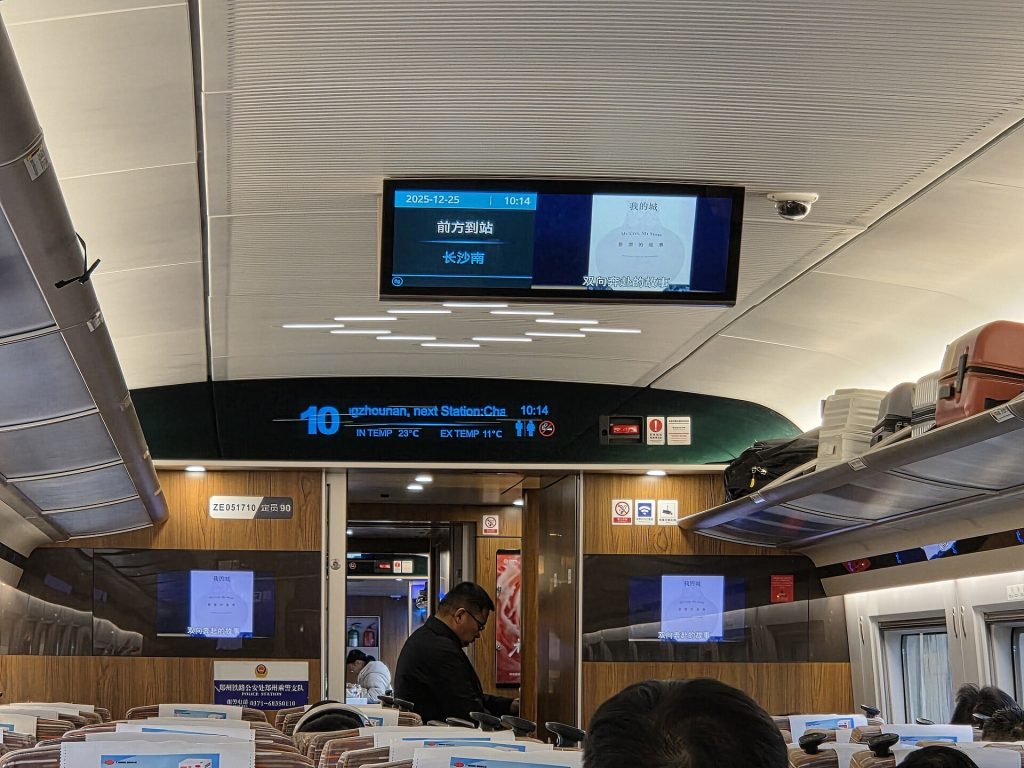
When travellers hear “onward ticket” for China’s 240-hour visa-free transit, many picture a connecting flight on the same airline. Official language, though, typically talks about an onward ticket to a third country or region—not only a plane. That leaves a fair question: can a confirmed train, ferry, or other land or sea ticket support the same transit stay? The honest answer is that it can be part of what you show, depending on where the ticket actually takes you, and that a domestic Chinese train is a different object from an exit. This is not a guaranteed yes or no for every itinerary.
Start with the 240-hour visa-free transit overview, then the 240-hour transit connecting flight rules and separate tickets for 240-hour transit if your air path is already complicated. Booking the rail leg itself is a separate skill; 12306 passport signup for foreigners covers 12306 passport signup.
What “onward” usually means, and what it does not
Transit is built around leaving the mainland for a third country or region after a short stay, within the hour limit and the permitted area. An onward ticket is evidence of that exit, not a souvenir of travel inside China.
A Beijing–Shanghai high-speed train, however elegant, is a domestic movement. It does not, by itself, take you out of the mainland. Showing only that ticket as your “onward” plan is the most common misunderstanding we see in this topic. You may still ride Chinese trains during a valid transit stay if the route stays inside the permitted geography; that is movement during the stay, not the ticket that justifies the stay.
A ticket that carries you from the mainland to Hong Kong or Macao, or across a land border into a neighbouring country, is a different assessment. Those places are not “another Chinese city” in immigration terms, but they also are not automatically interchangeable with a flight to a third country. Officers and airlines read the live notice, your passport, and the next ticket together. We will not invent a universal ruling that every Hong Kong-bound train is accepted, or that every ferry is refused. Confirm with the current National Immigration Administration wording on nia.gov.cn, and if you are unsure, ask the airline or the port before you travel.
What to carry if a train or ferry is part of your exit
If your exit really is by rail or sea, treat the ticket with the same seriousness you would give a flight:
- A confirmed booking, not a maybe-standby screenshot, with the date, train or sailing number, and destination readable
- The same name as the passport you will present
- A way to open the ticket without depending on a single app screen: PDF, official 12306 order, or operator confirmation
- Your incoming flight details and a hotel booking inside the permitted area, in Chinese if you have it (240-hour transit hotel registration)
- A simple one-sentence itinerary: arrive at port A, stay in city B, exit by train or ferry to place C
If the train is only how you move between mainland cities before you fly out, say that clearly. The onward proof in that case is still the ticket that leaves the mainland, usually the onward flight or the cross-boundary service, not the domestic seat you booked for Tuesday afternoon.
Land borders and ferry terminals have their own hours, luggage habits, and document checks. Build more time than a same-terminal air connection would need. Early or mid-December 2026 weather can slow road access to a station or port; that is a buffer issue, not a change in the immigration rule.
How this differs from a connecting flight
A same-airline connecting flight is a shape many check-in agents already recognise, which is why 240-hour transit connecting flight rules exists. Separate air tickets are messier and have their own pitfalls in separate tickets for 240-hour transit. A train exit sits closer to the separate-ticket world: you may arrive on one carrier, stay a night or two, and leave by a different mode, through a different building, under a different operator.
That does not make it invalid. It does mean you should be ready to explain the path calmly, with documents already open, rather than hoping the word “train” will be understood as an exit. If your first check-in agent cannot assess a rail exit, do not invent a speech about what “the law always allows.” Ask whether the airline can carry you to the mainland on that basis, and be prepared to adjust the plan or seek a visa if they cannot.
Booking the rail piece without confusing the story
If you do need a cross-boundary or international-adjacent train, book through official or well-known channels and keep the confirmation in your name. Domestic 12306 tickets are still useful for getting from the airport city to another permitted city, but label them in your own notes as internal travel. Do not ask a stranger in a chat group to “make an onward ticket appear.”
Recheck the live 240-hour notice near travel week: participating ports, permitted areas, and the wording around onward tickets can be updated. The National Immigration Administration remains the source of truth. Airline check-in is a practical gate you must also pass.
If the only tickets you can honestly book are domestic, 240-hour transit is the wrong tool. Look again at whether 30-day visa-free entry countries applies to you, or at a regular visa, rather than stretching a Beijing–Shanghai seat into an exit it cannot be.
Related Lovely China reading
For payments, start with Alipay and WeChat Pay hub and WeChat Pay vs Alipay for tourists. For trains, keep high-speed rail first-timers guide and 12306 passport signup for foreigners handy. City hubs: Beijing first-visit guide, Shanghai first-visit guide. Connectivity: roaming vs local SIM honest guide, pocket Wi-Fi vs eSIM for China, offline maps for foreigners. Bookmark China travel tools page.
Practical checklist
- Confirm official rules on the relevant government, park, airline, or bank page near your travel week
- Screenshot bookings, tickets, and QR codes while you still have stable Wi-Fi
- Save hotel and attraction names in Chinese characters in your phone notes
- Carry passport, a backup payment method, and a small cash float (why cash is still needed)
- Test one small mobile payment before you rely on wallets at a gate or taxi
- Keep the China travel tools page page bookmarked for related Lovely China hubs
FAQ
Does every train ticket count as an onward ticket for 240-hour transit?
No. Official language typically asks for an onward ticket to a third country or region, not only a flight. A domestic Chinese train is not an exit. A ticket toward Hong Kong, Macao, or a neighbouring country is a different assessment—confirm on current NIA notices and with the airline or port if you are unsure.
Should I still book domestic trains during a transit stay?
You may need them to move inside the permitted area. Label those tickets as internal travel in your own notes, and keep the actual exit ticket—the one that leaves the mainland—easy to show.
What should I screenshot before I lose Wi-Fi?
The confirmed exit booking with date and destination, incoming flight details, a hotel booking inside the permitted area, and the official notice you relied on.
Notes for late 2026 travellers
November and early December bring cooler mornings, earlier sunsets, and comfortable walking weather across much of eastern and central China. Pack layers and leave extra time on clear weekends at popular sights.
This article does not invent ticket prices, opening hours, processing times, consular fees, or official statistics. When a number matters, verify it on the official site, app screen, or ticket board near your travel week.
If an official rule page disagrees with this guide, follow the official page. Lovely China orients English-speaking travellers; we are not an immigration, banking, or medical authority.