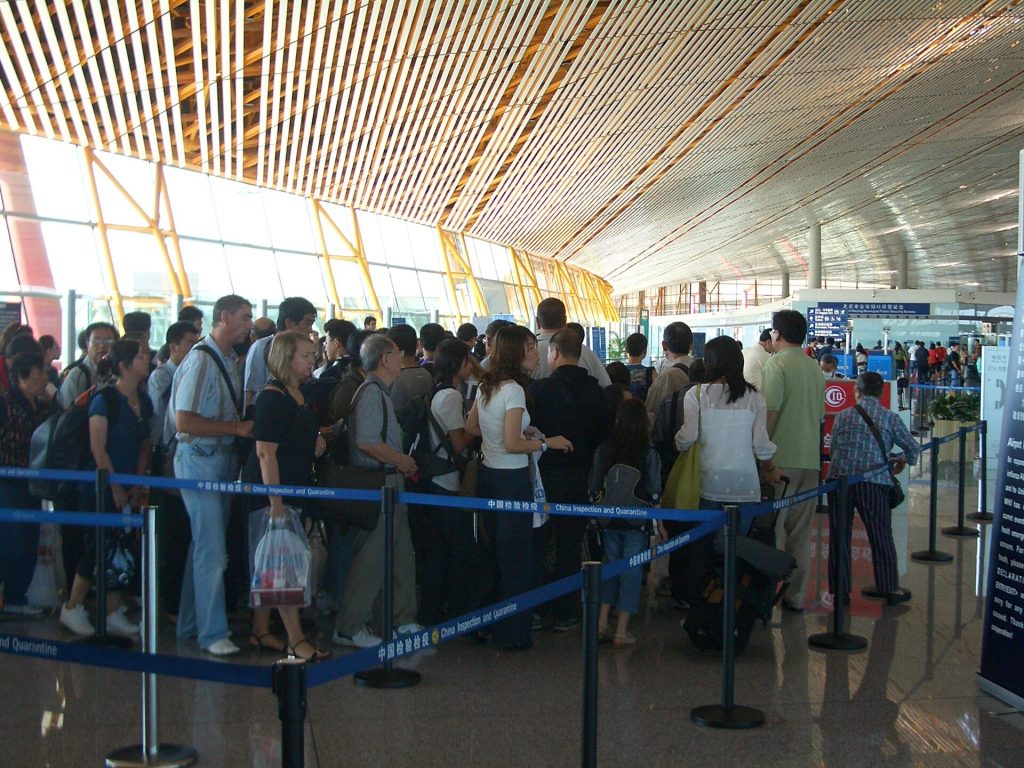
The most useful thing you can do in the first minute after a Chinese immigration officer returns your passport is not to walk away chatting. It is to stop, open the book to the fresh mark, and take a sharp photo of the whole page or sticker under the hall lights. That photograph is how you will later answer a simple, high-stakes question: when must I leave?
This guide is only about reading the entry stamp or sticker, and about confirming the allowed-stay end date when you entered under 240-hour visa-free transit or under 30-day visa-free entry. It is not exit stamps and overstay risks, which is about departure timing and overstay risk. It is not a lesson in filling arrival registration card fill guide, and it is not advice for a nearly full passport. It is also not a substitute for the current wording on nia.gov.cn or en.nia.gov.cn.
Two facilities, two clocks
240-hour visa-free transit and 30-day visa-free entry are different facilities. They have different nationality lists, different port rules, and different stay clocks. If you are unsure which one you actually received, do not borrow the arithmetic from a friend who entered under the other policy. Start with 240-hour transit vs 30-day visa-free, 144 vs 240-hour visa-free transit, and 30-day visa-free entry countries, then come back to the page in your passport.
Official explanations of 240-hour visa-free transit commonly describe a stay of no more than 10 days, or 240 hours, for eligible nationals who enter through designated ports with an ordinary passport and a confirmed onward ticket. Some official descriptions also explain how the hours are counted from the early morning after the entry day, and they tell you to follow the dates on the temporary entry permit you are given. We will not invent a sample stamp or a worked example that pretends to be your permit. Follow the mark in your passport and the official NIA page for that facility, not a spreadsheet you built on the plane.
30-day visa-free entry is a separate count. The way calendar days are usually counted is explained, for orientation, in how 30-day visa-free stays are counted and, if you are close to the edge, 30-day visa-free soft overstay hours. Again, the official page and the annotation in your passport win if they ever disagree with a blog.
What to look at, without inventing a template
Chinese entry marks can take more than one physical form: an ink stamp, a sticker, a printed endorsement, or a combination, depending on the port and the facility. We will not invent field labels, colours, or a diagram. What travellers can usefully do, at any port, is more boring and more reliable:
- Photograph the entire page or sticker, not a cropped corner, while you are still at or just beyond the counter.
- Make sure the entry date, port or office name if shown, and any permitted-stay date, duration, or annotation are in focus and not hidden by a thumb or a plastic sleeve.
- If you also received a loose slip, card, or printed permit, photograph that too and keep it with the passport until you exit.
- If the ink is faint, the sticker is skewed, or you cannot tell which date is the last permitted day, ask the officer before you leave the desk. A polite “which date must I exit by?” while pointing at the page is clearer than a later argument at a hotel or an airline counter.
Do not “correct” a stamp yourself, and do not peel or restick anything. If a second officer or a supervisor needs to replace a spoiled mark, that is their process, not yours.
240-hour transit: the permit is the clock
On 240-hour transit, the thing that matters is the temporary entry permission you actually received, not a casual “I have ten days.” The stay does not pause for weekends, for 1 January, or because you changed hotel cities inside a permitted area. A New Year decoration in the arrivals hall does not add hours. If your onward flight sits close to the end of the permit, read 240-hour transit over New Year week as a planning warning, and reconfirm the official clock on NIA rather than rounding up.
Your onward ticket still has to match the story you gave: a confirmed seat and date, usually to a third country or region, from a port that is valid for your exit. That is a policy question, covered in 240-hour visa-free eligible ports guide and 240-hour transit entering and leaving through different cities, not something an entry photograph can invent after the fact. The photograph only tells you what was granted.
30-day visa-free entry: do not mix the arithmetic
Related Lovely China reading
For payments, start with Alipay and WeChat Pay hub and WeChat Pay vs Alipay for tourists. For trains, keep high-speed rail first-timers guide and 12306 passport signup for foreigners handy. City hubs: Beijing first-visit guide, Shanghai first-visit guide. Connectivity: roaming vs local SIM honest guide, pocket Wi-Fi vs eSIM for China, offline maps for foreigners. Bookmark China travel tools page.
Practical checklist
- Confirm official rules on the relevant government, park, airline, or bank page near your travel week
- Screenshot bookings, tickets, and QR codes while you still have stable Wi-Fi
- Save hotel and attraction names in Chinese characters in your phone notes
- Carry passport, a backup payment method, and a small cash float (why cash is still needed)
- Test one small mobile payment before you rely on wallets at a gate or taxi
- Keep China travel tools page bookmarked for related Lovely China hubs
FAQ
How do I know the last day I am allowed to stay?
Photograph the full entry stamp or sticker and any printed permit before you leave the counter, then confirm the counting method for your facility on the current National Immigration Administration pages (nia.gov.cn or en.nia.gov.cn). 240-hour transit and 30-day visa-free entry use different clocks. Follow the mark in your passport and the official wording, not a blog example.
Is the 240-hour clock the same as a 30-day visa-free count?
No. They are different facilities. Do not apply a 10-day transit hour-clock to a 30-day stay, and do not apply a 30-day calendar count to a 240-hour permit. If you are unsure which one you received, start from the official NIA wording and the annotation in your passport.
The stamp is faint or I cannot read the date. What should I do?
Ask the officer before you walk away from the desk, politely pointing at the page. Do not alter, peel, or resticker anything yourself. A clear question at the counter is much easier than a later argument at a hotel or an airline check-in desk.
Does this replace the exit-stamp and overstay guide?
No. This article is about reading the entry mark and confirming the allowed-stay end date. Departure timing, soft-overstay caution, and exit formalities are covered in the separate exit-stamp article. Use both if you are close to the end of a stay.
Notes for late 2026 travellers
Late December 2026 and the New Year week into 2027 bring colder mornings, earlier sunsets, and holiday crowds in many city hubs. Pack real winter layers in the north, and leave extra time on weekends and around 1 January.
This article does not invent ticket prices, opening hours, processing times, consular fees, or official statistics. When a number matters, verify it on the official site, app screen, or ticket board near your travel week.
If an official rule page disagrees with this guide, follow the official page. Lovely China orients English-speaking travellers; we are not an immigration, banking, or medical authority.