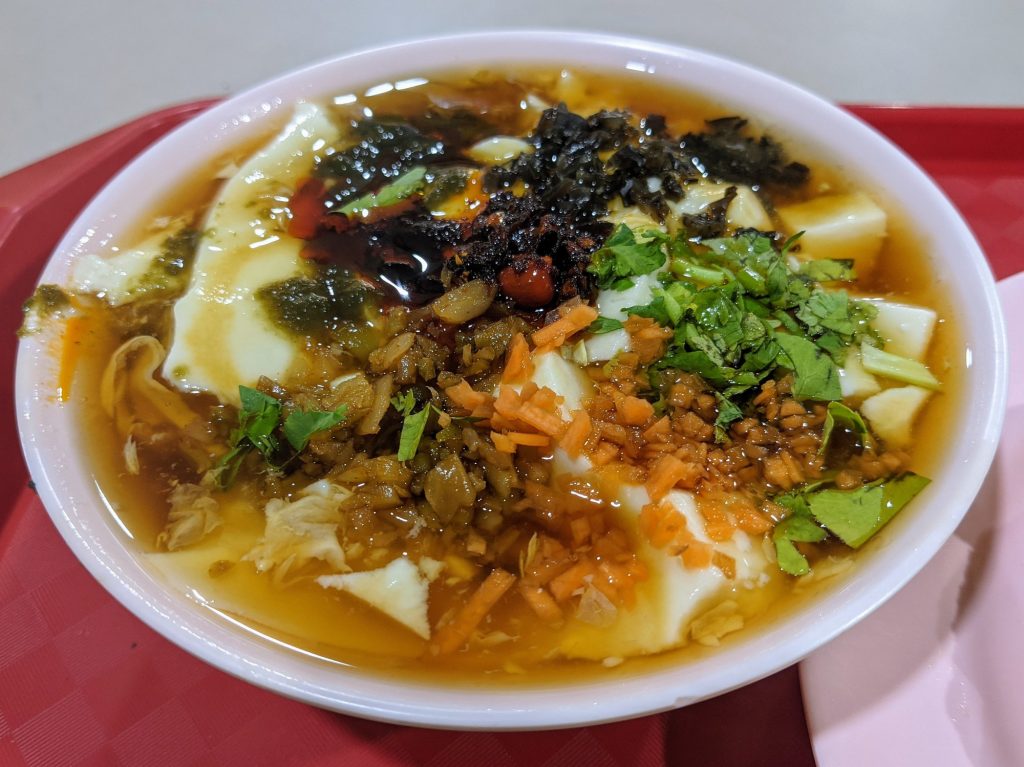
What douhua is
Douhua (豆花, dòuhuā), also called tofu pudding or “tofu flower,” is ultra-soft tofu set into a delicate curd and served in a bowl with sweet or savory toppings. In the north you will also hear 豆腐脑 (dòufunǎo, “tofu brains”) for savory breakfast bowls. Same family of soft soybean curd; different seasoning cultures.
If your only tofu reference is firm stir-fry cubes or mapo tofu’s soft cubes in chili oil, douhua is a different texture: spoonable, fragile, closer to a fine custard or panna cotta than to chewy bean curd. It is one of the gentlest first tofu experiences in China—and one of the easiest to order wrong if you expect dessert and receive chili.
This guide covers both sweet and savory tracks, how regional names shift, and a calm script for breakfast stalls and dessert shops.
Why it is a friendly first-timer bowl
Douhua is usually cheap relative to a full hotpot meal, fast to serve, and customizable. Sweet versions feel familiar if you like soy milk desserts. Savory versions teach you northern breakfast energy without requiring dumpling bravery on day one. You can eat it standing at a stall or sitting in a shop. It is also a useful mild counterpoint on days when you have already scheduled something fiercer like Sichuan hotpot for dinner—or after a spice-forward lunch elsewhere.
For payment at small breakfast windows, keep Alipay / WeChat Pay ready; many stalls still move quickly with QR codes.
Sweet douhua: syrup, ginger, and toppings
Southern and many dessert-shop versions lean sweet. The bowl arrives with soft tofu and a ladle of syrup—sometimes brown sugar, sometimes clear syrup—with optional ginger fragrance. Toppings might include peanuts, red beans, grass jelly, mango (in modern shops), dumplings of glutinous rice, or crunchy soy bits.
What to expect: warm or cool depending on shop and season. Mid-autumn evenings can go either way; summer dessert shops push cold bowls. Sweetness varies from gentle to sticky. Ask for 少糖 (shǎo táng — less sugar) if you want a softer finish.
Order cues: 甜豆花 (tián dòuhuā) or point at the sweet photo. In some areas people simply say 豆花 and the default is sweet—confirm with 甜的 (tián de).
Savory douhua / doufunao: breakfast umami
Northern savory bowls often come with a clear or lightly thickened savory broth spooned over the curd, plus toppings such as preserved vegetables, seaweed, dried shrimp, mushrooms, cilantro, and a spoon of chili paste or chili oil. The contrast—cool-soft tofu against salty, aromatic toppings—is the point.
Heat guidance: chili is optional and usually added at the end. Start without extra oil if unsure; add a little after the first spoon. This is not hotpot-level immersion heat. Say 不要辣 or 少放辣 when you order.
Order cues: 豆腐脑 / 咸豆花 (xián dòuhuā — savory). If the stall serves only one style, watch what locals receive before you commit.
Texture and how to eat it
Use the spoon provided. Do not try to pick douhua up with chopsticks like firm tofu—it will collapse. Scoop curd with some topping in each bite. If the curd weeps whey, that can be normal; excessive sour smell is not—choose a busier stall.
People with soy allergies should skip this dish entirely. If you dislike cilantro, say 不要香菜 early; it is a frequent garnish on savory bowls.
Where you will find it
- Breakfast streets and morning markets — savory northern bowls, soy milk neighbors, youtiao sold nearby (you can skip youtiao and still enjoy douhua)
- Dessert shops and night dessert stalls — sweet bowls, often with topping menus
- Some dumpling or noodle shops — as a side or breakfast add-on
- Mall food courts — clearer pictures, slightly less “alley charm”
If you are already comfortable with dumpling breakfasts, jiaozi for first-timers pairs well as a separate meal; douhua can be the lighter day. If QR table ordering appears in a sit-down dessert cafe, the same phone habits from restaurant QR menus apply.
Regional naming without stress
You do not need to master every dialect name. Focus on sweet vs savory and point. Taiwan and Southeast Asian related desserts (taho, tau fu fah) are cousins you might know from elsewhere; mainland stall presentation still varies. In Sichuan and Chongqing you may meet spicy savory douhua traditions—ask how hot before diving in.
If a menu lists both 豆花 and 豆腐脑, ask which is sweet. Staff would rather clarify than watch you flinch at chili at 7:30 a.m.
A calm ordering script
1. Watch one order if the line is fast.
2. Say 甜豆花 or 咸豆腐脑 clearly.
3. Add 少糖 / 不辣 / 不要香菜 as needed.
4. Point at toppings if there is a shared bar or photo menu.
5. Pay, step aside, eat while the texture is best.
For takeaway, sweet douhua travels better in sealed dessert cups than savory breakfast bowls with chili oil that will tip in a bag. Still, best eaten on the spot.
What it is not
Douhua is not firm tofu salad. It is not cheese. It is not yogurt, even when sweet and cold. It is not stinky tofu (different fermentation story). If you want chili-forward tofu with mince, that is closer to mapo territory on another day—see mapo tofu in Chengdu—not this pudding bowl.
First-timer mistakes to avoid
- Assuming every “tofu pudding” is dessert
- Dumping a full ladle of chili oil before tasting
- Ordering three sweet bowls because they seem light (sugar adds up)
- Expecting chopsticks to behave like with mapo cubes
- Buying from a deserted tray of lukewarm savory bowls at noon when the breakfast rush ended at 9:00
Breakfast timing and lines
Savory doufunao is a morning food in many northern neighborhoods. Arrive early if you want the best texture and toppings that have not dried out under a heat lamp. When the breakfast crowd thins, some stalls switch focus or sell out of the softest curd. Sweet dessert-shop douhua is more flexible across afternoon and evening.
If you are jet-lagged and hunting something gentle at 9:30 a.m., savory tofu pudding plus soy milk is a kinder landing than a chili-forward noodle challenge. Save experiments with heavier spice for later meals.
Building a small meal around douhua
Douhua alone can be a light snack. For a fuller breakfast, locals often add fried dough, buns, or eggs from neighboring stalls—you can also pair with fruit from a shop and call it done. There is no rule that you must recreate a complete local combo plate on visit one. A single well-chosen bowl teaches you more than a tray of unfinished sides.
At dessert shops, douhua can follow a savory dinner as a soft landing. Share one bowl between two people if you are already full; the sugar can sneak up.
Hotel and delivery notes
Delivery douhua exists in some cities through food apps, but soft curd suffers in long transit. Prefer nearby shops. Hotel restaurants may serve a sweet soy pudding under a different name—ask whether it is warm or cold and how sweet. Room-temperature mystery cups sitting on a buffet for hours are a skip.
Taste vocabulary you can use
Useful words beyond sweet/savory:
- 嫩 (nèn) — tender/soft (what you want)
- 烫 (tàng) — hot (temperature)
- 花生 (huāshēng) — peanut
- 红豆 (hóngdòu) — red bean
- 姜汁 (jiāngzhī) — ginger syrup style
Pointing still wins. Learn two words; gesture the rest.
When douhua is the wrong choice
If you need a high-protein post-hike meal, this is not it. If you dislike soy, skip. If the only nearby stall looks abandoned with crusted topping bins, walk. China has many excellent soft foods; you are allowed to wait for a better bowl.
First-timer checklist
- Decide sweet or savory before you reach the window
- Learn 甜 / 咸 / 不辣 / 少糖 / 不要香菜
- Spoon, do not chopstick-lift
- Start chili-light on savory bowls
- Eat fresh; watch stall turnover
- Phone pay ready for tiny breakfast counters
Douhua is quiet comfort food in a country famous for loud spice. Whether you choose syrup or savory toppings, the win is the soft spoonful—ordered on purpose, not by accident.