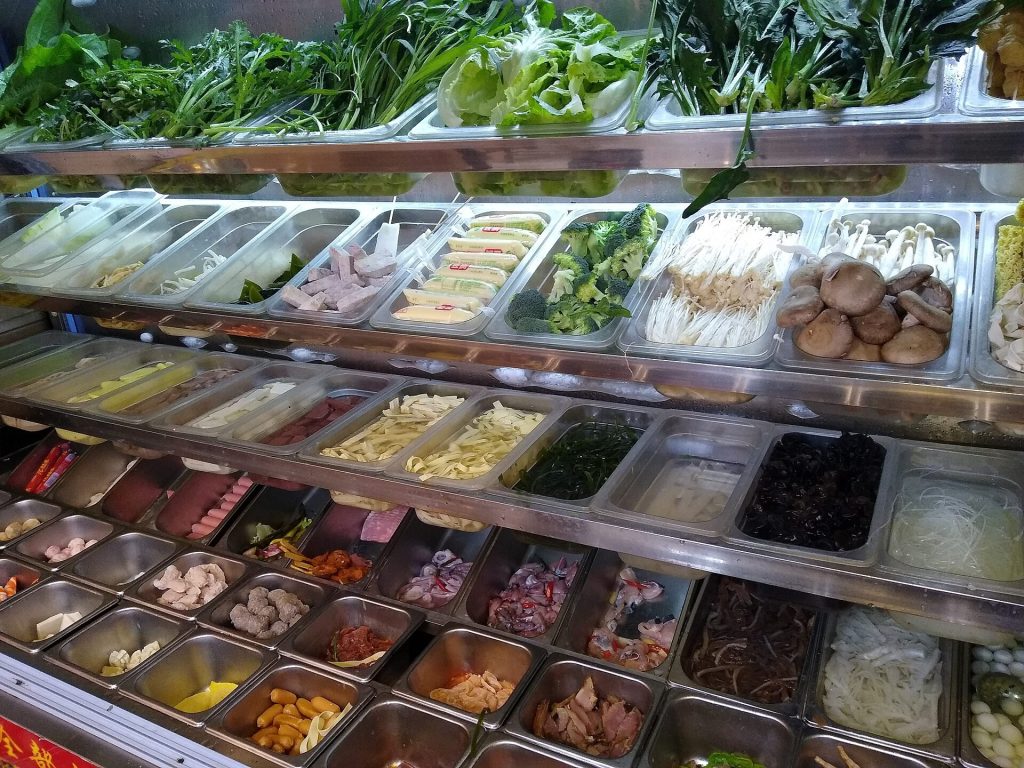
Maocai (冒菜) is one of Chengdu’s most practical one-person spicy meals: you choose ingredients, they are cooked in a numbing-hot or savory broth, and the bowl comes back as yours, not as a shared pot you have to negotiate. It looks, to a first-timer, like malatang or like a private hotpot. It is neither, and ordering goes more smoothly when you know the difference.
This is a first-timer’s plate guide, not a restaurant ranking. For neighbouring dishes, see Chengdu mapo tofu, how to order malatang, and chuanchuanxiang skewer hotpot. If you are in town in the holiday window, the Chengdu late December and New Year planner helps with everything around the meal. For table manners, chopsticks etiquette is enough.
How maocai differs from malatang and chuanchuanxiang
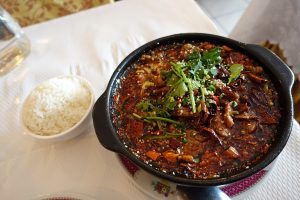
Malatang (麻辣烫) is often a choose-and-weigh or skewer-and-dip meal, frequently at a counter, with a broth that may be more “spicy soup” than a plated restaurant dish. Chuanchuanxiang (串串香) is skewers cooked in a communal pot, closer to a table hotpot. Maocai is typically a personal bowl, cooked to order behind the counter or in a kitchen, with a broth that can be packed with chili, Sichuan pepper, or a milder “tomato” or “clear” option depending on the shop.
You are not tending a burner. You are not fishing twenty skewers out of a shared pot. You are eating a composed bowl with a spoon and chopsticks, usually sitting down.
How to order without theatre
Shops either let you pick ingredients from trays or offer a menu of combinations plus add-ons. Common items include leafy vegetables, potato or lotus slices, tofu and tofu skin, mushrooms, luncheon meat, beef or lamb slices, and meatballs. If you do not recognise something, skip it rather than pointing at a tray at random.
Spice is the part visitors regret. 微辣 means mildly spicy in local terms, which can still be assertive. 中辣 is a serious bowl. 特辣 is for people who already know they want it. 麻, the numbing quality of Sichuan pepper, is separate from chili heat; if peppercorn makes your mouth tingle unpleasantly, say so. “少辣、少麻” is a clear, polite request. It will not always be followed exactly, so leave a buffer.
Tell staff if you do not eat a particular meat or if you need the oil kept lighter. You usually pay by what you selected; this article will not invent a price.
How to eat the bowl
Let the hottest oil sit for a moment if the surface is still bubbling. Vegetables and tofu can hide a surprising amount of heat. Meat slices may include bits of bone or tendon; eat slowly. A complementary staple—rice, or sometimes noodles—helps, and a sweet soya-milk or a mild drink is more useful than another chili garnish.
Maocai is often a solo or two-person lunch. Sharing one bowl is possible but messier than sharing a larger fish or hotpot; if you are two hungry adults, two bowls with different spice levels is the calmer order.
Practical notes
Carry a payment method that already works, and a little cash if the shop is small. Peak lunch and late dinner can mean a short wait; that is normal, not a sign you should abandon the queue. If your stomach is not used to chili oil, make maocai the main meal, not the fourth spicy dish of the day.
No “best street” list belongs here. Walk into a busy, ordinary shop, order a mild-to-medium bowl with vegetables you recognise, and decide later whether you want to climb the spice ladder.
Ground-level reminders for this topic
Stay flexible when a counter, app screen, or staff instruction disagrees with a blog. Lovely China orients travellers; live official pages and bilingual signs win. Keep China travel tools page, essential apps for foreigners, and Alipay and WeChat Pay hub bookmarked so logistics stay boring while you focus on the angle of this guide: A first-timer’s guide to Chengdu maocai (冒菜): a personal-bowl, cooked-to-order spicy and often numbing dish where you choose vegetables, tofu, meat, and a broth level. Distinguish it clearly from malatang (麻辣烫) street-stall skewers or scoop-and-weigh versions and from chuanchuanxiang (串串香) skewers in a communal pot. Cover how to order, spice requests for foreigners, common ingredients, and sharing vs solo bowls. No invented prices or restaurant rankings..
Related Lovely China reading
For payments, start with Alipay and WeChat Pay hub and WeChat Pay vs Alipay for tourists. For trains, keep high-speed rail first-timers guide and 12306 passport signup for foreigners handy. City hubs: Beijing first-visit guide, Shanghai first-visit guide. Connectivity: roaming vs local SIM honest guide, pocket Wi-Fi vs eSIM for China, offline maps for foreigners. Bookmark China travel tools page.
Practical checklist
- Confirm official rules on the relevant government, park, airline, or bank page near your travel week
- Screenshot bookings, tickets, and QR codes while you still have stable Wi-Fi
- Save hotel and attraction names in Chinese characters in your phone notes
- Carry passport, a backup payment method, and a small cash float (why cash is still needed)
- Test one small mobile payment before you rely on wallets at a gate or taxi
- Keep China travel tools page bookmarked for related Lovely China hubs
FAQ
Is maocai the same as malatang or chuanchuanxiang?
No. Maocai is typically a personal, cooked-to-order bowl. Malatang is often a choose-and-weigh or skewer counter meal. Chuanchuanxiang is skewers in a communal pot. Order the dish you actually want.
How spicy should I go as a first-timer?
Start with 微辣 or ask for 少辣、少麻. Local ‘mild’ can still be assertive, and numbing Sichuan pepper is separate from chili heat. You can climb the ladder later.
Do I share one bowl or order my own?
Maocai is a personal bowl. Two people with different spice tolerances should order two bowls rather than sharing one.
Will this article list the best shops and prices?
No. Choose a busy, ordinary shop, pick ingredients you recognise, and pay for what you selected. Prices belong on the menu or scale, not in a blog table.
Notes for late 2026 travellers
Late December 2026 and the New Year week into 2027 bring colder mornings, earlier sunsets, and holiday crowds in many city hubs. Pack real winter layers in the north, and leave extra time on weekends and around 1 January.
This article does not invent ticket prices, opening hours, processing times, consular fees, or official statistics. When a number matters, verify it on the official site, app screen, or ticket board near your travel week.
If an official rule page disagrees with this guide, follow the official page. Lovely China orients English-speaking travellers; we are not an immigration, banking, or medical authority.