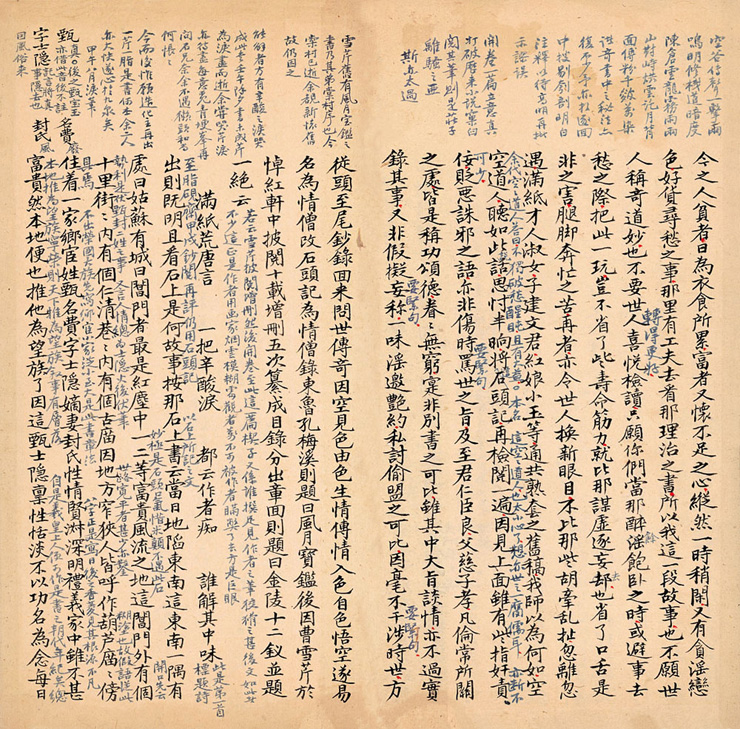
The morning mist still clung to the artificial lake when I slipped through the side gate of Grand View Garden, before the tour groups arrived with their flags and megaphones. A single gardener was raking gravel into perfect waves beside the Isle of Apricot Blossoms, the only sound the soft shhh-shhh of his tool. In that quiet, the stone bridges and moon gates stopped being props and started feeling like rooms where people once argued over poetry, burned incense, and watched the seasons turn.
Walking the Novel’s Floor Plan
The park follows the map Cao Xueqin drew with words: the Jia family’s pleasure ground where the young cousins gathered to escape their elders. You enter near the main hall where the matriarch received guests, then the path splits. Left leads to Bamboo Lodge, Daiyu’s cold and elegant retreat, where the windows frame nothing but green shadows. Right takes you to the Xiangling Pavilion, Baochai’s warmer quarters, scented with the ghost of winter plum. Between them stretches the winding corridor where the poetry society met, each bay once holding a desk, an ink stone, and a half-finished couplet.
Don’t rush the central lake. The original text spends chapters describing how the cousins raced painted boats here, how they floated lanterns during the Mid-Autumn Festival, how a drunken servant fell in and was fished out laughing. Stand on the Five-Dragon Pavilion at noon. The water reflects the upturned eaves exactly as the novel says: “a piece of jade dropped in a green bowl.” If you wait until a breeze ruffles the surface, the reflection shatters and reassembles — the novel’s central metaphor made visible.
When to Go for the Right Light
The garden reads differently by season. Late spring, when the crabapples bloom along the eastern wall, matches the “Crabapple Poetry Club” chapters. The air carries petal-scent and the paths are slick with fallen pink. Early autumn brings the osmanthus trees near the Iron Threshold Temple into flower; their sweetness drifts over the walls before you see the blossoms. This is when the novel sets the chrysanthemum tasting party. Winter is quietest — snow on the rockeries, the lake frozen hard enough to walk on — but many pavilions close their shutters against the cold.
Avoid the first week of the fifth lunar month (the Dragon Boat holiday) and the first week of the tenth lunar month (National Day). The crowds turn the narrow corridors into slow-moving queues. Instead, aim for a weekday morning in the third or fourth lunar month. The light slants low through the latticed windows at nine, gilding the dust motes the way Cao describes in Chapter 27. By eleven the tour groups arrive. By three the light flattens.
What the Plaques Don’t Tell You
Every pavilion bears a plaque with its literary name in calligraphy. What the signs omit: which buildings are reconstructions. The original garden burned during the Anglo-French expedition of 1860. What you walk through today was rebuilt starting in the 1980s for a television adaptation, then expanded for tourists. The rockeries use Taihu stones shipped from the south, but the placement follows the novel’s descriptions — the “Grotesque Rock” beside Bamboo Lodge really does resemble a crouching lion, just as the text insists.
Look for the small details the guides skip. In the room where Daiyu buries flowers, a ceramic jar sits half-buried under a flowering crabapple. The novel specifies it should be blue-and-white porcelain with a cracked glaze. This one is. Someone cared enough to get the glaze right. In Baochai’s room, the bronze mirror on the dressing table reflects the garden through the window — a deliberate alignment. The mirror frame bears the four-character inscription “heart like autumn water,” a phrase the novel attributes to her.
Eating Where the Characters Ate
The park’s restaurant serves “Red Chamber Banquet” dishes, but the better meal is outside the north gate. A row of no-frills shops sells the snacks the novel mentions by name: rose-petal cake steamed in bamboo baskets, lotus-root starch pudding thick enough to hold a chopstick upright, almond tofu cut into trembling cubes. Order the “Five-Spice Tea Eggs” — the vendor cracks the shell in a spiderweb pattern so the brine stains the white into marbled amber. Eat standing at the counter, watching the bicycles pile up outside. This is closer to what the servants ate in the kitchen courtyard than anything on a lacquered tray inside.
If you want the full literary spread, book a private room at the Lao Beijing restaurant two blocks west. Ask for the “Grand View Garden Set” — they know it by heart. It arrives in courses mapped to chapters: bird’s nest soup for the matriarch’s birthday (Chapter 18), pigeon-egg dumplings for the lantern festival (Chapter 22), cold chicken in chili oil for the drunken feast (Chapter 38). The chef will explain each dish’s scene. Eat slowly. The novel spans years; the meal should span hours.
Mistakes First-Timers Make
- Treating it like a museum. The novel is about life lived in these spaces — people napping on daybeds, spilling wine on scrolls, carving initials into window lattices. Sit on a stone bench. Lean against a pillar. Let your hand find the groove worn by two centuries of fingers on the same railing.
- Following the numbered route on the map. The novel’s characters wander. They get lost. They double back. Enter a moon gate, turn left instead of right, discover a courtyard with a single gingko tree dropping gold fans in autumn. That moment of disorientation is the truest thing you’ll feel here.
- Skipping the back hill. Most visitors cluster around the lake and main halls. The artificial mountain behind the Iron Threshold Temple has a cave system where the novel hides a mad monk and a buried manuscript. The path is steep, the signage faint. Climb it anyway. From the summit you see the whole garden spread below — the novel’s structure revealed as geography.
- Expecting English everywhere. The plaques have bilingual titles, but the couplets on the pillars, the poems carved into rock faces, the marginalia in the display cases — all classical Chinese. Photograph the ones that move you. Translate them later. The delay deepens the encounter.
- Buying the “authentic” jade pendant in the gift shop. The novel’s jade is a birth-token, warm from skin, inscribed with “Don’t forget, don’t lose, immortal life, eternal prosperity.” The shop versions are mass-produced nephrite on red cord. If you want the object, find a jade carver in Panjiayuan market. Ask for mutton-fat jade, unpolished, with the eight characters hand-cut. It will cost a month’s rent. The novel would approve.
Carrying the Garden Home
On my last visit, an elderly woman sat in the courtyard of the Iron Threshold Temple, folding paper lotuses. She placed each one in a ceramic bowl of water, watching them open. “For the girls,” she said when I asked. “They liked flowers that bloom in water.” She didn’t mean the characters. She meant the women Cao wrote for — his cousins, his sisters, the maids who raised him. The garden was his memorial to them. Hers was a smaller offering, but it reached the same address.
Before you leave, find the stone tablet near the exit carved with the novel’s opening couplet: “Pages full of absurd words / Handfuls of bitter tears.” Run your fingers over the characters. The stone is cold, the grooves deep. Thousands of hands have traced this same path. Yours is the latest. The garden doesn’t belong to the Jia family anymore, nor to Cao Xueqin, nor even to the park administration. It belongs to everyone who has ever read the novel and felt the weight of a world passing. Now you’re one of them.