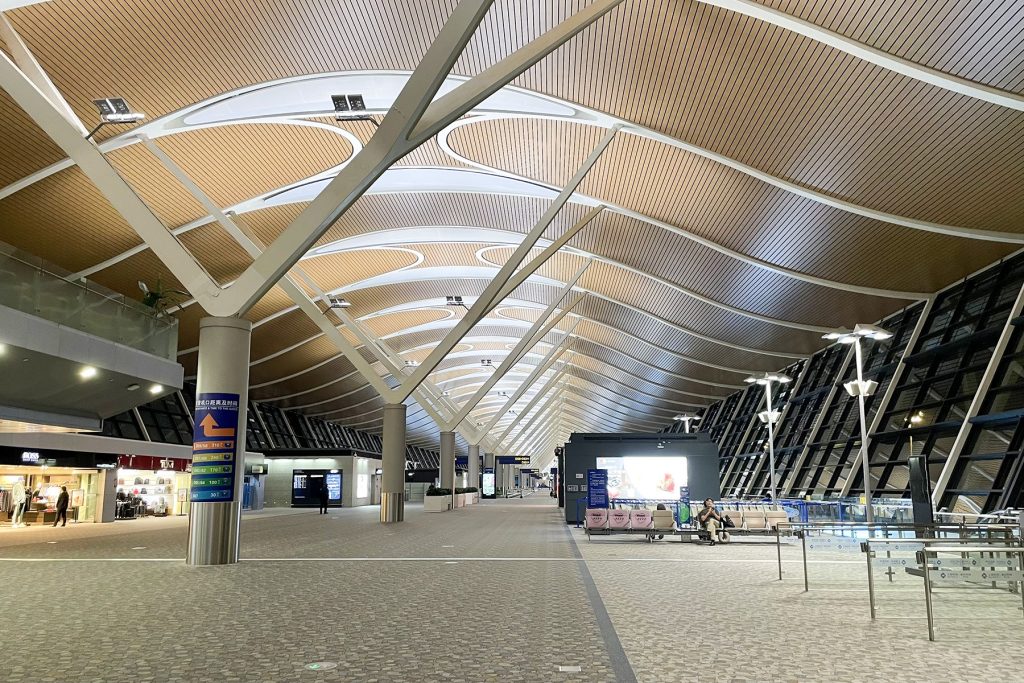
A four-hour connection through Shanghai or Beijing is not the same problem as a two-night stay in Hangzhou on the way to a third country. China has more than one transit idea, and travellers mix them up at check-in. One path is a short, often airside connection: you arrive internationally, you remain in the international transit area, and you leave again without entering the mainland as a visitor. Another is 240-hour visa-free transit, which is a permission to pass immigration, enter an allowed area, and continue later to a third country or region.
This article is the choice between staying airside on a short connection and entering under 240-hour transit. It is not the 240-hour versus 30-day comparison in 240-hour transit vs 30-day visa-free, and it is not the older 144-hour versus 240-hour explanation in 144-hour vs 240-hour visa-free transit. Official language lives on nia.gov.cn and on the pages of the airport you will use. Re-check both near your travel week. We will not invent which terminals allow overnight airside rest, which hotels sit inside a transit zone, or how long a given airport will let you remain without entry formalities.
When staying airside is the simpler story
Stay airside when your journey is really a connection: arriving and departing internationally, with bags that can be checked through or re-checked inside the transit area, and with enough time to walk from one gate area to the next without collecting luggage at a domestic belt or transferring to a second airport across town.
In that situation, entering China may be unnecessary. Entering adds immigration queues, a permission you have to qualify for, and the need to return through security and, often, a second check before your onward flight. If you can complete the connection without leaving the international area, many travellers are better off doing exactly that.
“Can” is the honest word. Airports differ. Some connections force you to change terminals in a way that leaves the sterile area. Some flights cannot through-check bags, which means you must collect luggage and, in many layouts, pass immigration to do it. A late-December 2026 night arrival with an early flight the next calendar day may look like a 24-hour idea on paper and still require a hotel landside. Do not assume an airside transit hotel exists at your airport, and do not invent access rules for the ones that do. Ask the airline how bags are tagged, and read the airport’s international-transfer pages.
The short 24-hour direct-transit idea, in official summaries, is about passing through China without becoming a stay. It is not a city-break visa. If a blog promises that “24 hours always includes a downtown hotel,” treat that as folklore until an official page for your port says otherwise.
When you actually need to enter
You generally need a landside permission—240-hour visa-free transit, 30-day visa-free entry, a visa, or another facility that actually applies to you—when you will leave the international transit area. Typical reasons include collecting bags and staying in a city hotel, transferring to another airport, taking a high-speed train onward from a city station, or spending a day or more in the allowed region before you leave for a third country or region.
240-hour visa-free transit, outlined in 240-hour visa-free transit overview, is the facility built for that longer, landside transit. It comes with nationality, port, area, and onward-ticket conditions. You confirm permitted cities and ports with check 240-hour transit permitted cities, you keep documents in the spirit of 240-hour transit immigration documents, and you re-read nia.gov.cn rather than memorising an old 144-hour map. 144-hour vs 240-hour visa-free transit explains why older “144-hour” language still appears in stale blogs.
If you qualify for 30-day visa-free entry and your trip is really a visit, use 240-hour transit vs 30-day visa-free instead of stretching a transit label to fit a holiday.
A practical way to decide before you buy
1. Write down the arriving flight, the departing flight or train, the scheduled time between them, and whether they use the same airport and the same international area.
2. Ask the airline, in writing if you can, whether bags are checked through to the final destination.
3. If the connection is same-airport, international-to-international, and bags can stay airside, plan to remain airside unless an official or airline instruction says you must clear immigration.
4. If you need a hotel in the city, a second airport, a train station, or a day of sightseeing, stop calling it an airside connection. Check whether 240-hour transit or another facility applies, and buy an onward ticket that supports it.
5. Screenshot official notices and your tickets. Airline check-in staff may ask which story you are using, as visa-free documents to show the airline describes.
Mistakes to avoid
Do not enter just to “look around” if you have not confirmed a facility that allows entry; exiting airside is not a casual stroll. Do not stay airside if your bag will appear at a landside belt and you have no plan to collect it. Do not treat 24-hour and 240-hour as interchangeable clocks. They are different permissions with different geography.
During late December 2026 and the New Year week into 2027, connections grow tighter because of holiday traffic, not because of a number we will invent. Build a buffer, and if the connection only works if every queue is short, it does not really work. Follow the official page when it disagrees with this guide.
Related Lovely China reading
For payments, start with Alipay and WeChat Pay hub and WeChat Pay vs Alipay for tourists. For trains, keep high-speed rail first-timers guide and 12306 passport signup for foreigners handy. City hubs: Beijing first-visit guide, Shanghai first-visit guide. Connectivity: roaming vs local SIM honest guide, pocket Wi-Fi vs eSIM for China, offline maps for foreigners. Bookmark China travel tools page.
Practical checklist
- Confirm official rules on the relevant government, park, airline, or bank page near your travel week
- Screenshot bookings, tickets, and QR codes while you still have stable Wi-Fi
- Save hotel and attraction names in Chinese characters in your phone notes
- Carry passport, a backup payment method, and a small cash float (why cash is still needed)
- Test one small mobile payment before you rely on wallets at a gate or taxi
- Keep the China travel tools page page bookmarked for related Lovely China hubs
FAQ
If my connection is under 24 hours, do I always stay airside?
No. A short clock helps only if you can actually remain in the international transit area and your bags can be handled there. Collecting luggage at a landside belt, changing airports, or staying in a city hotel usually means leaving airside and needing a permission that allows entry.
Is 24-hour airside transit the same as 240-hour visa-free transit?
No. They are different facilities. 240-hour transit is a landside permission with nationality, port, area, and onward-ticket conditions. A short airside connection is about completing an international transfer without entering as a visitor. Recheck nia.gov.cn and your airport’s transfer pages.
How is this different from the older 144-hour transit articles?
144-hour language still appears in stale blogs. Current official notices and our 144-versus-240 guide are the better comparison if you are choosing among landside transit facilities. This article is only about airside-versus-entry, not about 144 versus 240.
What should I ask the airline before I fly?
Whether bags are checked through to the final destination, and whether the two flights use the same international area at the same airport. Screenshot the answer and the tickets, then decide whether you truly need to enter.
Notes for late 2026 travellers
Late December 2026 and the New Year week into 2027 bring colder mornings, earlier sunsets, and holiday crowds in many city hubs. Pack real winter layers in the north, and leave extra time on weekends and around 1 January.
This article does not invent ticket prices, opening hours, processing times, consular fees, or official statistics. When a number matters, verify it on the official site, app screen, or ticket board near your travel week.
If an official rule page disagrees with this guide, follow the official page. Lovely China orients English-speaking travellers; we are not an immigration, banking, or medical authority.