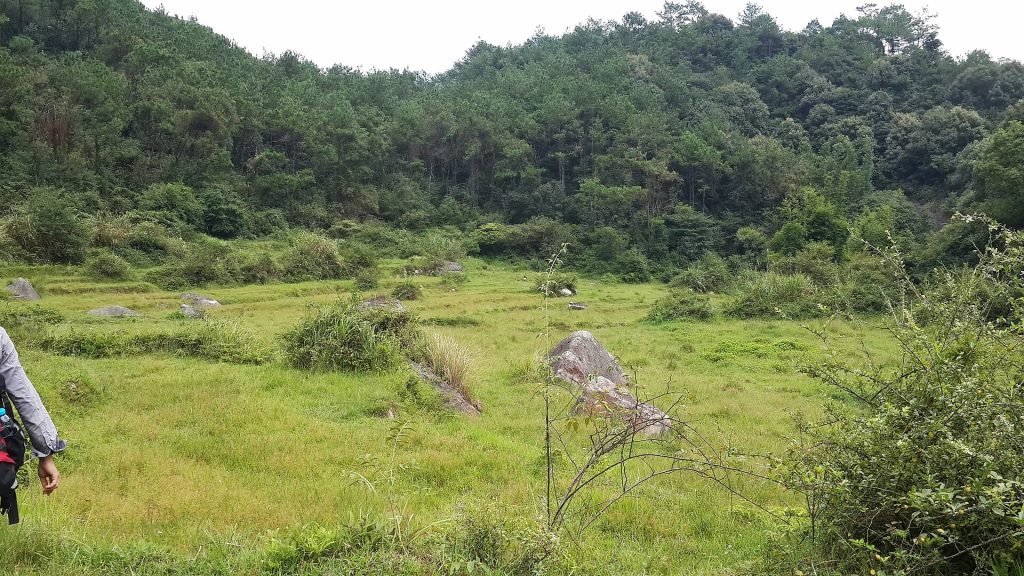
The minibus rattles past a row of half-finished high-rises, their concrete ribs exposed to the morning mist, then drops into a valley where banana trees shade a narrow creek. An old woman in a straw hat waves from a roadside stall stacked with lychees, their skins cracked and dripping sweet juice. This is Minhou — not quite Fuzhou, not quite the deep countryside, but a place where university students on shared bikes zip past farmers loading bamboo onto three-wheeled trucks.
Getting There Without a Headache
Most visitors arrive via Fuzhou. If you are staying near the city center, the simplest route is a city bus — routes 33, 511, or 905 all terminate near the museum cluster in Ganzhe Subdistrict. The ride takes about forty minutes and costs pocket change. For the university campuses, look for the dedicated shuttle buses that leave from the main gates of Fuzhou University and Fujian Normal University downtown; they run every twenty minutes during term time and are free with a student ID, though drivers rarely check if you are carrying a backpack. Taxis from the city center to the Tanshishan area run around eighty yuan, but agree on the price before the meter starts if you are heading farther into the hills. The two university train stations — Fuzhou University and Fujian Normal University — sit on the Fuzhou–Pingtan line; trains from Fuzhou South take twelve minutes, but the stations are a twenty-minute walk from the main campus gates through construction zones.
Moving Around the County
Minhou spreads out along the Min River’s western bank, so a single mode of transport rarely covers everything. In the suburban belt around Ganzhe, the city bus network is dense — buses 517, 767, and 905 form a loose loop connecting the county museum, the Tanshishan site, and the main shopping street. Beyond that, the schedule thins out. I rented an electric scooter from a shop near the Fuzhou University north gate for thirty yuan a day; the owner photocopied my passport and handed me a helmet with a cracked chin strap. It was the only way to reach the tea villages in the western hills before noon. If you prefer four wheels, Didi works reliably in the built-up areas, but drivers cancel the moment you drop a pin in a village like Shanggan or Xiangqian. Boats still ply the Min River between the old ferry piers, mostly carrying construction sand, but a few captains will take passengers upstream to the rock-carving sites if you negotiate at the dock near the county government compound.
What to See: Stones, Tea, and Campus Life
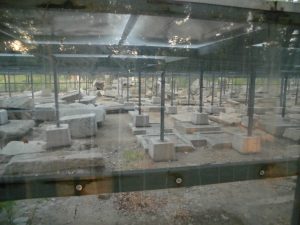
The Tanshishan Site Museum sits on a low hill where archaeologists unearthed a Neolithic shell mound five thousand years old. The main hall displays pottery with cord-marked patterns and stone adzes still sharp enough to shave bamboo. Allow an hour; the captions are Chinese only, but the layout follows a clear timeline. Down the road, the Minhou County Museum occupies a modern glass box — its strength is the Ming dynasty porcelain recovered from local kilns, especially the bluish-white qingbai bowls that catch the light like frozen tea. Both museums close on Mondays.
For a living scene, walk through the Fuzhou University campus at sunset. The library plaza fills with students practicing calligraphy on water-writing cloth, the characters vanishing as they dry. A side path leads to a hilltop pavilion where you can see the Min River curve around the city’s southern edge, the pagoda of White Lake Temple a white dot in the distance. If you have a car, drive thirty minutes west to Shanggan Village. The road climbs through terraced tea gardens; in late spring the air smells of roasted chestnut and fresh-picked oolong. Villagers dry leaves on bamboo mats in their courtyards and will invite you to taste if you linger near the ancestral hall.
Eating: River Fish, Mountain Greens, and Late-Night Noodles
Minhou cooking leans on the Min River and the hills behind it. The signature dish is steamed river fish with fermented red yeast rice — the fish arrives whole, skin glistening, flesh peeling off the bone in translucent flakes, the sauce a deep rose with a sweet-sour kick that lingers on the fingers. Mountain villages serve stir-fried bamboo shoots with smoked pork belly; the shoots keep a crunch that squeaks between teeth, the pork rendering into ribbons of fat that coat the wok. In the university districts, night markets spring up after ten. Look for the cart selling peanut soup — thick, grainy, sweetened with slab sugar, served in a porcelain bowl with a side of fried dough sticks you tear and dip.
- Steamed river fish with red yeast rice: whole grass carp (about 600 g), 2 tbsp red yeast rice paste, 3 slices ginger, 2 scallions, 1 tbsp light soy, 1 tsp sugar, 2 tbsp hot oil. Clean fish, slash diagonally both sides. Rub paste inside and out, stuff cavity with ginger and scallion. Steam 12 minutes over high heat. Discard liquid. Top with fresh scallion threads. Heat oil until smoking, pour over fish. Drizzle soy and sugar.
- Stir-fried bamboo shoots with smoked pork: 300 g fresh spring shoots (peeled, sliced), 100 g smoked pork belly (thin slices), 2 dried chilies, 1 tbsp fermented bean paste, 1 tsp rice wine. Blanch shoots 2 minutes, drain. Render pork in cold wok until fat turns translucent. Add chilies, bean paste, stir 10 seconds. Toss in shoots, splash wine, high heat 1 minute. No salt needed.
- Peanut soup (street style): 200 g raw peanuts (soaked 4 hours), 1.5 L water, 80 g slab sugar, pinch salt. Pressure cook peanuts 25 minutes until skins slip. Blend half, return to pot. Melt sugar, stir. Simmer 5 minutes. Serve hot with fried dough sticks.
What Newcomers Get Wrong
First mistake: treating Minhou as a day trip from Fuzhou. The museums take half a day, but the tea villages and river valleys need an overnight to make sense — especially if you want to catch the morning mist over the terraces. Second: assuming English works anywhere outside the university gates. Even at the Tanshishan ticket window, the staff speak Fuzhou dialect and Mandarin; bring a translation app with offline packs. Third: showing up at a village ancestral hall during the Qingming period in early spring without an invitation. Families gather to sweep tombs and offer roast pig; outsiders are tolerated at a distance but not welcomed into the inner courtyard. Fourth: ordering “Fuzhou fish balls” in a Minhou restaurant. The local version uses shark meat pounded to a paste that bounces like rubber — different texture, different broth. Ask for “Minhou yuwan” specifically. Finally: relying on the last bus back to the city. The 905 stops running at 9:30 p.m.; after that, you are negotiating with unlicensed minivan drivers who charge triple.
Seasonal Rhythms and Quiet Corners
Visit in the third lunar month (usually April) when the lychee blossoms turn the hills white and the tea harvest begins. The university campuses empty out during the summer heat, leaving the libraries cool and the canteens half-full — a good time to wander without crowds. Autumn brings the Mid-Autumn Festival lantern displays along the Min River promenade in Ganzhe; locals release floating candles in paper lotus shapes, and the water carries them downstream past the new bridge. Winter is quiet, but the smoked pork hangs from every farmhouse eave, curing in the damp cold. If you find yourself with a free afternoon, slip into the side alley behind the county museum where an old carpenter still hand-carves wooden tea caddies. He does not sell to tourists, but he will let you watch the plane shave curls of camphor wood onto the concrete floor, smelling of resin and time.