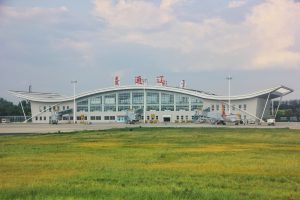
The high‑speed train brakes with a hiss, and the platform at Minle Station opens onto a plain that stretches south until it hits the white wall of the Qilian Mountains. It is late June. The air smells of dry earth and something sweet, almost floral, drifting from the fields that begin a few hundred meters beyond the station forecourt. A handful of taxi drivers lean against their cars, smoking, waiting for the two daily trains from Zhangye. There is no tourist office, no English signage, just a concrete shelter and a vendor selling warm bottles of yogurt drink. This is the gateway to Minle County — quiet, wide, and entirely dependent on the season.
Getting There and Moving Around
Minle sits on the Lanzhou–Xinjiang High‑Speed Railway. Trains from Zhangye West take about twenty minutes; from Xining, roughly an hour and a half; from Lanzhou, just under three hours. The station handles a cluster of mid‑day services, then goes quiet until the next morning. If you arrive on the last train, the taxi queue evaporates fast — arrange a pickup through your guesthouse or have a ride‑hailing app ready. The G227 highway cuts straight through the county seat on its way between Zhangye and Xining, so long‑distance buses and private drivers drop passengers at the main intersection near the county government buildings. Once you are off the main road, public transport thins out. Renting a car in Zhangye or Xining is the only practical way to chase the flower fields or reach the cliff temples on your own schedule. Most guesthouse owners know a driver who will wait for a day rate; negotiate the price before the engine starts.
The Rapeflower Sea: Timing, Light, and Logistics
Mid‑June to early July is the only window that matters. The fields south of the county seat, just before the highway climbs into the mountains, turn a saturated yellow that looks edited in photos but is startling in person. A designated tourism zone has been carved into the bloom: wooden viewing platforms, a dirt loop trail, and a pen where decorated yaks stand patiently for photos. Horses are available for short rides along the field edges. Admission was free the last time I passed through, though a ticket booth has been built and fees may appear without notice. The best light hits the ridge behind the platforms around 7 a.m. and again after 6 p.m., when the sun sits low enough to gild the petals and the Qilian peaks catch the last glow. By mid‑morning the tour buses from Zhangye arrive, and the narrow paths clog with selfie sticks. If you want the patchwork effect — stripes of yellow, green wheat, and brown earth — walk the ridge trail to the small knoll marked by a lone poplar. From there the whole valley spreads out like a quilt.
- When to go: Late June to early July, roughly the fifth to sixth lunar month.
- Entry: Currently free; carry cash in case a fee is introduced.
- Gear: Wide‑brim hat, sunscreen, sturdy shoes — the paths are uneven dirt.
- Transport: Taxi from the station or county seat (15‑20 minutes); driver will wait for ¥50‑80 round trip.
- Crowd hack: Arrive before 7 a.m. or stay past 6 p.m.; the light is better and the buses are gone.
Mati Si: The Cliffside Monastery Reached Through Minle
The access road to Mati Si — Horse’s Hoof Temple — branches off the G227 inside Minle County, winding up into the Qilian foothills. The temple complex is a series of grottoes carved into a sheer sandstone cliff, some stacked seven stories high, connected by wooden staircases that cling to the rock face. Inside, the air stays cool and smells of juniper incense and yak butter. Monks in maroon robes move between shrines where pilgrims leave barley grains and khata scarves. The main cavern holds a towering clay Buddha, its face softened by centuries of smoke. Below the cliffs, a village of Tibetan herders runs guesthouses and a small restaurant serving hand‑pulled noodles in mutton broth. Staying overnight here changes the pace entirely: you wake to the sound of prayer wheels turning in the wind and can hike the alpine meadow behind the temple before the day‑trippers arrive. The road is paved but steep; in winter or early spring, ice can close the upper switchbacks. Check conditions in Zhangye before you commit to the drive.
Eating and Sleeping in the County Seat
The town itself is a grid of low‑rise blocks centered on a square where retirees fly kites in the evening. There are no boutique hotels. The best beds are in family‑run inns (家庭旅馆) tucked into the lanes behind the main market — clean rooms, shared bathrooms, and a landlady who will fry you tomato‑egg noodles at 6 a.m. if you ask. For a proper dinner, follow the smell of cumin to the night market stalls near the bus station. Order yangrou chuan (lamb skewers) brushed with chili powder, liangfen (cold mung‑bean jelly) doused in vinegar and garlic, and a bowl of suan tangzi — sour soup with hand‑torn noodles, pickled cabbage, and a slick of chili oil. Wash it down with a bottle of Huanghe beer, served warm in summer. If you need supplies, the supermarket on Renmin Lu stocks water, snacks, and basic toiletries; ATMs are inside the Agricultural Bank branch on the same street.
What Newcomers Get Wrong
First, they treat Minle as a day trip from Zhangye. The train ride is short, but the flower fields and Mati Si lie in opposite directions, each needing half a day at minimum. Rushing both leaves you with photos but no memory of the place. Second, they assume the rapeflowers bloom on a fixed Gregorian calendar. They follow the lunar rhythm and the altitude; a cold spring pushes the peak into July, a warm one pulls it into June. Ask a local driver the week you arrive — do not trust last year’s blog post. Third, they underestimate the sun at 2,000 meters. The UV index burns through light shirts in twenty minutes. Bring a long‑sleeve UV shirt, not just sunscreen. Fourth, they expect English menus or signage. Outside the Mati Si ticket office, almost nothing is translated. Learn the characters for lamb (羊肉), noodles (面), and beer (啤酒), or carry a photo of each dish on your phone. Finally, they forget cash. Mobile pay works in the county seat, but the flower‑field parking lot, the yak‑photo pen, and the mountain guesthouses often only take paper yuan.
A Day That Works
Take the 7:15 a.m. train from Zhangye West. Step onto the platform at 7:35. A pre‑booked driver waits; you reach the flower‑field ridge by 8:00, when the light is gold and the platforms are empty. Walk the loop, climb the knoll, drink a bottle of water. Back in the car by 10:00, drive forty minutes up the valley to Mati Si. Eat hand‑pulled noodles in the village courtyard at noon. Spend the afternoon exploring the grottoes and the meadow behind the temple. Sleep in a Tibetan family guesthouse — thick quilts, a stove, and a view of the cliffs glowing at dusk. Next morning, hike the alpine trail before breakfast, then ride back to Minle Station for the 2:30 p.m. train to Xining or the 4:00 p.m. to Lanzhou. You will have seen the county’s two souls — the cultivated sea of yellow and the wild stone sanctuary — without ever feeling rushed.