The minibus shuddered to a halt on the shoulder of the G109, engine coughing in air thin enough to make a headache bloom behind my eyes. Outside, the grassland stretched flat and pale to the horizon, broken only by a line of prayer flags snapping in a wind that cut straight through my fleece. A herd of yaks grazed fifty meters away, indifferent to the train roaring past on the elevated tracks, its whistle a low moan in the vast silence. This was Nagqu: 4,500 meters up, the roof of the world’s northern pasture, and the first place my lungs truly understood what altitude meant.
When the grassland wakes up
Most travelers pass through in July and August, when the plateau turns a startling green and wildflowers—yellow potentilla, blue gentian, white edelweiss—carpet the ground between the tents. The air holds a faint warmth at midday, maybe fifteen degrees, and the nights, while cold, don’t bite like they do in winter. This is also festival season. The Nagqu Horse Racing Festival usually falls in the sixth lunar month. For a week, the plain outside town fills with canvas, smoke from juniper fires, and riders galloping bareback at breakneck speed, scooping up khata scarves from the dirt. If you want that energy, book a guesthouse bed months ahead.
September brings a quieter beauty. The grass yellows to gold, the tourist buses thin out, and the light turns sharp and golden, perfect for photography. By the tenth lunar month, the first hard freezes arrive. Winter here is brutal: daytime highs struggle past minus ten, wind scours the exposed roads, and many county-level guesthouses simply lock their doors until spring. Unless you are chasing the stark silence of a frozen Namtso shoreline, avoid the deep cold months.
Getting there without losing your breath
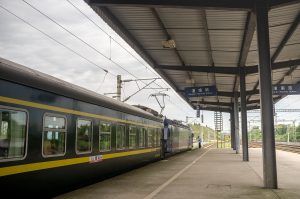
The Qinghai–Tibet Railway is the easiest way in. Trains from Lhasa take about four hours; from Xining, roughly twelve. The carriage oxygen supply helps, but the real test comes when the doors open at Nagqu station. Step onto the platform slowly. Keep your coat on. Resist the urge to take a deep, gasping breath—it only triggers coughing. I watched a group of lowland tourists sprint for a taxi and spend the next hour vomiting in a hotel lobby. Walk like an old man for the first twenty-four hours.
Driving the G109 from Lhasa or the G317 from Chengdu offers more control over acclimatization. You can stop at the Tuotuo River bridge, at the Kunlun Pass, at any roadside stupa where the air feels marginally thicker. Shared Land Cruisers leave Lhasa’s Liuwu Bus Station before dawn; expect a bone-rattling six to seven hours if the road is clear. Landslides in the rainy season can add half a day. Carry water, high-calorie snacks, and a plastic bottle for emergencies—there are no service stations worth the name between Damxung and Nagqu.
Sleeping, eating, and not panicking at 4,500 meters
Seni District has a cluster of three-star hotels near the railway station with oxygen piped into the lobby and sometimes into rooms. Ask for “oxygen supply” when booking; some places only run it in common areas. A standard double runs 300 to 500 yuan in peak season, less in shoulder months. In the counties—Baingoin, Nyima, Amdo—options shrink to basic guesthouses: concrete floors, squat toilets, a communal stove burning dung briquettes. Bring your own sleeping bag liner.
Food is fuel here. Breakfast is almost always yak butter tea—salty, oily, an acquired taste—and tsampa, roasted barley flour mixed into a dough ball with your fingers. Lunch and dinner revolve around yak meat: stewed with radish and potatoes until the broth turns milky, or dried into jerky (shapaley) that you gnaw on during long drives. Vegetables are scarce and expensive; a wilted cabbage leaf costs three times the Lhasa price. If your stomach turns, plain rice with a spoonful of fermented bean paste (doubanjiang) from your own pack is a lifesaver.
- Carry a fingertip pulse oximeter; watch for SpO2 below 85%.
- Diamox (acetazolamide) 125 mg twice daily starting the night before ascent—consult your doctor at home.
- Hydrate until your urine runs clear; the dry air steals moisture silently.
- Sleep with your head elevated on two pillows; it reduces morning headache.
- No alcohol, no hot showers, no running for the first forty-eight hours.
What to actually see between the highway and the horizon
Namtso Lake sits two hours south on a paved spur road. At 4,718 meters, the water is a violent turquoise ringed by snow-capped Nyenchen Tanglha peaks. Pilgrims circumambulate the shore prostrating every three steps; tourists snap selfies at the “Heavenly Lake” sign. Go at dawn. The wind dies down, the surface turns to glass, and you might have the peninsula to yourself for an hour before the tour buses climb the pass. Entry fee applies; bring your passport for the checkpoint.
North of town, the Siling Co (Seling Tso) basin opens into a salt-lake wilderness. No paved road reaches the shore—you need a local driver with a high-clearance 4WD and a spare tire. The landscape feels lunar: cracked mud flats, wind-carved yardangs, flocks of bar-headed geese in summer. I camped there one night in a tent anchored with yak-skull weights. The Milky Way cast shadows. No phone signal. No other souls. That silence is the real attraction.
In Seni, the Nagqu Monastery (Nagqu Chode) sits on a hill behind the market. It’s a Gelugpa complex rebuilt after the Cultural Revolution, modest compared to Lhasa’s great houses, but the debate courtyard comes alive in the afternoon. Monks in crimson robes clap hands, stomp feet, fire rapid-fire logic questions. Visitors may watch quietly from the perimeter—no photos inside the assembly hall. The market below sells turquoise beads, yak-hair ropes, and vacuum-packed yak jerky. Bargain gently; the vendors are often nomads who walked two days to reach town.
Moving deeper: Baingoin, Nyima, Amdo
Baingoin County lies west, reached by a graded dirt road that climbs over the 5,200-meter Dangla Pass. The county seat is a scatter of whitewashed buildings around a central square. From here, you can hire a motorcycle guide to the ancient rock art at Rongma—petroglyphs of hunters, deer, and sun symbols etched into basalt boulders. The guide will expect 300 yuan for a half day, plus fuel. Bring lunch; there is nowhere to buy food once you leave the square.
Nyima County, further northwest, is the domain of the Changtang Nature Reserve. Permits are mandatory and must be arranged in Lhasa or through a registered Tibetan travel agency—no exceptions. The reserve protects Tibetan antelope, wild yak, and kiang. Wildlife viewing means hours of scanning ridgelines through binoculars from a bouncing vehicle. I spent a full day seeing nothing but marmots, then at dusk a herd of two hundred kiang thundered across a basin, dust rising like smoke. That moment justified every jarring kilometer.
Amdo County sits on the northern edge, where the plateau drops toward the Hoh Xil desert. The train line parallels the road here, and you can sometimes watch a freight train crawl across the flats while you drink instant noodles at a roadside shack. The county town has a single decent noodle shop—hand-pulled, beef broth, chili oil—and a post office that doubles as a parcel pickup for nomads ordering solar panels on Taobao. It’s a good place to refill water jugs before the final push north.
What locals expect and where newcomers stumble
Tibetan nomads value personal space differently than city dwellers. If you approach a tent uninvited, the mastiff tied to the doorframe will decide your fate. Wait at a respectful distance—ten meters—until someone notices and waves you over. Accept butter tea with both hands; sip, don’t gulp. Leaving a small coin or a packet of cigarettes on the low table when you depart is polite, not transactional.
Photography etiquette trips up many. Never point a lens at a sky burial site, even from afar. Never photograph inside a monastery hall without explicit permission. Portraits of elders require a verbal yes; a nod is not enough. I once watched a guide argue with a tourist who had climbed a mani pile for a better angle—the guide made him walk three circuits clockwise while reciting “Om mani padme hum” as penance. The tourist was embarrassed; the guide was protecting the tourist’s own karma, he said.
Permits are the invisible wall. Beyond Seni District, every county requires an Alien Travel Permit (ATP) plus, for restricted zones like Nyima, a Military Permit. Your agency handles the paperwork, but you must hand over your original passport and visa for days at a time. Carry color photocopies of the data page and visa for daily ID checks at checkpoints. Losing the original in a saddlebag on a motorcycle ride is a nightmare I’ve seen twice.
Finally, respect the wind. It howls off the Tanggula range with no trees to break it. A cheap windbreaker tears in an hour. Invest in a hard-shell jacket rated for mountaineering, gloves you can operate a camera with, and a buff to cover your face. Sunburn happens in twenty minutes at this elevation—zinc oxide on nose, ears, and lips, reapplied after every tea stop. The plateau doesn’t forgive carelessness, but it rewards the prepared with a silence and scale that stay in your ribs long after you descend.