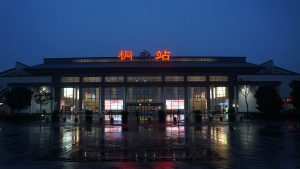
The overnight train from Chengdu slides into Nanchong just before dawn, the air already thick with the scent of river mud and frying chili oil. Outside the station, a knot of taxi drivers shouts over each other, their Sichuanese rising and falling like the hills surrounding the basin. I shoulder my pack, buy a steamed bun stuffed with pickled mustard greens from a woman who never looks up from her wok, and watch the Jialing River catch the first pale light. This is not a city that performs for tourists; it works, it eats, and it remembers.
Orientation: The River and the Ridges
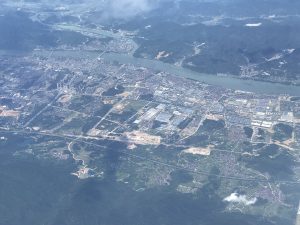
Nanchong sits in the northeast of the Sichuan Basin, folded between low mountains to the north and rolling hills to the south. The Jialing River cuts a brown snake through the center, splitting the urban core into Shunqing District on the west bank and Gaoping District on the east. Most visitors stay in Shunqing, where the older streets cluster near the water. Buses numbered 1, 11, and 22 run the length of the river road; a ride costs two yuan and takes you past the main sights in twenty minutes. If you arrive by high‑speed rail, you land at Nanchong North Station, a glass box ten kilometers north of the center — grab a Didi or the airport‑style shuttle bus rather than the local city bus unless you read Chinese characters fluently.
Walking the Old Lanes: Zhang Fei Temple and the Night Market
Start at Zhang Fei Temple, a compound rebuilt in the Qing dynasty but rooted in Three Kingdoms lore. The main hall smells of sandalwood and cigarette smoke; elderly men cluster in the courtyard playing xiangqi on stone tables, slapping pieces down with the same force the general once used on the battlefield. Behind the temple, a narrow alley drops to the riverbank where fishermen mend nets. Follow the lane north at dusk and you hit the night market on Renmin Road. Stalls flare with gas burners: skewers of beef tendon, lotus root stuffed with glutinous rice, quail eggs boiled in soy broth. Order by pointing. A bowl of liangfen — cold mung‑bean jelly drenched in chili oil, vinegar, and crushed peanuts — costs pocket change and cools the humid evening.
Day Trips: Langzhong Ancient Town and the Citrus Hills
An hour west by express bus, Langzhong preserves a Ming‑Qing street grid that feels lived‑in, not staged. The town sits in a horseshoe bend of the Jialing, its gray‑tiled roofs stepping down to the water. Wander past the imperial examination hall, then duck into a courtyard house where a family still hand‑presses rapeseed oil. In late autumn, the hills around Nanchong turn gold with citrus. Drivers park at the edge of orchards in Xichong County; farmers wave you in to pick pomelos and honey oranges straight from the tree. Bring a woven basket — vendors sell them roadside — and pay by weight at the farm gate. The fruit travels well; I’ve carried a sack on the train back to Chengdu and eaten them for weeks.
Eating Like a Local: From Breakfast Bowls to Riverside Hotpot
Food in Nanchong leans salty, spicy, and freshwater‑heavy. The day begins with a bowl of beef noodle soup: hand‑pulled wheat noodles in a broth boiled overnight with beef bones, star anise, and a spoonful of fermented bean paste. Top it with cilantro, scallions, and a ladle of the chili oil the shop keeps in a stainless‑steel thermos. For lunch, seek out a back‑alley spot serving jiaozi stuffed with pork and pickled mustard greens — pleated thick, boiled, then dipped in black vinegar laced with garlic. Dinner means hotpot, but not the Chengdu style. Here the broth is clear, built from Jialing River fish heads, ginger, and Sichuan pepper. You cook thin slices of grass carp, lotus root, and tofu skin, then ladle the soup over rice at the end.
- Beef noodle broth: beef knuckle bones, star anise, cassia bark, fermented broad‑bean paste (doubanjiang), ginger, scallion, hand‑pulled wheat noodles, cilantro, chili oil.
- Pickled mustard‑green dumplings: pork shoulder (30% fat), pickled mustard greens (squeezed dry), ginger, soy sauce, sesame oil, wheat wrappers, black vinegar for dipping.
- River‑fish hotpot base: grass carp heads and frames, ginger slices, whole Sichuan peppercorns, scallion knots, water; simmer two hours, strain, keep at a rolling boil tableside.
Home method for beef noodles: Blanch bones, rinse. Cover with cold water, bring to boil, skim. Add spices and doubanjiang, simmer four hours. Strain. Cook noodles separately, shock in cold water. Reheat noodles in boiling broth thirty seconds. Assemble: noodles, broth, sliced braised beef, cilantro, scallion, spoonful of chili oil.
Restaurant ordering tip: point to the wall menu photos rather than asking for an English version — most places don’t have one. Say “wei la” (mild spice) or “zhong la” (medium) unless you grew up on Sichuan pepper. Mistake beginners make: ordering a full hotpot set for one person. The minimum is usually two servings; solo diners should sit at the counter and order a half‑portion of fish slices with a side of cold cucumber salad.
Where to Sleep: River‑View Hostels and Quiet Courtyards
Budget travelers gravitate to the youth hostels on Binjiang Road, where a dorm bed runs fifty yuan and the rooftop looks straight across the Jialing to the illuminated pagoda on the far bank. Private rooms in the same buildings cost around one hundred fifty yuan; book a river‑view window or you’ll stare at a concrete wall. For something quieter, slip into a family‑run guesthouse in the lanes behind Zhang Fei Temple. The owners often grow citrus in the courtyard; wake to the sound of a rooster and the smell of tea leaves steaming in a clay pot. Mid‑range hotels cluster near the municipal government complex — clean, impersonal, reliable Wi‑Fi. Avoid the “business hotels” adjacent to the long‑distance bus station; the walls are thin and the hallway lights stay on all night.
Seasonal Rhythms and Local Expectations
Spring brings the citrus blossom festival — orchards open for picking, villages stage dragon dances on temporary stages beside the river. Summer is brutal: temperatures climb past thirty‑five Celsius, humidity clings like a wet shirt. Locals retreat to air‑conditioned teahouses after lunch; follow their lead. Autumn is the sweet spot — cool mornings, clear skies, pomelos swelling on the trees. Winter drizzles for weeks; the river turns slate gray and the hills vanish in mist. During the Spring Festival, the city empties as migrant workers return to home villages; many restaurants shutter for a week. If you’re in town then, stock up on instant noodles and fruit beforehand.
Locals expect you to speak loudly in restaurants — it signals enjoyment. They do not expect tips; leaving small change confuses the staff. On buses, offer your seat to anyone over sixty; the driver will thank you over the PA. When a farmer hands you a pomelo to taste in the orchard, take it with both hands and eat a segment immediately — refusing is rude. The biggest newcomer error: treating Nanchong as a day trip from Chengdu. The city reveals itself in the second morning, when you recognize the noodle vendor’s nod and the river smells familiar.