The minibus shudders around a hairpin bend, and the city of Nanchuan drops away below — tile roofs, a knot of expressway, the brown ribbon of the Qijiang River. Ahead, the limestone shoulders of Jinfo Mountain rise into a ceiling of cloud. I grip the seatback as the driver honks at a herd of goats crossing the road. This is the moment the guidebooks skip: the smell of wet pine and diesel, the pop in your ears, the realization that the mountain decides the schedule, not you.
Getting there without losing a morning
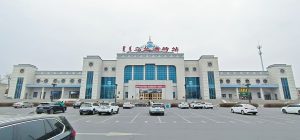
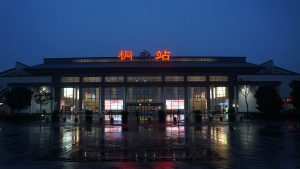
Most travelers come from central Chongqing. The high‑speed train from Chongqing East Railway Station to Nanchuan North takes about fifty minutes. Trains run frequently, but the station sits on the district’s northern fringe. From the forecourt, catch bus 108 or 111 toward the center — twenty minutes, a few yuan, and you are at the main bus hub on Huochezhan Avenue. If you prefer wheels the whole way, long‑distance coaches leave from Chongqing’s airport bus station and several downtown depots. They drop at either Nanchuan Central Bus Station or the newer West Bus Station near the Jinshan Avenue intersection. The ride is two to two and a half hours depending on traffic; bring water and something to read because the onboard screens loop the same variety show on repeat.
Moving around the district
Nanchuan’s urban core is walkable along the main avenues, but the sights scatter outward. City buses 101, 102, 103, 110, 111, and 112 link the museums, the old town lanes, and the mountain access road. Fares are one or two yuan; drivers do not carry change, so keep coins. Taxis cluster at the railway station and both bus stations — insist on the meter. For Jinfo Mountain, a dedicated tourist shuttle departs from the square in front of Nanchuan Central Bus Station every hour from early morning until mid‑afternoon. The shuttle climbs the scenic road to the cable‑car lower station in forty minutes. If you miss the last return bus, a private hire back to town costs roughly 120 to 150 yuan; negotiate before the door closes.
Jinfo Mountain: the real reason you came
The mountain is a karst plateau capped with alpine meadow, rhododendron thickets, and cliffs that drop into fog. The standard route: ride the cable car up the sheer face, then follow the boardwalk loop across the summit ridge. Allow four hours if you walk slowly and stop for tea at the cliff‑side pavilion. In late spring the rhododendrons bloom in waves of magenta and cream; in autumn the meadow turns gold and the air sharpens. Winter brings rime ice on the pine needles — photographers arrive before dawn with tripods. The summit temperature runs ten degrees cooler than town, so pack a wind‑proof layer even in summer.
- Buy the combined ticket (park entry plus round‑trip cable car) at the visitor center — saves queuing twice.
- Take the first cable car at 8:30 am; the light on the cliffs is clean and the crowds are thin.
- Walk the full ridge loop clockwise: Golden Turtle Peak → Lotus Platform → Ancient Buddha Cave → back to the upper station.
- Carry snacks and a thermos; the summit kiosk sells instant noodles and overpriced bottled water.
- Descend by the same cable car or, if your knees allow, the stone‑step pilgrimage path — three hours down through bamboo groves.
Town‑level culture: museums, memorials, and market lanes
Back in the valley, Nanchuan Museum on Heping Side Road opens at nine and closes at five, shut on Mondays. The collection is modest — bronze drums, Han‑dynasty pottery, a few revolutionary‑era posters — but the building itself, a converted 1980s government hall, has quiet courtyards where elderly men play xiangqi under ginkgo trees. A ten‑minute walk west, Yinzi Memorial Hall Cultural Park honors the Ming‑loyalist scholar Yin Zhen. The compound blends restored ancestral halls with new exhibition wings; incense curls in the forecourt on festival days. Locals come to practice calligraphy on the stone tablets. If you wander the side alleys behind the park, you’ll find a lane of stalls selling hand‑rolled rice noodles, pickled mustard greens, and smoked tofu wrapped in lotus leaves. Eat standing up; the vendor will hand you a plastic stool if you ask.
What locals expect and where newcomers stumble
Nanchuan moves at a different rhythm than downtown Chongqing. Shops pull shutters for a long midday break — roughly noon to two — and many family restaurants close entirely on the first and fifteenth of the lunar month for ancestor offerings. Don’t assume English menus exist; point at a neighbor’s bowl or use a translation app. Tipping is not customary; rounding up the taxi fare by a yuan is enough. On the mountain, stay on the boardwalk. The karst edges crumble, and every year a few hikers ignore the red tape and slip. Finally, the shuttle bus does not wait. If you linger at the summit pavilion past the posted departure, you are walking down — or paying for that private car. I learned that the hard way during a misty Mid‑Autumn Festival; the driver shook his head, lit a cigarette, and left me with the sound of wind in the pines for company.