The morning mist still clung to the canals when I stepped onto the stone slabs of Nanxun’s main lane. A vendor was already slicing lotus root into a wok, the scent of ginger and vinegar cutting through the damp air. An elderly woman in a blue cotton jacket poled a flat-bottomed boat past the willow fringe, her rhythm slow and deliberate. No tour groups yet. No amplified megaphones. Just the slap of water against wood and the creak of oarlocks — exactly the Jiangnan morning the guidebooks promise but rarely deliver.
Getting There Without the Hassle
Most visitors arrive from Hangzhou or Shanghai. The high-speed rail station sits about ten kilometers outside the old town. From Hangzhou East, the ride takes twenty minutes; from Shanghai Hongqiao, just over an hour. Exit the station and ignore the taxi touts waving printed price lists. Walk fifty meters to the official stand — meters run, receipts print, no negotiation needed. Expect thirty to forty yuan to the ancient town gate. If you prefer the bus, the K282 runs every twenty minutes from the station forecourt and drops you at the South Gate stop. Drivers announce stops in dialect; listen for “Nánxún Gǔzhèn” and press the red button.
Driving? The G50 and G92 expressways both feed into the S12 provincial road. Weekend mornings in the plum rain season can back up at the toll plaza near Huzhou. Leave before dawn or after the midday exodus. Parking lots cluster around the North and West gates; the underground garage at the Visitor Center holds three hundred cars and costs ten yuan for the first hour, five thereafter. Keep the ticket — you’ll need it at the pay station before the exit barrier.
Navigating the Ancient Town
The ticket booth sells a single pass covering eight major sites. Buy it at the South Gate if the line is short; otherwise the East Gate kiosk moves faster. The pass is a paper card with a magnetic strip — tap it at each turnstile. No need to show ID after the first scan. The town layout follows the canals: a north-south spine crossed by three east-west lanes. Maps at each intersection use red dots for “you are here” but omit the smaller footbridges. Pick up the free folded map at the tourist office beside the Little Lotus Garden; it marks the public toilets, which the official map does not.
Wear flat rubber soles. The flagstones are uneven, slick with moss after rain, and the arched bridges have no handrails. I watched a tourist in wedge sandals slide halfway down the Hundred-Step Bridge before a shopkeeper caught her elbow. Strollers are a nightmare — carry a carrier instead. If mobility is an issue, the electric carts (twenty yuan per person, fixed route) loop the perimeter but skip the interior alleys where the best courtyards hide.
Four Courtyards You Should Enter
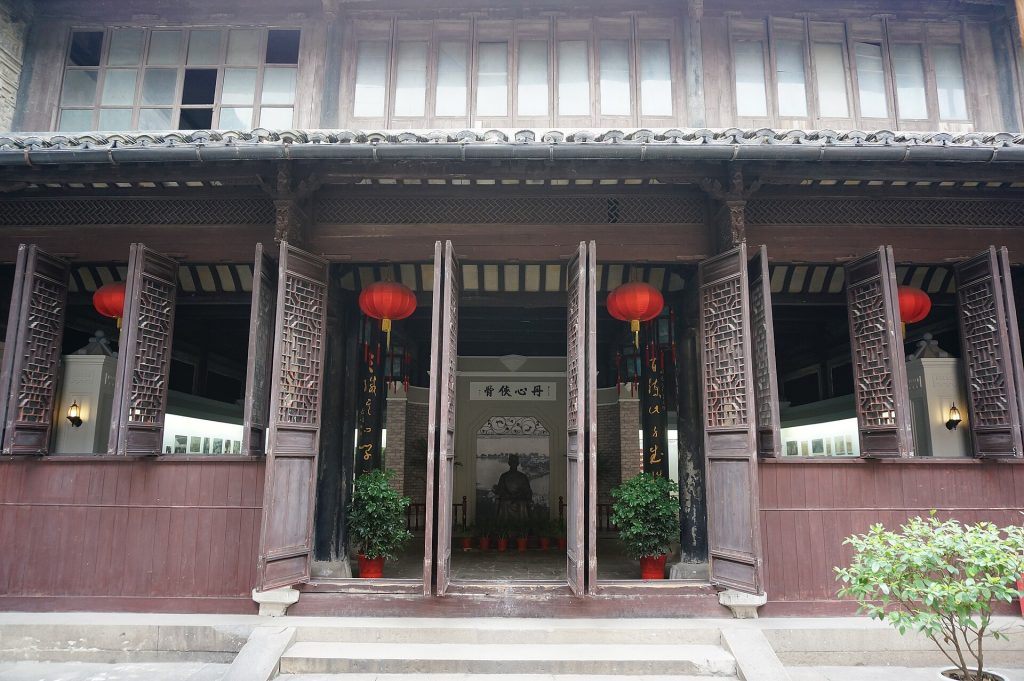
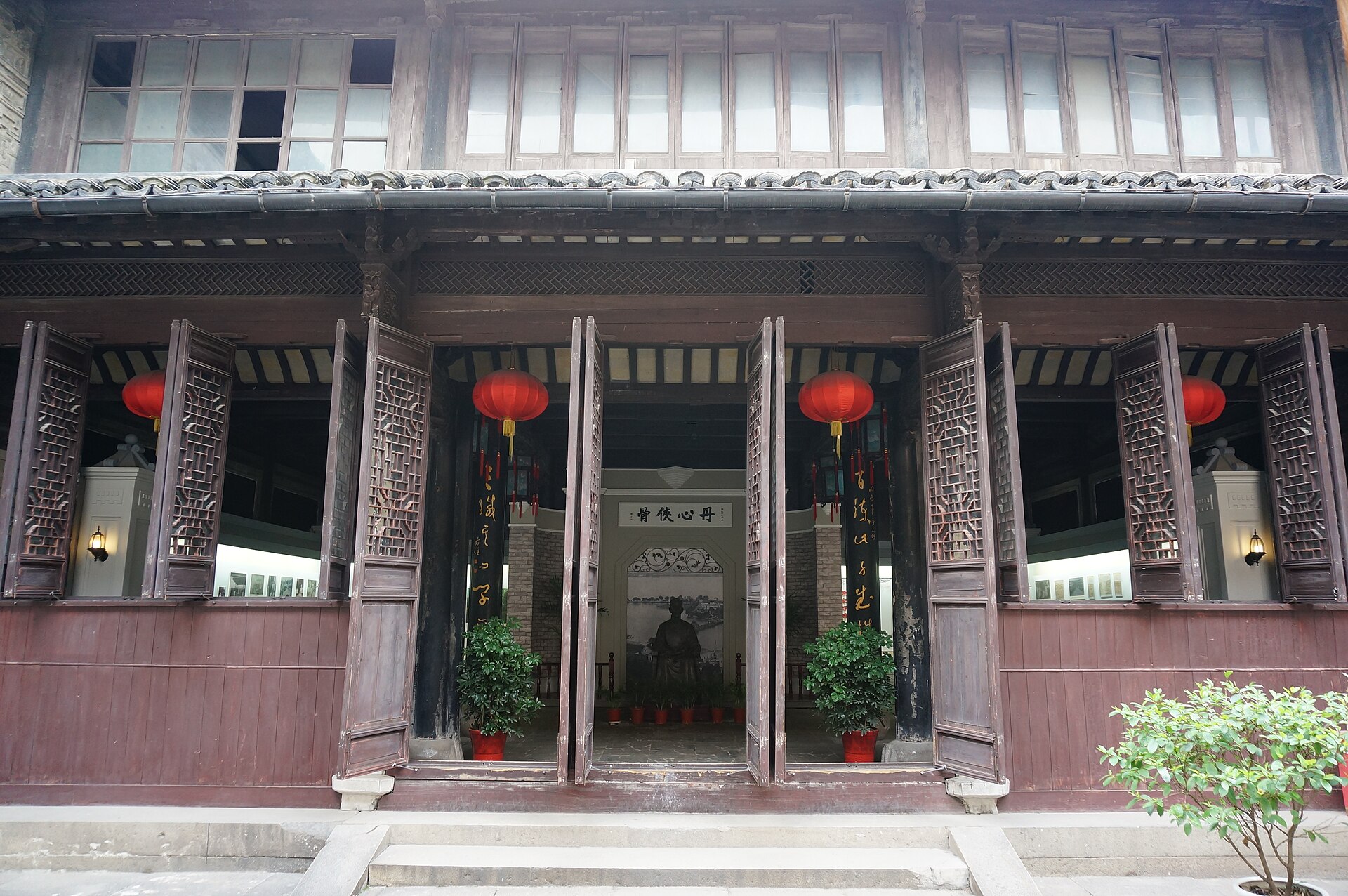
Liu’s Garden (刘氏花园) sits behind a plain gray gate on Dongshi Street. The owner, a silk merchant named Liu Yong, built it in the late Qing. The rockery uses Taihu stones — pitted, perforated, each chosen for a shadow pattern at noon. The pond reflects a pavilion with a double-eaved roof; the eaves drip into ceramic basins tuned to different pitches. When rain falls, the courtyard plays a chord. Sit on the stone bench facing the moon gate. Wait. The sound arrives in waves.
Zhang Shiming’s Former Residence (张石铭故居) blends Jiangnan timber framing with French Baroque. The main hall ceiling bears a plaster medallion of cherubs and acanthus leaves — imported from Lyon in 1905. The floor is laid with encaustic tiles from Minton, each bordered in cobalt. Upstairs, a Western-style study holds a roll-top desk and a phonograph that still plays wax cylinders. The family’s silk ledgers, written in brush script with red-ink corrections, sit in a glass case. Photography is allowed without flash.
Little Lotus Garden (小莲庄) is the smallest but the most intimate. A single lotus pond occupies the center, ringed by a covered corridor. The owner planted one lotus per square meter — no crowding. In the seventh lunar month, the blossoms open at dawn and close by noon. I arrived at six on a misty morning; the petals unfurled like slow lanterns. The fragrance rises, cool and green, and clings to your sleeves. Bring a thermos of Longjing. The caretaker will refill it with hot water from the brass kettle on the stove.
Jiaye Hall Library (嘉业堂藏书楼) holds the private collection of the Liu family — over one hundred thousand volumes, including a complete “Siku Quanshu” manuscript set. The building itself is fireproof: walls of rammed earth mixed with lime and tung oil, roof tiles glazed twice. The reading room has no windows, only skylights fitted with frosted glass. Humidity is regulated by buried clay jars. You cannot browse the stacks, but the exhibition cases rotate monthly. Last autumn they displayed a Ming dynasty “Dream of the Red Chamber” commentary with the owner’s marginal notes in cinnabar.
Canal Time: Boat, Walk, or Both
The hand-rowed wooden boats (eighty yuan for two people, twenty minutes) depart from the dock behind the South Gate archway. The boatmen are locals; many are descendants of the old canal families. They pole rather than row in the narrow side canals — silent, precise. Ask for the “backwater route.” It threads behind the commercial strip, past laundry hanging over the water, past a cat sleeping on a mooring post, past the crumbling brick wall of a former dye house where indigo still stains the mortar. The standard tourist loop stays on the wide central canal; you’ll see the same facades from a different angle.
If you walk, follow the stone towpath from the West Gate northward. It runs two kilometers to the old Grand Canal junction. The path is shaded by plane trees planted in the Republic era. Halfway, a stone stele marks the former customs checkpoint — silk bales were weighed here, taxed, then transferred to Grand Canal barges. The inscription is worn, but a rubbing hangs in the tourist office. Continue to the junction and you’ll see the modern lock gates, massive steel jaws that still operate. Barges the length of a city block pass through, horn blasts echoing off the ancient warehouses.
Eating Where the Boatmen Eat
Skip the riverside restaurants with laminated English menus and plastic tablecloths. Turn into the alley behind the City God Temple. A steam table sits under a blue tarp: braised pork belly (红烧肉), the fat translucent, the lean melting; stir-fried river shrimp (清炒河虾), shells soft enough to crunch; stewed bamboo shoots with fermented bean curd (腐乳笋), sour-salty-sweet in one bite. A bowl of rice, a dish of pickled mustard greens, a pot of yellow wine warmed in a tin cup — thirty yuan total. The owner, a woman in her sixties, wipes her hands on her apron and asks, “First time?” Nod. She’ll ladle extra sauce over your rice.
- Braised pork belly: pork belly cubes, rock sugar, Shaoxing wine, soy sauce, star anise, ginger — slow-cooked two hours until the sauce clings like lacquer.
- River shrimp: live shrimp, garlic, scallion, splash of rice wine — high heat, thirty seconds, serve immediately.
- Bamboo shoots with fermented bean curd: fresh spring shoots, red fermented bean curd, sugar, water — simmer until the shoots absorb the brine.
For a sit-down meal, the family-run “Old Bridge Noodles” (老桥面馆) on Xishi Street serves hand-pulled wheat noodles in a broth boiled overnight with pork bones, dried scallops, and ham. Toppings: minced pork, pickled vegetables, a poached egg. The noodles have bite — alkaline water in the dough. A large bowl costs eighteen yuan. Arrive before eleven; the broth runs out by one.
What the Guidebooks Miss
The silk museum near the North Gate looks dusty, but the basement workshop runs live demonstrations on the old wooden looms. The weaver, a man named Chen, learned from his grandfather. He’ll let you throw the shuttle once — your fabric will be crooked, the tension wrong. He laughs, cuts it off, and hands you a bookmark woven on the same loom: a cloud pattern in indigo on white. No charge. He only asks you not to photograph his face.
On the fifteenth day of the eighth lunar month, the town holds a lantern riddle night. Locals write riddles on red paper strips, tie them to lanterns hung along the canals. Solve one, claim a packet of melon seeds. The riddles are in dialect; ask a teenager to translate. They’ll trade help for a selfie. The atmosphere is quiet — families strolling, elders debating answers, no amplified music. The lanterns reflect in the black water, double images trembling with each pole stroke.
Don’t try to “do” Nanxun in three hours. The town rewards slowness. Sit on a bridge step with a cup of tea from a thermos. Watch the light shift on the white walls. Listen to the mahjong tiles clicking in the upstairs rooms. The canals have carried silk, tax grain, revolutionaries, and now you. They’ll carry the next visitor too. Your wake disappears before the next boat passes.