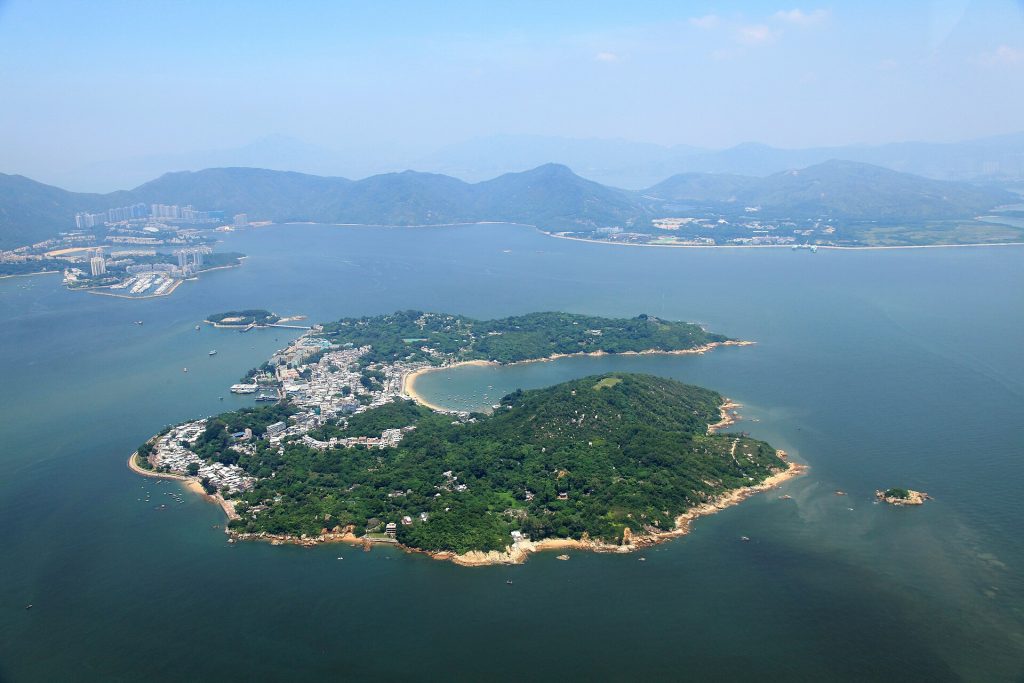
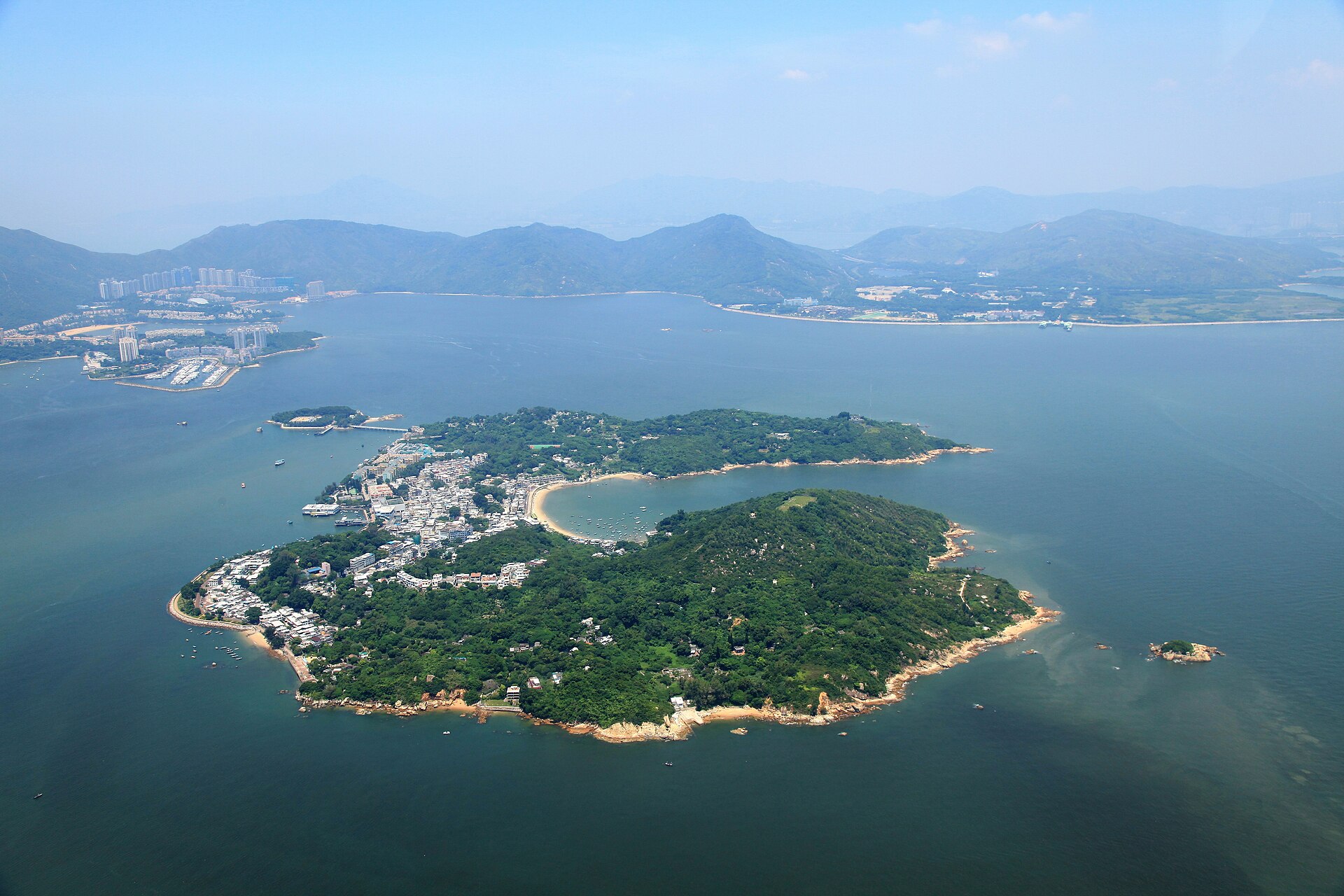
The ferry deck shudders as the bow cuts through the grey chop of Victoria Harbour, the skyline of Central collapsing into a jagged silhouette behind you. Twenty minutes later, the engine note drops, the ramp clangs down onto a concrete pier, and you step onto a lane where the loudest sound is a bicycle bell and the smell of drying cuttlefish drifting from a doorway. No cars, no MTR, no escalators — just a square kilometre of flat land where the pace is set by the tide.
Getting there and moving around
Fast ferries leave Central Pier 6 every half hour on weekdays and every twenty minutes on weekends; the ordinary boat runs a slower schedule and costs a few dollars less. Buy the ticket at the machine or tap an Octopus card at the gate — no reservation needed. Once the ramp lowers, you are on the main pedestrian spine, Tung Wan Road, which loops the village in ten flat minutes. Bicycles are the only wheels allowed; rentals cluster near the pier and run about fifty dollars a day for a single-speed cruiser with a basket. Grab one if you plan to reach the far beaches, but walk if you only want the temple, the market, and the seafood strip.
Fast ferry: Central Pier 6 → Peng Chau, roughly 25 minutes.
Ordinary ferry: same pier, roughly 45 minutes, cheaper fare.
Kaito to Trappist Monastery: departs from the small finger pier beside the main terminal, runs every 30–40 minutes in daylight hours.
Bicycle rental: three shops within 50 metres of the main pier, cash or Octopus accepted.
Walking the hills and the coast
Don’t let the “flat island” label fool you. The interior rises to Finger Hill (手指山) at 95 metres, a steep but short climb that rewards you with a 360-degree view over the airport runways, the Tsing Ma Bridge, and the green spine of Lantau. The paved path starts behind Tin Hau Temple, passes a row of incense burners, and turns into a concrete staircase that burns the calves for five minutes. At the summit, a rusted trig point and a single bench make a fine spot for a water break.
For a longer ramble, follow the family trail that circles the island’s edge. The northern section hugs the seawall past abandoned lime kilns — stone igloos where oyster shells were once burned for construction mortar. Information boards explain the industry that fed Hong Kong’s early building boom. The eastern stretch opens onto Tung Wan Beach, a crescent of coarse sand with a BBQ pit area and a lifeguard tower that operates in summer. Continue south and the path narrows to a dirt track behind the power station, emerging at the quiet pier where the kaito to the Trappist monastery loads passengers. From there you can hop the boat, hike the monastery’s hillside stations of the cross, and descend to Mui Wo in under three hours.
Finger Hill summit: 15 minutes up from Tin Hau Temple, steep stairs, no shade.
Family Trail full loop: 5 km, 2–2.5 hours at a relaxed pace.
Lime kiln ruins: north coast, interpretive signs in Chinese and English.
Tung Wan Beach: showers, toilets, BBQ pits (permit required on public holidays).
Kaito to Trappist Monastery: buy ticket on board, cash only.
Eating: seafood, snacks, and the famous cake
The village’s restaurant row sits along Wing On Street, a narrow lane where tables spill onto the pavement and menus are handwritten on red plastic boards. Order the steamed garlic vermicelli with scallops — glass noodles soak up the sauce, the shellfish stay sweet, and the garlic hits a mellow gold rather than a raw bite. Another staple is the salt-and-pepper squid: batter light as lace, tentacles curled tight, tossed with fried chilli threads and spring onion. Share a clay-pot rice with Chinese sausage and salted fish; the crisp bottom layer (fan jiu) is the part everyone fights for.
For a lighter bite, queue at the stall selling Peng Chau’s signature sponge cake (坪洲糕). The batter — rice flour, brown sugar, fermented rice wine — steams in rectangular bamboo trays, producing a honeycombed crumb that springs back when pressed. Eat it warm, torn by hand, with a cup of milk tea from the cha chaan teng next door. Late afternoon brings out the curry fish ball cart: skewers bobbing in a turmeric broth, served with a squeeze of sweet chilli sauce and a wooden stick.
Steamed garlic vermicelli with scallops: order “蒜蓉粉絲蒸帶子”.
Salt-and-pepper squid: ask for “椒鹽鮮魷”, specify mild or spicy.
Clay-pot rice with sausage and salted fish: “臘味鹹魚煲仔飯”, allow 20 minutes cooking time.
Peng Chau sponge cake: buy whole or by the slice, best eaten same day.
Curry fish balls: street cart near the pier, cash only.
Temples, tin hau, and the festival calendar
Tin Hau Temple (天后宮) anchors the village square, its roof ridges crowned with ceramic dragons that have weathered a century of typhoons. Inside, the air is thick with coil incense; worshippers kneel before the goddess of the sea, offering roast pork and oranges. The temple’s biggest day falls on the 23rd of the third lunar month — Tin Hau’s birthday — when a floating parade of decorated sampans circles the harbour, lion dancers weave through alleys, and the whole island smells of roast suckling pig. If your visit coincides, arrive early; the ferries fill fast and the guesthouses book solid.
A smaller shrine to Pak Tai (北帝廟) hides behind a banyan tree on the lane leading to the beach. Fishermen still pause here before heading out, tying red ribbons to the iron fence for safe passage. The seventh lunar month brings the Hungry Ghost Festival: temporary bamboo theatres rise on the football pitch, Cantonese opera blares into the night, and paper offerings burn in metal drums at every corner. It’s loud, smoky, and utterly local — wander respectfully, keep cameras low, and never step on the ash piles.
Tin Hau Temple: open daily, free entry, donation box at the altar.
Tin Hau Festival: 23rd day of third lunar month, floating parade mid-morning.
Pak Tai Shrine: quiet spot, incense provided, no photography inside.
Hungry Ghost Festival: seventh lunar month, evening performances for two weeks.
Staying overnight and practical tips
Guesthouses cluster in the lanes behind Wing On Street. Most are converted village houses: tiled floors, shared bathrooms, a balcony that looks onto a neighbour’s drying laundry. Prices rise sharply on weekends and festival dates; book a week ahead through the phone number posted on the door — few list on international platforms. Bring cash for the deposit; Octopus works for the ferry but not for the room. Water pressure drops after sunset when the whole island showers, so rinse early.
Power outlets follow the UK three-pin standard. Mobile coverage is solid on all major carriers. There are no ATMs on the island; the nearest is the 7-Eleven on the pier concourse, which also stocks mosquito repellent, sunscreen, and emergency snacks. Rubbish bins are scarce — carry a small bag for your waste until you reach the pier’s recycling station. Dogs are common on the trails; they’re used to hikers but keep food sealed.
Guesthouse booking: call directly, confirm price and check-in time.
Cash essential: no ATMs, most eateries cash-only.
Water pressure: shower before 7 pm for best flow.
Rubbish: pack out what you pack in.
Last ferry back: check the posted timetable at the pier; late-night sailings are rare.
Common missteps and how to avoid them
First-timers often treat Peng Chau as a two-hour tick-box: pier, temple, beach, ferry back. They miss the kiln ruins, the monastery hop, the cake still steaming in the bamboo tray. Others rent a bicycle without checking the brakes, then discover the hill to Finger Hill is steeper than it looks on the map. A few arrive hungry at 2 pm on a Sunday to find every seafood restaurant full with a 90-minute wait — order early, or eat at the cha chaan teng where turnover is quick. And don’t assume the kaito runs after dusk; the last boat to the monastery usually departs around 5 pm, leaving you a long hike back if you linger too long at the stations of the cross.
Allow at least half a day, preferably a full day or overnight.
Test bicycle brakes before leaving the shop.
Order seafood by 11:30 am on weekends to avoid the rush.
Confirm kaito return time before hiking to the monastery.
Carry small change for temple donations and street snacks.