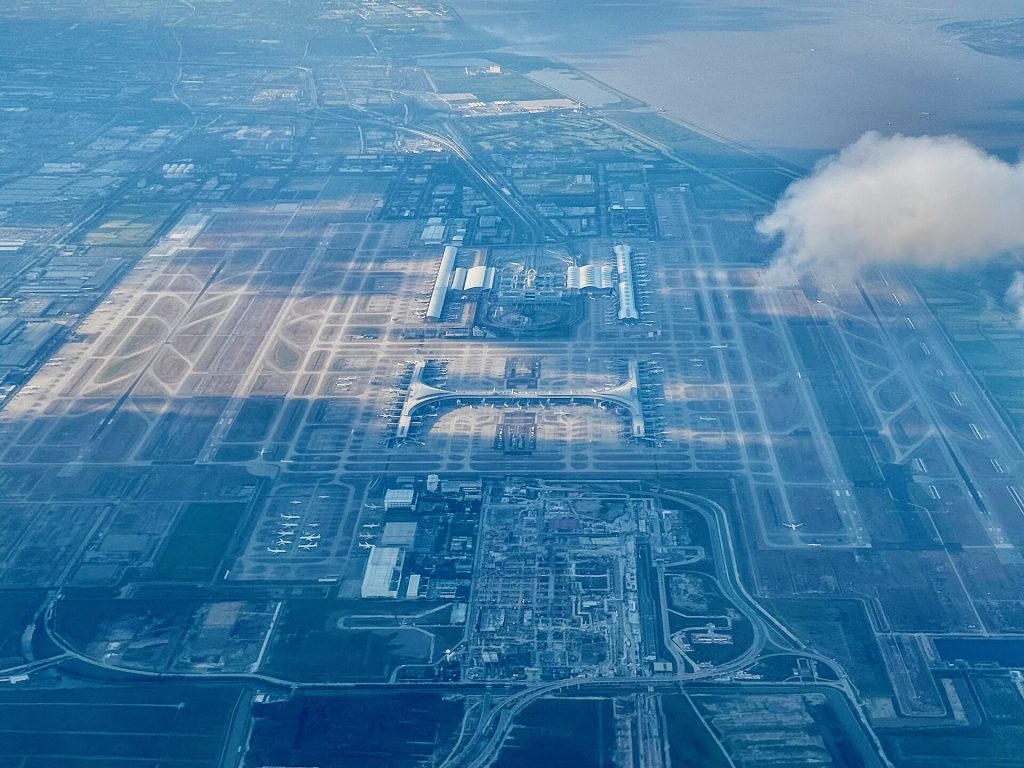
Shanghai Pudong International Airport (PVG) is the city’s main long-haul gateway—and it sits a genuine distance east of the Bund. First-timers who expect a twenty-minute hop into People’s Square are regularly surprised. The good news: options are clear once you know the tradeoffs among Maglev, Metro Line 2, and taxi/Didi, plus how Hongqiao (SHA) fits if you are connecting to domestic rail or flights.
This guide stays practical: steps, honesty about luggage and timing, and payment notes for foreigners. It does not invent fixed 2026 fares. Read the price on machines and in apps for your day. After you check in, continue with the Shanghai first-visit guide and Shanghai metro tips.
Orientation after landing
Follow arrivals signs to baggage claim, customs, and then Ground Transportation / Maglev / Metro. Pudong’s terminals are large—give yourself walking time. Get data working (eSIM/SIM or roaming) so maps and Didi function before you exit.
Have ready:
- Hotel address in Chinese characters
- Alipay and WeChat Pay tested if possible
- A little cash for stubborn machines
- Passport for any staff-assisted ticket windows
Option 1: Maglev (to Longyang Road)
The Shanghai Maglev links Pudong Airport with Longyang Road on the metro network. It is fast, distinctive, and popular with first-timers who want the experience.
Tradeoffs. You still need metro, taxi, or another ride from Longyang Road to most Bund / People’s Square / former French Concession hotels. With heavy luggage, that transfer matters. Service span and ticket rules are posted at the station—confirm on the day, especially late evening.
Who it suits. Travellers who enjoy the ride, arrive during operating hours, and do not mind a clean transfer afterward.
Option 2: Metro Line 2
Line 2 is the workhorse connecting Pudong Airport through many central districts. It is usually cheaper than Maglev+connections in spirit (check live fares) and can be door-to-near-door for hotels beside Line 2 stations—but it is a long ride with luggage, crowds at peak times, and the ordinary metro boarding rush.
Tradeoffs. Excellent value and predictability when trains run; tiring after a transpacific flight; stairs and gates with big suitcases are real work.
Who it suits. Light packers, daytime arrivals, travellers already comfortable with metro systems.
Use official ticket machines, service centres, or QR ticketing once your payment apps work. English appears on many central signs; announcements mix languages. Stand aside for exiting passengers.
Option 3: Taxi or Didi
Door-to-door calm. Official taxi ranks beat lobby touts every time. Didi shows an estimate in-app once registered and funded.
Tradeoffs. Cost is higher than metro; traffic across Pudong and into Puxi can stretch duration in rush hours; pickup pins at airports require attention.
Who it suits. Families, late flights, heavy luggage, groups splitting fares, anyone whose first priority is the hotel bed.
Show the Chinese address. Keep your phone charged for navigation if the driver uses a different map app.
Bund, People’s Square, and Pudong hotels
Puxi side (Bund, People’s Square, Nanjing Road, many Concession hotels). Maglev+metro, pure Line 2, or car all work. Cars win when exhausted; Line 2 wins when thrifty and light.
Pudong side hotels (Lujiazui and nearby). Often shorter car rides from PVG than cross-river trips—still not “next door,” but psychologically easier. Metro routes exist; match station names carefully.
Ask your hotel which airport option staff recommend for your arrival hour—they see delayed guests daily.
Hongqiao connection honesty
Hongqiao Airport (SHA) and the adjacent Hongqiao railway hub sit on the west side. If your itinerary is PVG → city → Hongqiao train to Hangzhou or Beijing, you are crossing much of Shanghai. Do not schedule a tight international arrival plus same-evening high-speed departure without generous buffer.
Metro and Maglev-linked routes can eventually reach Hongqiao lines; cars are simpler with luggage. For Hangzhou day trips and Jiangnan plans, confirm train stations on 12306 the day before—Shanghai has multiple stations.
Ticket machines and foreign visitors
Machines may offer English menus. Foreign bank cards often fail where UnionPay or mobile QR succeed. Shift to a staffed counter without frustration. Keep small plans flexible: if Maglev queues look painful and Line 2 is boarding, switch.
Late October and November arrivals
Evenings cool; rain happens. Umbrella in the carry-on helps at taxi ranks. Winter airline schedule adjustments can shift arrival times—recheck Maglev/metro span if you land late. Aim for a simple first meal near the hotel rather than forcing a Bund sunset thirty minutes after touchdown.
Safety and touts
Ignore unmarked “taxi” offers inside the terminal. Use official ranks and app pickup zones. Do not hand passport or bank cards to helpers who appear unbidden.
Family and group logistics
If you are travelling with children, elderly parents, or three large suitcases, optimise for fewest transfers. A single Didi Comfort or taxi from the official rank often beats Maglev-plus-metro gymnastics. Ask the driver to use the meter or follow the app price; keep the hotel phone number open in WeChat so the front desk can clarify the entrance if the pin is ambiguous.
Groups of three or four should compare a single car against multiple metro tickets plus energy cost. Split fares make cars surprisingly rational after midnight flights.
Accessibility notes
Pudong Airport and Shanghai metro continue to improve elevators and accessible routes, but long walks between gates, Maglev platforms, and Line 2 trains still challenge mobility-impaired travellers. If elevators are essential, build extra time and consider a car to the hotel door. Hotels can often advise which entrance has the smoothest drop-off for wheelchairs or walkers—message them before you land.
What “success” looks like on night one
You clear immigration, collect bags, ignore touts, reach a licensed car or a ticketed Maglev/metro path, and arrive at a hotel that can say your name in English or show your booking. Payments already tested or a small cash backup in pocket. That is enough. The Bund lights will still be there tomorrow—ideally after sleep, breakfast, and a clearer brain.
FAQ
Is the Maglev worth it?
For many first-timers, yes as an experience—if operating hours fit and you accept the Longyang Road transfer. If you only want the hotel, Line 2 or a car may be simpler.
How long does Line 2 take to People’s Square?
It is a long urban metro ride; exact duration depends on the day and dwell times. Check an official metro map/app estimate when you land rather than memorising a blog number.
Can I go straight from PVG to a Hangzhou train?
Usually via city transfer to a railway station (often Hongqiao for many Hangzhou services—verify your ticket). Build buffer; do not treat it as an airport-side hop.
What if my phone has no data?
Use airport Wi‑Fi to message the hotel, buy a metro ticket with cash/card assistance at a counter, or take an official taxi with a paper address.
Where next after check-in?
The Shanghai first-visit hub for Bund timing, museums, and day trips.
Bottom line
Pudong to the city is a choose-your-tradeoff problem: Maglev for speed-plus-transfer, Line 2 for thrift and metro confidence, taxi/Didi for luggage and late nights. Lock your Chinese hotel address, get payments online, and ignore touts. Once rested, Shanghai opens quickly—the airport ride is just the prologue.