The minibus shudders to a halt on a gravel loop beside a canal that smells of wet stone and frying dough. Lanterns flicker above the water, casting wavering circles on the black surface. Behind the row of whitewashed inns, the ridge of Simatai climbs into the night sky, its watchtowers strung with amber lights like a necklace dropped on dark velvet. I tighten my pack straps, check the headlamp battery, and follow the flow of weekend hikers toward the ticket gate where a scanner beeps and the turnstile clicks.
Getting There Without a Tour Bus
Most people arrive from Beijing in one of three ways. The direct tourist bus leaves from Dongzhimen Wai Bus Station around 8:30 in the morning during the warm season and returns from the water town parking lot at 4:30 in the afternoon. It takes roughly two and a half hours each way, traffic permitting. A high-speed train from Beijing North or Qinghe to Gubeikou Station cuts the ride to just over an hour; from the station forecourt a green-and-yellow shuttle van runs every twenty minutes to the scenic area entrance. If you drive, take the Jingcheng Expressway to the Simatai exit and follow the signs for the P1 lot — the underground garage fills fast on golden-week weekends, so aim to park before nine.
Day Hike: East Section Towers 1 to 10
Only the eastern stretch is open to regular visitors. The western towers beyond the reservoir remain closed for structural reasons. You enter through the main gate, pass the security checkpoint, and face a choice: walk the flat lakeside path to Tower 1, or buy the cable-car ticket that whisks you halfway up the ridge to a platform between Towers 5 and 6. I walked the lake trail on my first visit — forty minutes of easy boardwalk past willow trees and the mirrored surface of Mandarin Duck Lake — then climbed the stone stairs from Tower 1 upward. The gradient steepens fast. By Tower 4 the steps are uneven, some worn to a slick polish by centuries of boots, others broken away entirely.
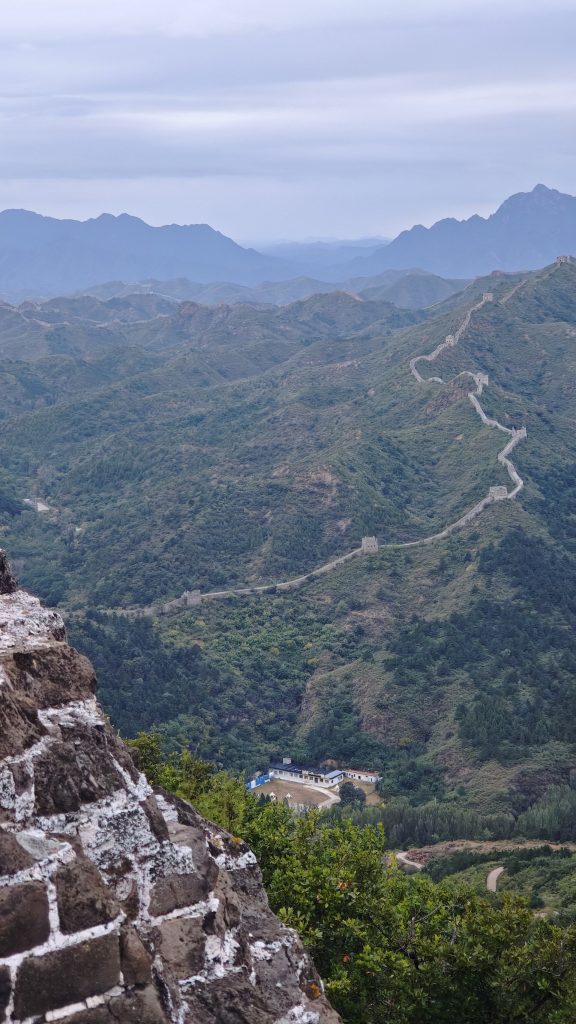
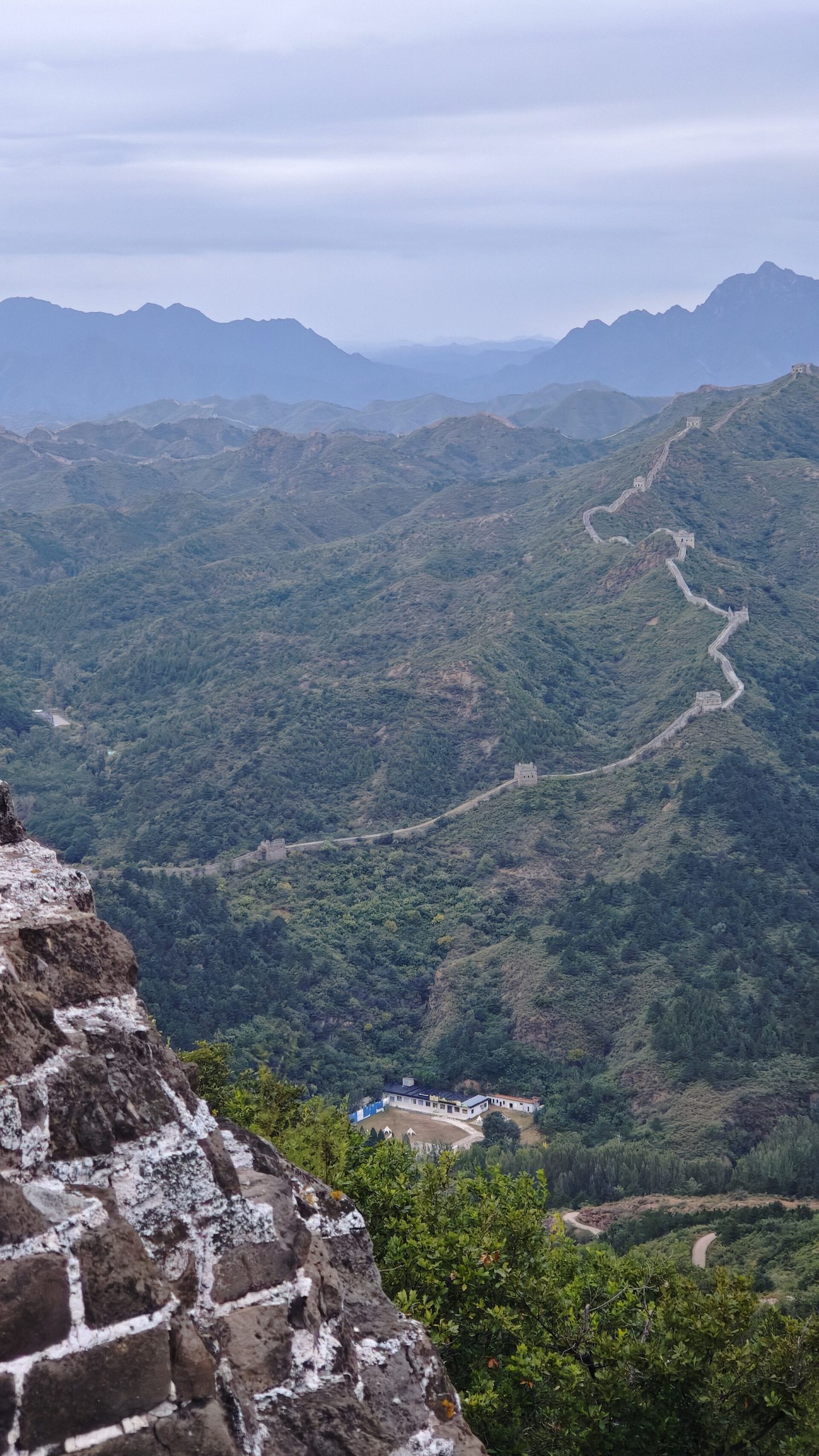
Tower 5, the General’s Tower, is the first real viewpoint. You can see the reservoir snaking through the valley and the water town’s tiled roofs clustered at the mountain’s foot. Tower 8, the White Tower, sits on a knife-edge spur; the drop on either side feels vertical. Tower 10 marks the current turnaround point. A metal gate blocks the path beyond, welded shut and stamped with a red safety notice. Allow three to four hours for the round trip if you walk from the gate; two hours if you ride the cable car up and hike down.
Cable Car, Slide, and Zip Line Logistics
The cable car runs from a lower station near the lake to the upper platform between Towers 5 and 6. Cabins hold eight people and depart every few minutes. A one-way ticket costs roughly half the round-trip price, so decide early whether you want to descend on foot. The toboggan slide — a metal chute on wheels — starts at the upper platform and ends near Tower 2. It’s fast, loud, and brakes are a hand lever you squeeze; keep your elbows in. The zip line launches from a tower near the upper station and lands on an island in the reservoir. You harness up, clip in, and slide across the water in thirty seconds. Both the slide and zip line operate only in dry weather; high wind or rain shuts them down without notice.
Night Tour: Lights, Crowds, and the Reservoir Reflection
Simatai is the sole Great Wall section with permanent illumination. Night sessions start after sunset and end around ten. The lit portion covers Towers 1 through 6; beyond that the ridge fades to silhouette. The atmosphere shifts completely — couples pose for wedding photos under the glow, guides herd flagged groups, and the stone feels warmer under hand. The best photo angle is from the lakeside boardwalk looking up: the illuminated towers stair-step into the darkness, mirrored perfectly in the still water. Bring a light jacket; the wind off the reservoir cuts through humidity fast. If you stay in a water-town courtyard hotel, you can exit the scenic area, shower, eat, then re-enter for the night session on the same ticket — just keep the wristband intact.
Sleeping in Gubei Water Town
The resort mimics a Jiangnan canal village: arched stone bridges, narrow lanes, courtyards with pomegranate trees. Accommodation ranges from dorm beds in a converted granary to private siheyuan villas with heated kang beds. Book a room facing the canal if you want the sound of water at night; book a mountain-view room if you want the wall lit up outside your window. Breakfast is usually included — steamed buns, pickled radish, millet porridge, and tea eggs. Evening activities shadow-puppet shows, baijiu tastings, and calligraphy workshops — run on a printed schedule posted in each lobby. The town stays lively until midnight, but the scenic-area gates lock at ten, so time your return if you plan a late stroll.
Food on the Mountain and in the Lanes
Inside the scenic area, a single kiosk near Tower 2 sells warm corn on the cob, vacuum-packed beef jerky, and bottled water at a markup. Pack your own snacks — roasted peanuts, dried mango, a sandwich that survives compression. In the water town, the food street behind the main square does hand-pulled noodles in pork-bone broth, lamb skewers dusted with cumin, and pan-fried dumplings with chive and egg. A sit-down courtyard restaurant near the south gate serves whole roasted chicken with chestnuts and a clay-pot tofu stew that bubbles at the table. Avoid the tourist-set menus priced per person; order à la carte from the picture menu on the wall.
Gear, Timing, and Common Mistakes
- Footwear: trail runners with grippy soles or light hiking boots. The stone steps are polished smooth in places; sandals slide.
- Layers: a wind shell, a fleece, and a moisture-wicking base. Temperature drops ten degrees from lake level to Tower 10.
- Headlamp: essential for the night tour. Phone flashlights drain fast and don’t throw far enough on broken stairs.
- Water: fill a 1.5-liter bottle before the gate. No refill stations on the ridge.
- Cash: the cable-car window, slide counter, and many food stalls still prefer notes or Alipay/WeChat QR codes; foreign cards often fail.
- Timing: arrive at the gate by 8:30 in spring or autumn to beat the tour-bus wave. Summer heat pushes the comfortable window earlier — 7:30 is better.
- Mistake: assuming the western towers are accessible. They are not. The gate at Tower 10 is welded shut; rangers turn hikers back.
- Mistake: buying a round-trip cable-car ticket then realizing the toboggan line is two hours long. Check the queue first; walk down if it snakes past the ticket booth.
- Mistake: leaving the wristband in the hotel room. No wristband, no re-entry for the night session.
Seasonal Rhythm
Late spring brings wild apricot blossoms on the lower slopes and clear skies for photography. Early autumn — around the Mid-Autumn Festival — offers crisp air and the lowest haze; the wall looks like a brush stroke across the ridge. Winter turns the steps to ice; microspikes become mandatory and the cable car may suspend operation during heavy snow. Summer monsoon season wraps the peaks in mist; the night lights diffuse into halos, beautiful but slippery. Whenever you go, check the scenic-area WeChat account the evening before for sudden closures or wind warnings.