The suitcase learned the calendar first
You told yourself you would leave after breakfast on a calm day. Then Mid-Autumn arrived on Friday 25 September 2026, the short holiday filled 25–27 September, and suddenly the ordinary bridge — 28–30 September — was a countdown toward Golden Week roughly 1–7 October, makeup Saturday 10 October, State Council notice 国办发明电〔2025〕7号 blinking in every staff group chat like a polite siren.
You were leaving the city before Golden Week, not as a travel influencer, but as a person with a ticket, a half-charged power bank, and a fridge that still contained festival diplomacy.
Why leaving early felt like a kindness
You had read the warnings without wanting to become them: return rushes later in October — Golden Week HSR return rush — and the way stations swell when too many people choose the same brave evening. Leaving before the peak was not superiority. It was scheduling humility.
Bridge days still asked you to show up at work. You answered emails with the focus of someone who had already measured the minutes between the last meeting and the security line. Colleagues joked about tickets. You smiled and checked your seat number again anyway — booking HSR before Golden Week.
Packing as editing
You did not pack your whole China life. You packed a week:
- Clothes that forgive train air
- Documents in the zip you touch too often
- Headphones, meds you actually use, a light layer
- One sealed snack, not an open mooncake opera — leftover mooncakes
- Screenshots of train number, Chinese station names, hotel address
You took out the “maybe hiking” shoes. You took out the third book. Suitcases reward editing the way cities reward early departures.
The apartment’s soft inventory
Before the door clicked:
1. Trash out
2. Fridge cleared of what would not survive your absence
3. Plants watered or delegated
4. Couriers redirected — delays are a season — courier timing
5. Roommate informed in text, not telepathy
You stood in the quiet for ten seconds. Mid-Autumn had already taught empty rooms — quiet apartment after Mid-Autumn. This quiet was different: forward-leaning, wheeled, ticketed.
Crossing the city with a purpose
The metro toward the rail hub felt like a rehearsal for October without the full costume. You kept the suitcase parallel to your legs, not diagonal across strangers. Etiquette was muscle memory now — China metro etiquette, Beijing subway basics if your city rhymed with that density.
A child counted station names aloud. A man in a company polo refreshed a leave form. You recognised the face of bridge-day China: half work, half exodus maths.
The station hall as weather
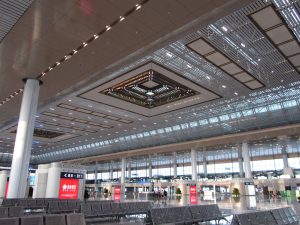
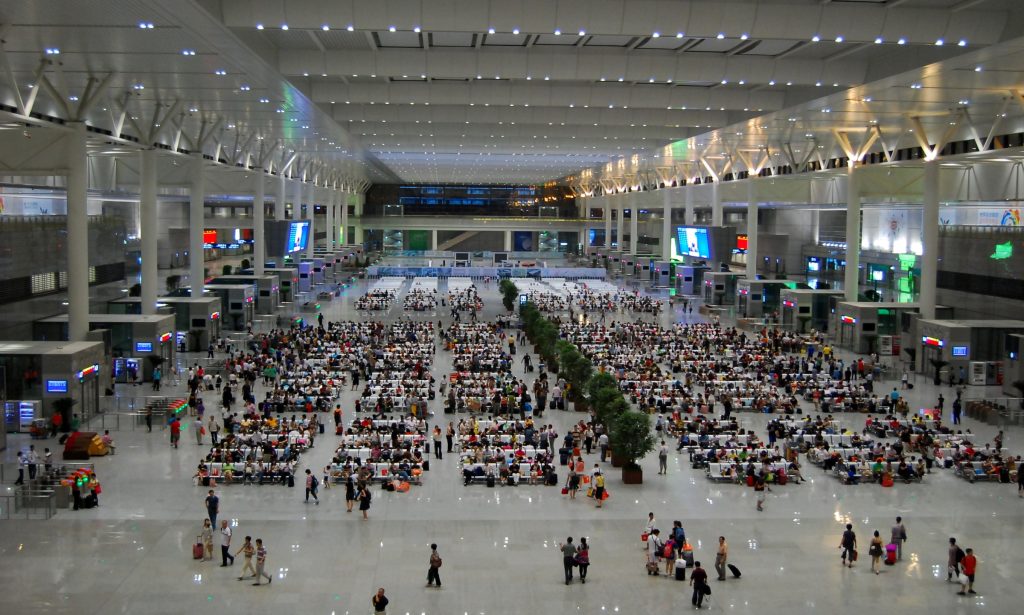
Inside the high-speed rail hall, air-conditioning and announcements made their own climate. Boards flipped. People formed lines that looked abstract until you needed one. You had done festival-end stations before — HSR at the end of Mid-Autumn — and Eve chaos before that — Eve train station survival. Today was neither reunion theatre nor last-holiday soft landing. It was preemptive motion.
You bought water with a QR code — Alipay / WeChat Pay — and sat without colonising three seats. The tin you almost brought stayed home. Bravery.
What you almost ruined
You almost answered a “quick sync” while your ID was in the tray. You almost trusted outbound memory for the platform number. You almost ran when the board updated. You walked instead. Running with a suitcase is how stories become clinic visits.
You almost messaged your manager that you were “basically offline.” You wrote, more honestly, that you were en route and would confirm arrival tonight. Boundaries can be factual — the same spirit as office return and leave requests.
Faces without inventing their novels
A student slept on a folded hoodie. An elderly couple shared sunflower seeds with the patience of people who have outwaited many National Days. A foreign family practised seat letters in a whisper. You did not film them. The board was already cinema enough.
Someone asked, in English, whether this was the right waiting zone. You pointed at the signs and the train number together. Help can be small and still count as culture.
On the platform, the city loosens
The train arrived with industrial kindness. You boarded without choreography, stowed the bag where it would not become a missile, sat in the assigned seat because contested seats are an unpaid sport — HSR etiquette. Outside, the city slid from hard edges to wider light.
You thought about colleagues who would stay for duty, students on empty campuses, parents aligning school notices — school calendars for foreign parents — and grocery fridges stocked like modest insurance — expat grocery runs. Leaving early did not make you the protagonist. It made you one more moving part.
Messages between cities
A friend sent a photo of office mooncake archaeology. You sent the seat-back sky. No contest. HQ asked if you could “jump on” at midnight your new local time. You offered tomorrow morning and linked, once, fall 2026 holidays. You did not apologise for geography.
Your mother asked if Golden Week was the same as Mid-Autumn. You said: related season, different shape — Golden Week vs Mid-Autumn — and that you were safe on the train. Explaining can wait for a fuller call; arrival cannot.
If you leave the city like this too
Practical rules the story still supports:
1. Treat 28–30 September as real workdays that also contain logistics
2. Pack light enough to stay kind in queues
3. Arrive at the station earlier than pride suggests
4. Follow today’s screens, not last month’s memory
5. Redirect parcels before you vanish
6. Tell work and housemates in writing
7. Keep ID ready; keep voice low
8. Remember makeup 10 October exists for your return life
The first quiet after the scan
When the ticket gates accepted you, something in your shoulders dropped. Not because travel is pure, but because the decision had become motion. Golden Week would still be crowded somewhere. You had simply chosen not to make the first night of it a race.
You watched the names of places scroll past. You ate the sealed snack. You did not open work files in the first ten minutes, which felt like a minor festival of your own.
Dinner the night before felt like a closing scene
You ate something ordinary on purpose — not a farewell banquet, just noodles that would not haunt the fridge. A neighbour asked how long you would be gone. You gave dates, not itinerary theatre. Someone offered to water the plant. You accepted without turning it into a debt.
Mid-Autumn had been about reunion tables. This meal was about leaving cleanly. Different festival energy, same city manners.
Sleep versus the refresh button
You almost stayed up refreshing a ticket page you had already paid for. You put the phone face down. Sleep is part of station competence. The people who look calm on platforms usually borrowed that calm from the night before, not from a final adrenaline scroll.
When the alarm went on 28, 29, or 30 September — whichever bridge day your seat required — you moved like someone keeping a promise to future-you standing in a security line.
FAQ-shaped afterthoughts (for readers who skim stories)
Is leaving before 1 October always smarter? Often calmer for outbound seats; not mandatory. Match tickets to your school and work constraints.
Should you skip bridge-day work to travel? Only with approved leave. The calendar is shared.
What if plans change? Change tickets through official channels; avoid platform rumours.
Bottom line
Leaving the city before Golden Week is a practical story about timing: Mid-Autumn’s aftertaste, three ordinary bridge days, and a train that rewards early humility. Pack lightly, clear the fridge, keep manners in the hall, and let the seat number be enough plot. Lovely China founded 2025 — [email protected] for guide fixes.