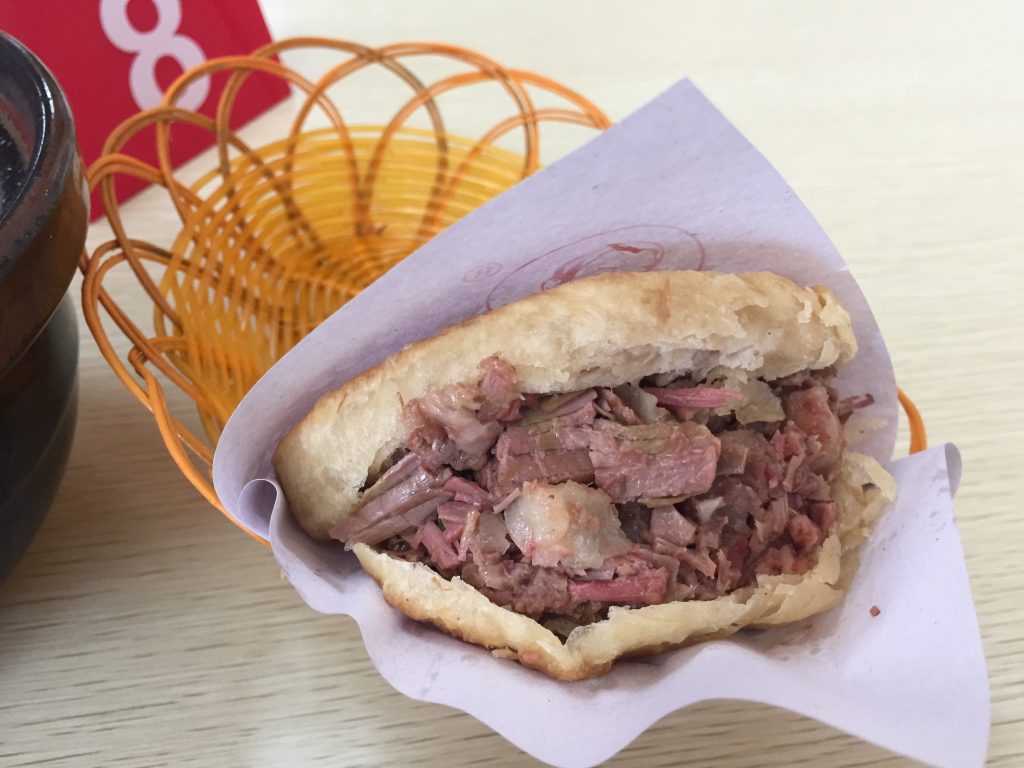
What Hebei lvrou huoshao is
Hebei lvrou huoshao (驴肉火烧, also written lǘròu huǒshāo) is a northern street classic: chopped or shredded braised donkey meat tucked into a roasted, semi-flaky bread pocket called huoshao. English menus say “donkey burger,” “donkey sandwich,” or “lvrou huoshao.” Despite the burger nickname, think crisp Chinese pocket bread plus spiced meat — not a Western bun with ketchup. Point at the stuffed round or rectangular pocket if the board is vague.
Two famous Hebei styles matter for first-timers. Baoding-style often uses a rounder, crisp pocket with hot chopped meat. Hejian-style often uses a rectangular pocket and may serve meat cooler. Neither is the same as Beijing luzhu huoshao (卤煮火烧), a different offal stew with bread pieces. Confirm 驴肉 (donkey meat) on the sign.
For travellers who already know baozi and jianbing, this is the next northern sandwich to try when you pass Hebei cities, Beijing roadside shops that advertise Hebei style, or service-area counters on north–south expressways. If your first bite tastes only of dry bread and bland shreds, try another busy stall rather than deciding “donkey meat is bad.”
Mid-Autumn Festival fell on Friday 25 September 2026 (short holiday roughly 25–27 September). Ordinary workdays were 28–30 September. Today 1 October 2026 is National Day, the first day of Golden Week (roughly 1–7 October 2026), with a makeup workday on Saturday 10 October 2026 per State Council notice 国办发明电〔2025〕7号. Road-trip and city snack queues swell on holiday day one — eat earlier, or after peak lunch when griddles catch up. Pair a sandwich with a calm city walk rather than stuffing one between two timed tickets.
Bread, meat, and what “good” looks like
Good huoshao should be crisp outside and layered enough to hold juice without turning into a soggy sponge immediately. Meat should look moist chopped or shredded donkey with a brown braise colour, not grey and dry. Aroma is spiced braise — star anise, peppercorn, soy — plus toasted bread. Green chilli or coriander may appear as toppings; heat level varies by stall.
Watch whether locals bite in while standing nearby. A steady neighbourhood queue is a better signal than neon English “exotic meat challenge” signs aimed only at tour groups. Hotel Chinese restaurants rarely specialise in authentic Hebei huoshao — treat them as a last resort unless they clearly run a Hebei snack window.
Do not confuse this with sweet Beijing lvdagun (“rolling donkey”), which is sticky rice and bean paste. Same animal joke in English nicknames, completely different plates.
How to order without guessing
Useful phrases:
- 驴肉火烧 — donkey burger / lvrou huoshao
- 一个 / 两个 — one / two
- 保定的 / 河间的 — Baoding style / Hejian style when both are offered
- 热的 / 现烤的 — hot / freshly baked
- 多加点肉 — more meat when the stall allows
- 不要辣椒 / 少辣 — no chilli / less spicy
- 要香菜 — with coriander when you want it
- 打包 — takeaway
Point at wall photos if English boards are thin. Confirm whether sides (chilli, soup, pickles) are included. One sandwich can be a light meal; two with a thin soup is a fuller lunch.
Payments: Alipay / WeChat Pay. Stall lines move fast — have your phone ready. Didi for foreign visitors helps between hotel and old-town snack lanes. On holiday metro days in Beijing, see Beijing subway for foreign visitors for pacing.
Taste notes for first bites
Expect toasted crisp bread, savoury braised donkey that is leaner than fatty pork belly, and a finish that can be peppery or chilli-bright depending on toppings. The meat should not taste only of salt. Freshly stuffed pockets beat sandwiches that sat wrapped for an hour.
Lvrou huoshao is often a stand-up street lunch or a takeaway for the train platform, not a banquet dish. Hungry travellers can add a light soup or congee later; stacking two huge sandwiches plus full Peking duck in one dehydrated hour is ambitious.
Etiquette and practical manners
- Eat over the wrapper or a plate — juices drip.
- Stand aside after ordering so the next customer can reach the counter.
- Keep bags off griddles and chopping boards.
- Do not film a loud “I ate donkey” dare shout at a quiet family stall.
- Finish what you can; leftover chilli stays in the wrapper, not on the pavement.
- Takeaway paper wraps can soak — bag carefully before metro rides.
Busy northern snack counters are friendly but compact. If chilli hits hard, pause and eat more bread before another bite. Asking for 少辣 is normal for first-timers.
Where to try (types of venues, not a fake list)
Look for Hebei-style snack shops and street windows with a clear 驴肉火烧 board, a baker turning huoshao, and a steady local queue. Baoding and Hejian specialists exist in many northern cities; Beijing and Tianjin also host migrant Hebei stalls. Expressway service areas on routes through Hebei sometimes sell a travel-friendly version — quality varies. Tourist strips that only advertise “donkey burger” in English without Chinese characters can be hit-or-miss.
Chain windows exist; quality varies by outlet. One excellent hot sandwich does not require a three-city crawl. Sandwich, thin soup, and a short walk can be enough.
Common mistakes
- Ordering luzhu (卤煮) by accident because both names include 火烧
- Expecting a Western burger bun and ketchup
- Letting a stuffed pocket sit until the crust softens for no reason
- Ordering maximum chilli first, then calling the meat “inedible”
- Scheduling a hard HSR departure immediately after a leisurely snack crawl
- Confusing this savoury sandwich with sweet sticky-rice “rolling donkey”
First-timer checklist
1. Confirm 驴肉火烧 (donkey meat in huoshao), not 卤煮火烧.
2. Ask Baoding vs Hejian style if both are listed.
3. Start with 少辣 if you are chilli-sensitive.
4. Eat while the pocket is still crisp.
5. Keep Golden Week queue time slack.
FAQs
Is donkey meat legal and common here? In Hebei snack culture it is a long-standing local specialty sold openly in busy shops — choose crowded reputable stalls.
Does it taste like beef? Leaner and distinct; expect braised spice more than steakhouse beef.
Is it spicy? Meat braise is usually mild; chilli is optional on top.
Kids? Possible if chilli is skipped and the bread is not too hard — cut smaller bites.
Muslim / halal travellers? Do not assume; ask the shop directly about sourcing and kitchen practice.
Pairing northern lunches without overload
A classic mistake is donkey burger plus full zhajiangmian plus duck before a long afternoon walk. Pick a lane: one hot sandwich as lunch, or a richer sit-down meal — not every northern icon in one hour. Tea or plain water helps after salty braise. Cool holiday mornings suit outdoor queues; carry a light layer for shop air-conditioning.
Allergies, dietary notes, and polite refusals
Wheat bread and donkey meat are central. Shared knives and boards may contact other meats, sesame, or peanut oil — ask if you have allergies. This dish is not vegetarian.
Polite refusal script: smile, point, and say 我不要辣椒 for chilli, or 只要一个 for a single sandwich. Staff are used to curious first-timers. Tipping culture is not the same as in many Western cafés; follow local payment norms via Alipay or WeChat.
Holiday crowds and pacing
On National Day and through Golden Week, build slack into every plan. A delayed metro or expressway jam plus a famous snack queue plus a timed ticket is the classic stress triangle. Choose two food priorities per day, not five. If rain arrives, indoor snack rooms and hotel Chinese restaurants (for milder backups) are a solid plan B. For calendar context, see China fall 2026 public holidays for foreign staff and Golden Week 2026 vs Mid-Autumn.
Carry tissues, hand sanitiser, and a power bank. Busy venues stretch toilet lines on holidays. Drink water even when the air feels cool. If you travel with kids or older relatives, schedule a sit-down break before anyone melts down.
Screenshot the Chinese name 驴肉火烧 before you lose signal at a roadside stall. When staff hold up fingers, confirm whether the number is price, portions, or wait-time. Smiling confusion is normal; rushing creates wrong orders.
Lovely China was founded in 2025 to publish practical English guides for travellers and expats. Questions or a broken link: [email protected].
Before you go (quick mental rehearsal)
Know the Chinese name, confirm donkey meat (not luzhu), ask for less chilli if needed, eat while the pocket is crisp, and leave buffer before trains or timed tickets. That rehearsal prevents most first-timer stress. Lovely China founded 2025 — [email protected].