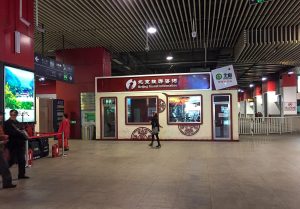
Arriving without data turns every taxi, translation, and wallet OTP into a project. Major Chinese airports often host carrier kiosks that sell tourist or local SIMs to foreigners who present a passport. This guide covers the desk experience—not VPNs, not grey-market SIMs.
Compare bigger picture options in roaming vs local SIM honest guide, SIM vs eSIM carriers compare, eSIM airport pickup vs ship-to-hotel, and pocket Wi-Fi vs eSIM for China.
Where the desks usually sit
Look near arrivals halls at large hubs (think Beijing, Shanghai, Guangzhou-style airports). Signs may say China Mobile, China Unicom, China Telecom, or generic “SIM / Wi-Fi.” Staffed hours matter on red-eye landings—if the desk is closed, have a backup: hotel Wi-Fi, pocket Wi-Fi pickup, or pre-arranged eSIM.
What you typically bring
- Passport (the same document used for entry)
- A phone that is unlocked and supports the local bands
- Payment method the desk accepts (cash, domestic QR, sometimes foreign card)
- Patience for real-name registration photos and forms
Registration is a legal identity step, not optional theatre.
Physical SIM vs eSIM at the counter
Some desks still push plastic nano-SIMs; others can provision travel eSIMs. If your phone is eSIM-capable and the offer is clear, eSIM avoids a tray tool—but only if activation instructions are in a form you can complete while still at the airport Wi-Fi. Plastic is tangible and easy to remove when you leave China.
Plan types without invented prices
Expect talk of data-heavy tourist packs, validity days, and whether voice/SMS are included. Do not memorise a price from this article—read the placard and receipt. Ask whether the plan auto-renews, how to check balance, and what happens when data runs out.
Activation and testing
Insert or install before you leave the desk when possible. Disable fighting SIM profiles, set the new line for cellular data, and load a map tile. Send a test SMS to yourself if SMS matters for wallet recovery. Photograph the packaging, phone number, and any PUK/ICCID labels.
Honest limits
Airport SIMs solve connectivity; they do not magically fix every app’s foreign-card rules. Keep wallet setup habits from Alipay and WeChat Pay hub. For the first hour online, airport free Wi-Fi may bridge the gap—see the companion Wi-Fi login guide in this batch.
November travel angle
Queues lengthen when many international flights land together. If your itinerary is tight for a same-day high-speed train, either pre-arrange eSIM/pocket Wi-Fi or budget buffer before high-speed rail first-timers guide security lines (train station security and luggage).
Related Lovely China reading
For payments and wallets, start with Alipay and WeChat Pay hub and WeChat Pay vs Alipay for tourists. For trains and long-distance moves, keep high-speed rail first-timers guide and 12306 passport signup for foreigners handy. For city orientation, the Beijing first-visit guide, Shanghai first-visit guide, and Chengdu first-visit guide hubs remain useful even when your trip centres on another province. Connectivity backups live in roaming vs local SIM honest guide, SIM vs eSIM carriers compare, pocket Wi-Fi vs eSIM for China, and offline maps for foreigners. Bookmark China travel tools page so you can jump between logistics topics without searching from scratch on hotel Wi-Fi at midnight.
Practical checklist
- Confirm official rules on the relevant government, park, airline, or bank page near your travel week
- Screenshot bookings, tickets, and QR codes while you still have stable Wi-Fi
- Save hotel and attraction names in Chinese characters in your phone notes
- Carry passport, a backup payment method, and a small cash float (why cash is still needed)
- Test one small mobile payment before you rely on wallets at a gate or taxi
- Build time buffers for security lines, November weather, and bilingual navigation
- Prefer refundable holds until visas, trains, or park tickets are confirmed
- Keep the China travel tools page page bookmarked for related Lovely China hubs
How to verify information without panicking
English travel blogs lag policy changes. When something critical is at stake—entry permission, ticket validity, or whether a card works—use primary sources: embassy or VAC pages, National Immigration Administration notices, official park reservation platforms, airline apps, and the screens inside Chinese super-apps. Lovely China articles such as Alipay and WeChat Pay hub, high-speed rail first-timers guide, and essential apps for foreigners help you orient, but they are not substitutes for the live rule in front of you.
If two sources conflict, choose the stricter one until you can ask a human at the counter. That habit prevents most arguments that begin with “I read online that…” at gates.
FAQ
Can I buy a SIM without a passport?
Real-name rules generally require passport identification for foreigners.
Is an airport SIM always cheaper than eSIM online?
Not always—compare total cost and activation friction, not marketing slogans.
What if my phone is carrier-locked?
It may reject the SIM. Unlock before you travel.
Should I also carry offline maps?
Yes—download them while you still have Wi-Fi; see the offline maps guide.
Notes for late 2026 travellers
Late October and November bring cooler mornings, earlier sunsets, and comfortable train weather across much of eastern and central China. Pack layers, keep phone batteries warm outdoors, and leave extra time whenever a clear weekend coincides with popular sightseeing.
This article does not invent ticket prices, opening hours, processing times, consular fees, or official statistics. When a number matters, verify it on the official site, consulate page, app screen, or ticket board near your travel week.
Write key Chinese addresses into your phone notes before you leave Wi-Fi. Screenshot tickets and booking codes. Carry a small cash float even if you prefer wallets—see why cash is still needed. Reconfirm last-mile transport the evening before early starts.
If an official rule page disagrees with this guide, follow the official page. Lovely China orients English-speaking travellers; we are not an immigration, banking, or medical authority. Keep the China travel tools page bookmarked for other logistics hubs.
Traveller mindset
Move slowly through paperwork moments. A calm queue is cheaper than a missed train or a refused visa file. When language fails, show passport pages, booking screens, and maps with Chinese labels. Hotel front desks and station information booths are used to helping foreigners through routine steps.
Keep expectations honest: China is highly digital, but edge cases remain. Your job is not to memorise every exception—it is to carry backups (second card, cash, offline maps, written addresses) so one failure does not end the day. For everyday apps, start with essential apps for foreigners.