Shanghai does not have one railway station with many wings. A ticket to 上海虹桥 (Shanghai Hongqiao), 上海 (Shanghai Railway Station), or 上海南 (Shanghai South) is a ticket to a different place in a very large city. Foreigners who treat a same-day change as a corridor walk sometimes discover they have a metro ride, a security queue, and a second station to enter. This guide is about transferring among those stations—not a repeat of the Hongqiao-only walkthrough in Shanghai Hongqiao Railway Station guide, and not the airport-to-airport problem in Hongqiao vs Pudong transfer.
Beijing visitors who already used transferring between Beijing railway stations will recognize the idea: read the station field as if it were the destination.
Read the official station name
On a 12306 ticket, the station is printed in Chinese first. Official names win over hotel English, a map pin, and the habit of saying “Shanghai station” for all of them.
- 上海虹桥, Shanghai Hongqiao, sits in a huge rail-and-air complex in the west. It is not downtown 上海站. The Hongqiao complex also contains an airport, which is why people confuse a rail transfer with Hongqiao vs Pudong transfer.
- 上海站, Shanghai Railway Station, is a central, older, still very busy station of its own.
- 上海南, Shanghai South, is another major station, not a hall inside Hongqiao.
- Other official names can appear—follow whatever 12306 printed, including places such as a west or Songjiang station if that is what the ticket says. Do not assume a short walk.
Before you leave the first arrival hall, confirm the next ticket’s station in Chinese, the departure time, and whether your luggage can move at the speed you are imagining. Save the Chinese name in your notes and in a ride-hailing pin (Didi ride-hailing for foreigners, Amap Baidu English mode).
How people usually move, without fake minutes
The metro is the usual planned transfer, with Shanghai’s network and QR or ticket habits described in Shanghai Metro first-timers and Shanghai Metro QR for foreigners. A taxi or Didi can be kinder with heavy bags or a late tight connection, at a price you read in the app, not in a blog fare table. We will not invent transfer times. Peak hours, luggage, ticket checks, and security screening at the next station all add time. A “one-hour gap” that looks generous on paper can be tight if you include walking a long concourse, finding the right metro entrance, and re-entering another station.
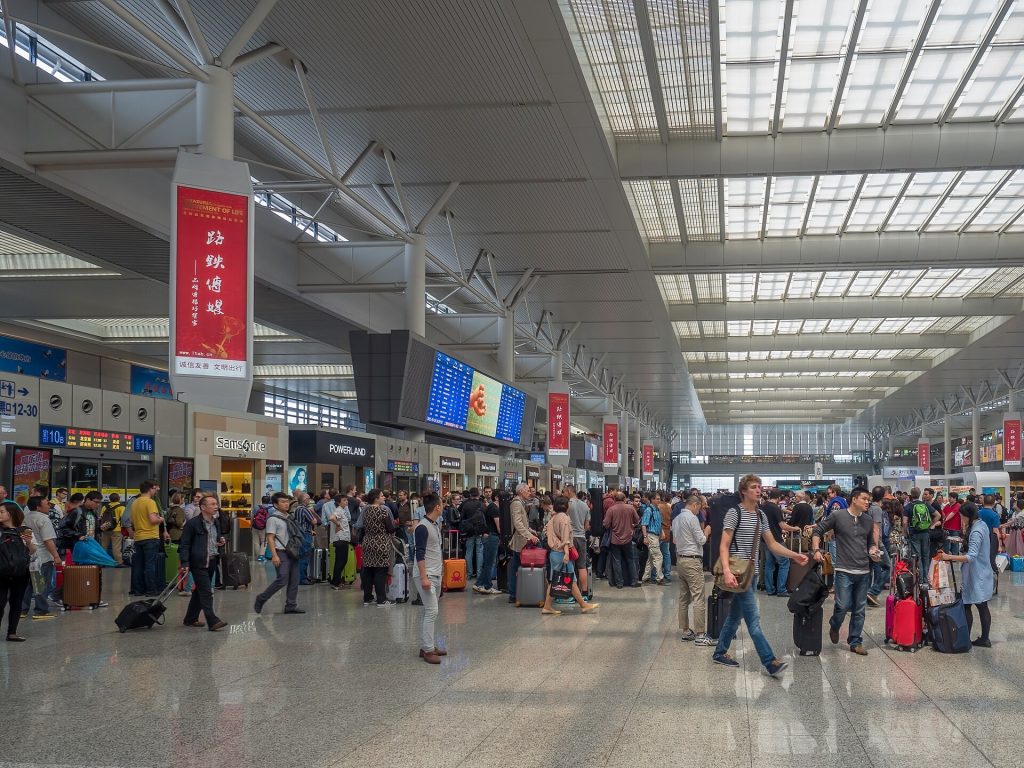
Hongqiao in particular punishes last-minute terminal confusion: rail platforms, metro, and airport areas are related but not interchangeable. Follow signs for 高铁 or 动车 and the official station name, not only the word “Hongqiao.” If your next train is at 上海站, leaving the Hongqiao complex is the point; do not linger in a waiting hall that belongs to the train you already finished.
Give yourself a buffer that would still work if one metro line is slow. If you cannot accept that risk, book itineraries that arrive and leave from the same official station, or choose a later train with same-day 12306 refund and change. Use 12306 refund and change rules and the 12306 change article if you need to move the second booking. Late December and the 1 January holiday week can add crowds; start the transfer earlier than your summer memory suggests.
Practical habits
- Photograph both tickets and the station name on the departure board.
- Keep passport ready for gates (12306 e-ticket gates with a foreign passport, train platform ticket gates passport).
- Eat and use a washroom at the first station only if the remaining time is truly comfortable.
- If you are also connecting to Pudong or Hongqiao Airport, switch to the airport pieces rather than treating this as the same transfer.
Official 12306 station names and on-site signs win. Lovely China will not clock your walk. Leave more time than you think, and treat each Shanghai station as a separate destination.
Related Lovely China reading
For payments, start with Alipay and WeChat Pay hub and WeChat Pay vs Alipay for tourists. For trains, keep high-speed rail first-timers guide and 12306 passport signup for foreigners handy. City hubs: Beijing first-visit guide, Shanghai first-visit guide. Connectivity: roaming vs local SIM honest guide, pocket Wi-Fi vs eSIM for China, offline maps for foreigners. Bookmark China travel tools page.
Practical checklist
- Confirm official rules on the relevant government, park, airline, or bank page near your travel week
- Screenshot bookings, tickets, and QR codes while you still have stable Wi-Fi
- Save hotel and attraction names in Chinese characters in your phone notes
- Carry passport, a backup payment method, and a small cash float (why cash is still needed)
- Test one small mobile payment before you rely on wallets at a gate or taxi
- Keep the China travel tools page page bookmarked for related Lovely China hubs
FAQ
Is this travel advice official?
No. Lovely China orients travellers. Verify live rules on official pages, apps, and counters near your travel week.
Will every city behave the same?
No. Airports, stations, parks, and markets differ. Use local signage and staff instructions when they conflict with a general guide.
What should I screenshot before I lose Wi-Fi?
Bookings, tickets, hotel Chinese address, pickup pins, and payment success screens.
Notes for late 2026 travellers
Late December 2026 and the New Year week into 2027 bring colder mornings, earlier sunsets, and holiday crowds in many city hubs. Pack real winter layers in the north, and leave extra time on weekends and around 1 January.
This article does not invent ticket prices, opening hours, processing times, consular fees, or official statistics. When a number matters, verify it on the official site, app screen, or ticket board near your travel week.
If an official rule page disagrees with this guide, follow the official page. Lovely China orients English-speaking travellers; we are not an immigration, banking, or medical authority.