The dish you came to Beijing for
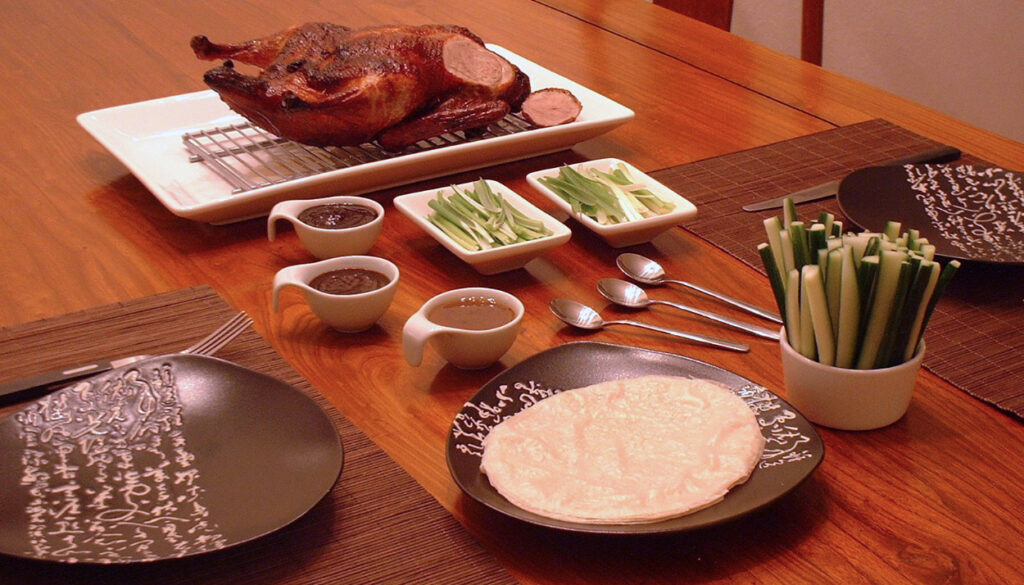
Peking duck — Beijing roast duck — is not a mysterious banquet trick. It is a whole bird roasted for crackling skin, carved at or near the table, and eaten with thin pancakes, sweet bean sauce, and slivers of spring onion and cucumber. First-timers get into trouble less from “etiquette failure” and more from ordering the wrong amount, missing how the courses arrive, or treating the meal like a quick lunch when it wants a little ceremony.
You do not need a ranked “best duck in Beijing” list to eat well. You need a clean kitchen, a bird cooked the same day, and a table that understands the sequence. Prices, wait times, and reservation rules change by restaurant and season — confirm on the spot rather than trusting an old viral post.
What you are actually ordering
Whole bird vs half
Many classic roast-duck restaurants sell by the whole duck, sometimes with a half-duck option when available. A whole bird feeds more than two hungry adults once you count pancakes, sides, and soup that may follow. Two people can share a whole duck comfortably if they are not also ordering five other mains; three or four people may want a whole duck plus vegetables and a non-duck dish.
If only a whole duck is offered, do not apologise for leftovers you can pack — ask politely whether takeaway of remaining meat is possible. Half ducks, when listed, suit solo travellers or light eaters paired with other plates.
Skin-first logic
The glory is the lacquered skin. Carving often presents skin pieces first, sometimes with sugar for dipping in older banquet style, then meat with skin, then remaining meat for follow-on dishes. Not every restaurant follows the same theatre. Watch what the carver does, and follow the server’s cues.
Pancakes, sauce, alliums
You will receive thin wheat pancakes (sometimes steamed in a covered dish), a sweet savoury sauce (often sweet fermented bean sauce), and cucumber and spring onion strips. Assembly is simple: smear a little sauce on a pancake, add skin and meat, add vegetables, wrap, eat with your hands. There is no gold-medal fold. Keep the wrap tight enough to avoid sauce on your shirt.
If pancakes run out before duck does, ask for more. If duck remains after pancakes, ask whether the kitchen can prepare a follow-up dish from the meat — some houses offer lettuce wraps, fried dishes, or duck bone soup as later courses. Menus differ; ask rather than assume.
How the table usually flows
- Order the duck (and any must-have sides) when you sit, especially if roasting is finished to order timing.
- Cold dishes or light starters may arrive first while you wait.
- Duck carving and pancake service — the main event.
- Optional second preparations from remaining meat or bones.
- Staples — rice or noodles if you still need them.
- Soup or broth in some traditional sequences, using the carcass.
You will not offend anyone by eating at a normal pace. You will frustrate yourself if you fill up on fried appetisers before the skin arrives. Pace the cold dishes.
Reservations, hours, and holiday reality
Popular duck houses fill for dinner. Book ahead when the restaurant offers reservations, especially on weekends and around Mid-Autumn (Friday 25 September 2026, short holiday roughly 25–27 September) and Golden Week (roughly 1–7 October). Lunch can be easier than dinner for walk-ins, but that is not a law — check the specific house.
If you are pairing duck with heavy sightseeing the same day — say a morning at the Forbidden City — prefer an early dinner reservation over a late one. Carving waits feel longer when you are already footsore.
Finding a place without fake rankings
Use ordinary signals:
- Ducks visible in the roasting process or a kitchen that looks busy with actual birds, not only photos
- Locals and visitors both present
- Clear menu with duck options explained in Chinese and, ideally, some English or pictures
- Staff willing to explain whole vs half and what is included
Hutong addresses can be charming and cramped; mall restaurants can be consistent and louder. Either can serve excellent duck. A residential hutong walk earlier in the day pairs nicely with an evening duck meal nearby, as long as you do not treat every courtyard doorway as a dining tip.
Skip anyone who pressures you into the most expensive set without explaining portions. Skip grey-market “VIP queues” that cannot show a real booking under your name.
Eating manners that actually matter
Chinese table manners vary by region and company. For duck specifically:
- Use the serving chopsticks or spoons for shared plates when provided.
- Take pancakes one at a time; do not build a private stack for later unless the table agrees.
- Bones go on the small plate or bone dish, not back into a shared sauce.
- It is fine to use your hands for wraps.
- Toasting may happen at banquet tables; if you do not drink alcohol, tea or soft drinks are normal substitutes — a light nod keeps social rhythm without overexplaining.
If you are invited as a guest rather than paying yourself, wait for the host to order the duck and to signal starting. For broader guest behaviour at festival dinners, our Mid-Autumn family dinner etiquette note is useful even when the menu is not mooncakes.
What else to order (and what to skip)
Duck is rich. Balance it:
- A refreshing cold vegetable or tofu dish
- A green seasonal vegetable
- Something spicy or vinegary if you like contrast
- Rice if you need ballast
You do not need three other meat mains. You do not need every chef’s special on the first visit. Autumn in Beijing also tempts people toward more banquet food than one stomach wants — leave room.
Allergy and diet notes: pancakes are wheat; sauces may include fermented soy; some kitchens use traditional hanging ovens with specific woods — ask if you have constraints. Vegetarian companions will need a real vegetable strategy; duck restaurants are not automatically flexible.
Paying and leaving
Mobile pay dominates; keep Alipay and WeChat Pay ready. Ask for the bill clearly when you are finished; waving alone sometimes works, a polite “măidān” works better. Itemise if the table shared unevenly — Chinese dining often splits less precisely than Western apps, so sort it among friends before the QR code appears.
Take leftover meat if offered and safe to transport. Hotel fridges exist for a reason.
First-timer mistakes (easy to avoid)
- Ordering a whole duck plus two other heavy meats for two people
- Arriving starving and filling up on fried starters
- Skipping the vegetables that cut the fat
- Visiting only at peak holiday dinner hours without a reservation
- Treating the carver as a photo prop instead of letting them work
- Expecting the exact same sauce-and-sugar ritual in every restaurant
A simple Beijing duck evening
Walk a quiet hutong stretch in late afternoon light. Sit down early for duck. Eat the skin while it is crisp. Share pancakes without scoring technique points. Add one green plate. Finish with tea or a light broth if it comes. Ride the metro home slightly glossy and happy.
Peking duck is Beijing hospitality in edible form: theatrical enough to remember, practical enough to learn in one meal. Order with clear eyes, follow the bird’s sequence, and let the pancake be your utensil. The city’s other flavours can wait until tomorrow.