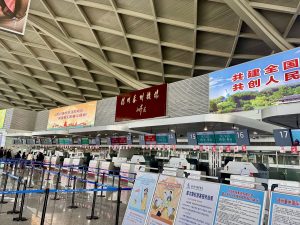
Chongqing rewards travellers who accept vertical cities: elevators, monorails, bridges, and staircases stitch neighbourhoods that look adjacent on a flat map but feel like different altitudes. This first-visit guide covers the first 48–72 hours for English-speaking travellers in late 2026.
Arrival and first transfers
Whether you land by air or high-speed rail, plan the first transfer before you are hungry. Metro lines and ride-hail both work; save Chinese destination names (Didi ride-hailing for foreigners). Offline maps matter when underground passages scramble your sense of direction.
Orientation without checklist tourism
Hongyadong and Jiefangbei appear on every feed. Visit if you want the glow—but balance them with a quieter riverside walk or a neighbourhood noodle shop. The point of a first visit is learning the city’s layers, not photographing every neon sign in one night.
Metro and monorail mindset
Chongqing’s rail network climbs and dives. Follow terminus names and line colours the same way you would in Beijing (Beijing subway first-timers logic applies even when the map looks wild). Keep transit QR or tickets ready (tourist metro cards vs mobile pay).
Food pacing for spice
Chongqing heat is famous. Order mild or “less spicy” when menus allow, share dishes, and keep stomach space for breakfast the next day. Hotpot can wait until you are hydrated and rested—especially after a long train. Payments: Alipay and WeChat Pay hub.
November weather and fog
Late autumn can bring cool, misty days that soften skyline photos and hide distant hills. Pack a light rain layer. Stairs get slippery; wear shoes with grip.
A simple three-day skeleton
Day 1: arrival, hotel registration (hotel registration for foreigners), short monorail ride, early sleep. Day 2: one iconic district + one local food focus. Day 3: museum or cable-crossing viewpoint + riverside evening. Adjust freely; the skeleton exists to prevent overbooking.
Connectivity and cash
Set up wallets and connectivity before spice tourism begins (essential apps for foreigners, eSIM airport pickup vs ship-to-hotel). Carry a little cash for stalls that still prefer it (why cash is still needed).
Related Lovely China reading
For payments and wallets, start with Alipay and WeChat Pay hub and WeChat Pay vs Alipay for tourists. For trains and long-distance moves, keep high-speed rail first-timers guide and 12306 passport signup for foreigners handy. For city orientation, the Beijing first-visit guide and Shanghai first-visit guide hubs remain useful even when your trip centres on another province. Bookmark China travel tools page so you can jump between logistics topics without searching from scratch on hotel Wi-Fi at midnight.
Practical checklist
- Confirm official rules on the relevant government, park, airline, or bank page near your travel week
- Screenshot bookings, tickets, and QR codes while you still have stable Wi-Fi
- Save hotel and attraction names in Chinese characters in your phone notes
- Carry passport, a backup payment method, and a small cash float (why cash is still needed)
- Test one small mobile payment before you rely on wallets at a gate or taxi
- Build time buffers for security lines, November weather, and bilingual navigation
- Prefer refundable holds until visas, trains, or park tickets are confirmed
- Keep the China travel tools page page bookmarked for related Lovely China hubs
How to verify information without panicking
English travel blogs lag policy changes. When something critical is at stake—entry permission, ticket validity, or whether a card works—use primary sources: embassy or VAC pages, National Immigration Administration notices, official park reservation platforms, airline apps, and the screens inside Chinese super-apps. Lovely China articles such as Alipay and WeChat Pay hub, high-speed rail first-timers guide, and essential apps for foreigners help you orient, but they are not substitutes for the live rule in front of you.
If two sources conflict, choose the stricter one until you can ask a human at the counter. That habit prevents most arguments that begin with “I read online that…” at gates.
FAQ
Is Chongqing only about hotpot?
No—hotpot is central to food culture, but the city’s transport and views are equal draws.
Do I need a guide?
Optional; maps and metro handle many first visits.
Is English widely spoken?
Tourist desks help; neighbourhood staff may not—use translation tools.
How many days are enough for a first look?
Two to three full days give a fair introduction without rushing.
Notes for late 2026 travellers
Late October and November bring cooler mornings, earlier sunsets, and comfortable train weather across much of eastern and central China. Pack layers, keep phone batteries warm outdoors, and leave extra time whenever a clear weekend coincides with popular sightseeing.
This article does not invent ticket prices, opening hours, processing times, consular fees, or official statistics. When a number matters, verify it on the official site, consulate page, app screen, or ticket board near your travel week.
Write key Chinese addresses into your phone notes before you leave Wi-Fi. Screenshot tickets and booking codes. Carry a small cash float even if you prefer wallets—see why cash is still needed. Reconfirm last-mile transport the evening before early starts.
If an official rule page disagrees with this guide, follow the official page. Lovely China orients English-speaking travellers; we are not an immigration, banking, or medical authority. Keep the China travel tools page bookmarked for other logistics hubs.
Traveller mindset
Move slowly through paperwork moments. A calm queue is cheaper than a missed train or a refused visa file. When language fails, show passport pages, booking screens, and maps with Chinese labels. Hotel front desks and station information booths are used to helping foreigners through routine steps.
Keep expectations honest: China is highly digital, but edge cases remain. Your job is not to memorise every exception—it is to carry backups (second card, cash, offline maps, written addresses) so one failure does not end the day. For everyday apps, start with essential apps for foreigners.